The Short Answer
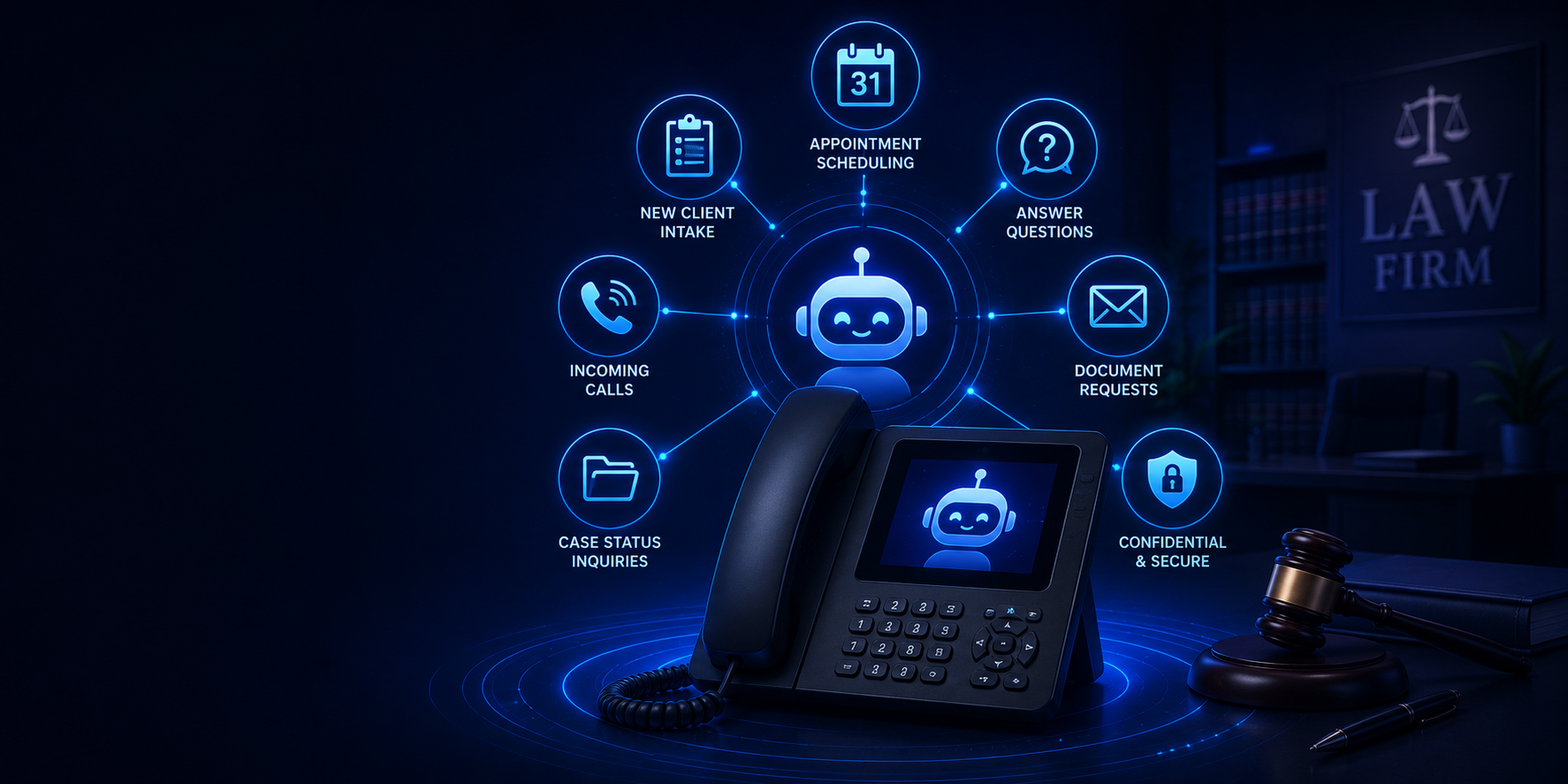
Effective law firm call routing separates prospective-client intake from current-client service, professional callers and routine administration. The menu stays short, reception remains reachable, transfers preserve context and every unanswered call has a defined owner. The system should support the firm’s intake rules without collecting unnecessary facts or suggesting that a consultation has begun.
Key Takeaways
- Use intent-based routing instead of an employee directory as the first experience.
- Keep new-client intake staffed, measured and backed up.
- Verify current clients before discussing matter information.
- Prefer warm transfers for sensitive or high-value calls.
- Set maximum waits, overflow rules and voicemail ownership.
- Use different schedules for open, closed, lunch and emergency conditions.
Start With Caller Intent
A caller rarely thinks in extensions. A concise menu might offer new matters, existing clients, courts or professional callers, billing and receptionist assistance. Practice-specific options may be appropriate, but long menus increase abandonment and invite callers to guess.
The greeting should establish the firm’s identity and direct the call. Avoid requesting detailed facts before the right team is ready to receive them. Intake scripts and disclaimers belong in the firm’s approved process; the phone system should make that process easier to follow consistently.
Design the New-Client Intake Queue
New-client calls should ring trained intake staff first, then overflow to a designated backup team or approved service after a defined interval. Show queue position or offer callback only if staff can reliably honor it. Voicemail should be a last controlled step, not the default destination during business hours.
Primary
Ring the intake team with caller context and the main campaign or practice-area number that was dialed.
Overflow
Add cross-trained staff or a backup destination before the caller reaches voicemail.
Voicemail
Send to a monitored intake mailbox with a response target and escalation rule.
Measurement
Track answer rate, wait time, abandonment and successful callback—not simply total calls.
Route Existing Clients Differently
Existing clients often need an update, a document handoff, scheduling help or contact with a specific team. Reception should verify identity according to firm policy before discussing a matter. Use presence and shared team routing so a caller is not repeatedly transferred to an unavailable attorney.
If the intended person cannot answer, offer a documented alternative: a paralegal, matter team, scheduled callback or secure message. Voicemail notifications should reveal only the minimum information needed and should never be forwarded to unmanaged personal accounts.
Courts, Agencies and Professional Callers
Courts, opposing counsel, adjusters and other professional callers may need faster access than a general public queue. A dedicated menu path or published direct number can route them to reception, a litigation support team or the responsible attorney’s coverage group. The goal is reliable handling, not unrestricted bypass of verification and availability rules.
Transfers, Holds and Failed Handoffs
Warm transfer is usually preferable when context matters. The sending employee confirms that the recipient can take the call, summarizes the reason privately and then joins the caller. If nobody accepts, the call returns to the sender or a named backup instead of disappearing into a generic mailbox.
Define hold thresholds. A two-minute queue may be reasonable for a staffed intake line but unacceptable for a court callback. The correct threshold depends on call type, staffing and the promise made in the greeting.
Build the Exception Paths First
During design, ask what happens when the receptionist is already on a call, the attorney is in court, the office closes early, the internet fails or the person covering intake calls out. Those answers create a resilient call flow.
Frequently Asked Questions
Should callers be able to dial an attorney by name?
Sometimes, but not as the only route. A directory can help known callers while intake and receptionist paths remain prominent.
How many menu options are too many?
There is no universal number, but the first level should usually fit in one short greeting and reflect genuine caller intent.
Should missed intake calls ring every employee?
No. Use an accountable overflow team so ownership remains clear and sensitive information is not broadcast unnecessarily.
Can call routing change automatically?
Yes. Schedules can switch routing for business hours, lunch, holidays, weather closures and after-hours coverage.
Continue Learning
Design Around the Firm’s Real Workflow
Tier 1 Telecom helps Florida law firms map intake, staff roles, offices, security, continuity and support requirements before recommending a platform.
Map Your Law Firm Call Flow
We can review your current numbers, call paths, equipment, internet and client-communication workflow.