The Short Answer
The best phone system for an accounting or tax firm is built around two very different operating conditions: normal-season client service and tax-season call volume. It should keep the main number answerable, separate appointment and document-status calls from questions that require a preparer, support bilingual callers when needed, protect voicemail and text history, and give seasonal employees only the access required for their roles.
Key Takeaways
- Design separate normal-season and tax-season call flows.
- Keep menus short and give every queue an overflow destination.
- Treat voicemail, texts, faxes and transcripts as part of the firm’s information inventory.
- Use role-based equipment for reception, preparers, remote users and conference spaces.
- Document service-provider safeguards in the firm’s Written Information Security Plan.
- Compare the complete implementation cost, not only an advertised per-user rate.
Why Accounting and Tax Offices Are Different
Call volume can change dramatically between filing season and the rest of the year. During peak weeks, callers ask about appointments, extensions, missing documents, refund status and preparer availability. Sending all of them to the same ring group interrupts professional work and creates long holds.
The firm also handles Social Security numbers, income records, bank details and identity documents. The phone system should not become an uncontrolled collection point for that information. Decide what reception, voicemail, texting and automation may collect before programming the workflow.
A Practical Main-Number Design
Appointments and new clients
Route scheduling and general intake to reception or a defined intake queue.
Existing-client service
Handle document status and administrative questions without interrupting every preparer.
Preparer questions
Use scheduled callbacks, direct extensions or a protected specialist queue.
Spanish-language service
Offer the language choice early and preserve the caller’s selection throughout the handoff.
Every path needs a maximum wait, overflow destination and accountable voicemail owner. During tax season, activate additional users and queues without rebuilding the entire system. See the detailed guide to tax-season routing and overflow.
Equipment by Role
Front desk and intake
A business-class desk phone or supported softphone, wired headset and live queue visibility.
Tax preparers and accountants
A desk phone or desktop app with presence, business caller ID and easy scheduled callbacks.
Seasonal and remote employees
A managed app or provisioned device with individual credentials and a defined removal date.
Conference and shared rooms
A purpose-built speakerphone and correctly configured emergency location.
Safeguards and the WISP
The IRS says tax professionals are required to maintain a Written Information Security Plan. The plan should identify risks, safeguards, responsible people and service-provider oversight. A hosted phone platform belongs in that review whenever it stores or transmits customer information through voicemail, SMS, eFax, recordings or integrations. Review the FTC Safeguards Rule and VoIP guide.
Control administrator access, use multifactor authentication where available, document retention, and understand what Tier 1, the underlying platform and connected email systems can access. A product label does not make the firm compliant; the configuration and operating process matter.
Features Worth Prioritizing
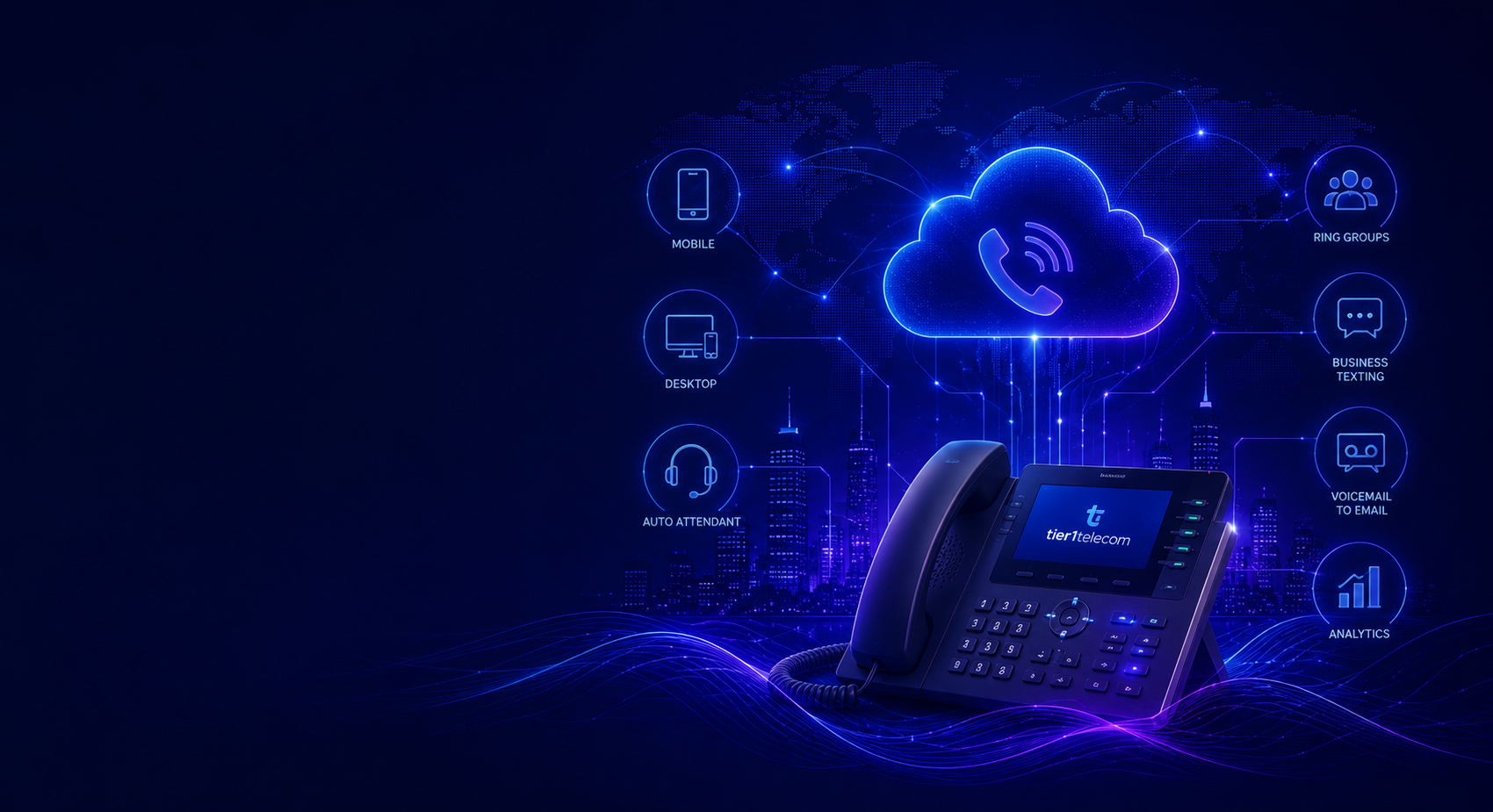
Prioritize schedules, queues, overflow, warm transfer, voicemail-to-email or app access, business texting, bilingual routing, mobile and desktop apps, reporting, E911 administration and permission controls. Optional AI answering can handle defined administrative tasks, but it should avoid requesting taxpayer secrets and must have a reliable human handoff.
Understanding Total Cost
Build the budget from year-round users, seasonal users, phone numbers, devices, implementation, taxes and regulatory fees, network readiness and optional services such as eFax, SMS or AI reception. Ask whether seasonal accounts can be added and removed cleanly, whether hardware is purchased or financed, and whether support is included.
A lower seat price can become more expensive when implementation, phones, support, number porting or necessary network work are excluded.
Tier 1’s Practical Recommendation
Create the tax-season call flow before January and test it from an outside number. The busiest day of filing season is the wrong time to discover that a queue has no overflow destination or that an old employee still owns a voicemail box.
Frequently Asked Questions
Can an accounting firm keep its existing numbers?
Usually yes. Existing local and toll-free numbers can normally be ported after ownership and account information are verified.
Can seasonal workers have temporary extensions?
Yes. Give each worker an individual account, limited permissions and a documented removal date.
Should callers leave tax documents in voicemail or text?
The firm should define approved channels and tell callers not to send sensitive documents through channels it has not approved.
Does hosted VoIP make a firm WISP-compliant?
No. It can support safeguards, but the firm must assess risks, configure controls, oversee providers and maintain its written program.
Continue Learning
Build Around the Firm’s Real Workflow
Tier 1 Telecom helps Florida accounting and tax firms map call volume, roles, language needs, sensitive-data boundaries, seasonal staffing, equipment and continuity before recommending a platform.
Plan Your Accounting Firm Phone System
We can review your current numbers, call paths, equipment, internet and client-communication workflow.