In most cases, an eligible business telephone number can be transferred to a new phone provider. The process is called number porting. It allows customers to keep calling the same main number, department numbers, and direct-dial numbers after a business changes providers or moves to a modern cloud phone system.
Keeping an established number protects much more than a dial tone. It preserves the connection between the business and the people who already know how to reach it. That continuity can protect:
- Customer familiarity
- Printed advertising
- Website listings
- Search-engine profiles
- Business cards
- Vehicle graphics
- Directory listings
- Vendor records
- Customer contacts
- Years of brand recognition
The transfer is not automatic, however. Every number should be reviewed for portability, account status, carrier information, ownership or authorization, service dependencies, and geographic eligibility before a migration is finalized.
The Federal Communications Commission’s number-porting guidance describes porting between wireline, IP, and wireless providers when the applicable portability requirements and geographic conditions are met. The guidance is a helpful general reference, but the current and receiving providers still need to evaluate the specific numbers and account.
The Short Answer
Most businesses can keep eligible existing telephone numbers when switching providers. A reliable transfer starts with accurate records and a new system that is ready before the established numbers move.
- Confirm the portability of every number.
- Keep the existing telephone service active.
- Gather a recent telephone bill.
- Verify the account name and service address.
- Obtain the account number and any required PIN through a secure process.
- Identify main, direct, toll-free, fax, texting, tracking, and specialty numbers.
- Resolve pending orders, freezes, security locks, and inaccurate records.
- Authorize the new provider to submit the port request.
- Do not cancel the old service first.
- After cutover, test calls, caller ID, voicemail, texting, emergency information, and routing.
A number port should be managed as part of the complete phone-system migration. Moving the number is only one step; users, devices, call flows, emergency-service information, messaging, specialty equipment, and any services remaining with the old provider also need a plan.
What Is Phone Number Porting?
Phone number porting changes which provider and network route calls to a telephone number. The number itself remains the same, while the receiving phone system changes. Customers continue dialing the established number as the providers coordinate the routing change behind the scenes.
A port may be part of several kinds of business-phone-system transitions:
- A traditional telephone carrier to a cloud phone provider
- An on-premise PBX to a hosted PBX
- One VoIP provider to another
- Cable-company voice service to a managed business system
- Wireless service to an eligible, compatible platform
Porting should not be confused with call forwarding. Forwarding sends calls from one active service to another destination, while porting changes the provider responsible for routing the number. A forwarding arrangement can sometimes help during planning, but it does not replace a properly authorized number transfer.
Which Business Numbers Can Be Ported?
Many active business numbers are eligible to move, but each number should be checked individually. Two numbers on the same bill can have different ownership, platform, geographic, or service dependencies. An inventory helps the new provider evaluate the whole account instead of assuming every number will follow the same process.
Main business number
The main business number usually carries the greatest continuity risk. It may appear on the website, business listings, advertising, signs, invoices, social profiles, customer contacts, and vendor records. Confirm that the number is active, belongs to the business or is properly authorized for transfer, and appears accurately in the current carrier’s records.
Direct-dial numbers
Direct employee numbers should be inventoried even when they appear to receive very little traffic. A salesperson, manager, former employee, vendor, or long-term customer may still rely on one. Decide whether each direct number should route to the same employee, a replacement user, a department, an announcement, or another approved destination after the migration.
Department numbers
Sales, service, billing, dispatch, scheduling, and other public department numbers may have separate call flows or carrier records. Determine whether each number should continue, route differently, or be retired only after an approved transition. A number that looks redundant on a bill may still appear in a campaign, directory, or customer workflow.
Toll-free numbers
Toll-free numbers can often transfer, but they use different management and authorization processes from many local numbers. Confirm who controls the number, which provider manages it, what authorization is required, and how its current routing will be reproduced. Do not assume a local-number port request also covers a toll-free number.
Fax numbers
The fax number and the fax technology are separate decisions. A number may be eligible to transfer while a physical fax machine, electronic fax service, analog adapter, multifunction device, or regulated workflow requires separate planning and testing. Portability does not promise that every fax device or workflow will work on the receiving platform.
Text-enabled business numbers
Voice porting does not automatically transfer messaging registration, toll-free verification, 10DLC campaigns, consent records, or platform configuration. A business may keep the same number for voice while texting remains unavailable until the receiving messaging platform completes its own registration, verification, and configuration requirements.
Tracking and advertising numbers
Numbers supplied by marketing, call-tracking, directory, or lead-generation companies may be controlled by a third party rather than the business. Confirm control, ownership or authorization, transfer rights, replacement tracking requirements, and reporting consequences before relying on those numbers in a migration plan.
Why a Number Might Not Be Portable
A familiar number is not automatically portable simply because it appears on a bill or rings into the current system. Portability may be delayed, restricted, or unavailable when:
- The existing service has already been disconnected.
- The number has been released by the carrier.
- The receiving provider does not support the number’s geographic rate center.
- The number is controlled by a third party.
- Account authorization or ownership cannot be verified.
- Submitted information does not match the current carrier’s records.
- A porting freeze or security lock is in place.
- Another carrier order is pending on the account.
- The number is part of a complex bundled service.
- Geographic eligibility limitations apply.
- The receiving platform does not support the number type.
- The carrier’s records are incomplete or outdated.
Some of these conditions can be corrected; others may limit the transfer. Portability should therefore be checked before the business commits to a final cutover plan, cancels a contract, replaces equipment, publishes a migration date, or tells customers that a number will remain available.
Do Not Cancel Your Existing Service First
Canceling too early may cause the current carrier to disconnect or release the number. Recovery can be difficult and, in some situations, impossible. Even when a provider accepts a port request, the old service should remain active until the business verifies that every approved number and call path works on the new system.
- Prepare the new system.
- Validate every number.
- Submit the port request.
- Keep the existing service active.
- Confirm the cutover date.
- Transfer the numbers.
- Test the new system.
- Verify every number and dependency.
- Cancel only services confirmed to be unnecessary.
Do not treat a completed voice port as permission to cancel the entire old account. Remaining internet service, equipment agreements, specialty lines, minimum commitments, and bundled services should be reviewed separately. Removing one number or the account’s primary line can also change how the carrier bills or identifies the services left behind.
Information Needed to Port Business Numbers
Port requests are compared with the current carrier’s account records. Accurate, complete information helps the receiving provider submit the request correctly and respond to carrier questions. Common requirements include:
- Legal business name
- Service address
- Billing address
- Current provider
- Account number
- Billing telephone number
- Authorized contact
- Account PIN or porting PIN
- Complete number list
- Recent telephone bill
- Customer Service Record, where available
- Signed Letter of Authorization
- Transfer type
- Requested cutover date
Requirements vary by carrier and port type. A local-number port, toll-free transfer, wireless transfer, partial port, or multi-location project may require different records or authorization.
What Is a Customer Service Record?
A Customer Service Record, commonly called a CSR, may show the account information held by the existing carrier. Depending on the carrier and service, it can include:
- Customer name
- Service address
- Billing telephone number
- Account details
- Listed telephone numbers
- Service configuration
- Authorized information
The carrier’s internal record may differ from what appears on the visible bill. An abbreviated company name, old service address, former authorized contact, or different billing telephone number can produce a mismatch even when the business recognizes the account. The port request normally needs to match the carrier record, so the CSR can be useful when a bill does not provide enough detail or a request is rejected.
Inventory Every Number Before Porting
Build the number inventory from current and historical bills, phone-system records, websites, advertising, call-flow documentation, carrier portals, and employee knowledge—not from memory alone. Include:
- Main numbers
- Department numbers
- Direct numbers
- Toll-free numbers
- Fax numbers
- Text-enabled numbers
- Tracking numbers
- Advertising numbers
- Equipment and specialty numbers
- Forwarded numbers
- Integration numbers
- Numbers that appear unused
For each number, record the current provider, account, purpose, current destination, new destination, port-or-retain decision, texting status, known dependencies, and approval owner. An “unused” number should be investigated before retirement. It may still receive emergency calls, forward to another location, identify an advertising source, support equipment, or appear in customer records.
This inventory also helps distinguish telephone numbers from users, extensions, devices, and simultaneous call paths. If the migration plan is still unclear about those differences, review How Many Phone Lines Does My Business Need? before finalizing the new system.
Partial Ports Require Extra Care
A partial port moves some numbers while leaving other services with the current provider. A business may need to retain an alarm line, elevator line, fax service, specialty circuit, internet connection, another location’s number, or a service that is not ready to move.
Partial ports require a clear list of what moves and what stays. Removing the billing telephone number or primary line can affect the identity, structure, bundle, or pricing of the remaining account. Before submission, confirm:
- Which numbers are moving
- Which numbers and services are remaining
- The new primary account identifier, if one is required
- Potential bundle or pricing changes
- Internet and network dependencies
- Any carrier restructuring requirements
A successful partial port should leave both environments in a known state. The new system needs the correct numbers, while the old account needs valid identifiers and working services for everything intentionally retained.
How Long Does Number Porting Take?
There is no single guaranteed porting timeframe. Timing depends on the current and new carriers, number type, number quantity, local or toll-free status, information accuracy, pending orders, security freezes, partial ports, bundles, corrections, and the requested schedule.
A straightforward request may move more quickly than a complex multi-number, multi-location, toll-free, partial, or mismatched request. Carrier questions and corrections can also change the schedule after submission. Begin early, keep the existing service active, and wait for the request to be accepted and a cutover date to be confirmed before committing employees, vendors, or customers to a final transition date.
Common Reasons a Port Request Is Rejected
Port requests are frequently rejected because the submitted information does not match the losing carrier’s records. Common reasons include:
- Incorrect account number
- Incorrect PIN
- Business-name mismatch
- Incorrect service address
- Unauthorized signer
- Missing Letter of Authorization
- A number missing from the account
- A pending order
- An account freeze or security lock
- Incorrect transfer type
- Disconnected service
- Partial-port conflict
- Incorrect billing telephone number
- A mismatch between the bill and the carrier record
A rejection does not always prove that the number is permanently nonportable. It often identifies information or account conditions that need correction. The new provider should review the carrier response, obtain corrected information through a secure process, and resubmit only after the underlying issue has been addressed.
Prepare the New System Before the Numbers Move
The receiving phone system should be configured and tested before the established numbers are transferred. Preparation may include:
Use the full installation guide to prepare and test the new system before porting, including the account review, configuration, network checks, training, and cutover plan.
- Users and extensions
- Desk phones
- Mobile and desktop apps
- Auto attendants
- Ring groups
- Queues
- Business hours
- Holiday schedules
- Voicemail
- After-hours routing
- Outbound caller ID
- Emergency-service addresses
- Recording policies
- Alternate routes
- Approved integrations
- Optional AI voice agent workflows
Temporary test numbers may be used to verify phones, applications, call flows, voicemail, queues, transfers, and schedules before the final transfer. The temporary numbers are for testing; the approved established numbers replace or route into the completed configuration on the cutover date.
Review what to expect on the scheduled porting day so your team understands the carrier handoff, verification, and post-port testing.
The preparation should also document temporary routing and how to keep calls moving during an internet outage while the new platform and number port are being tested.
System sizing and number porting should be planned together. A business that knows how many users, numbers, devices, and simultaneous call paths it needs can prepare the receiving platform more accurately before the port.
What Happens on the Port Date?
On the port date, network routing changes so the transferred numbers begin reaching the new provider. The business should have employees available for testing and a known escalation contact for anything that does not route as expected.
Test the new environment systematically:
- Inbound calls from multiple carriers
- Outbound calls
- Outbound caller ID
- Main-number routing
- Direct numbers
- Department numbers
- Toll-free numbers
- Fax workflows
- Voicemail
- Queues
- After-hours destinations
- Mobile and desktop apps
- External transfers
- Emergency-service information
- Texting, when separately approved and activated
A well-planned cutover reduces preventable risk, but no transfer should be presented as completely interruption-free. Report problems promptly, keep records of the numbers and tests, and do not cancel the old account until the new provider confirms transfer completion and the business verifies all intended services.
Voice Porting and Business Texting Are Separate
Moving a telephone number for voice does not automatically move its business-messaging status. Texting may require:
- Number enablement
- Brand registration
- Campaign registration
- Toll-free verification
- Approved use cases
- Consent language
- Sample messages
- Privacy and terms pages
- Employee permissions
- Opt-out handling
- Platform configuration
Voice may become available before messaging registration and configuration are complete. Inventory every text-enabled number, preserve relevant consent and campaign records through the approved process, and coordinate the transition separately. Learn more about Business Text Messaging.
Caller ID Does Not Always Transfer Automatically
Keeping the number does not guarantee that every caller-ID database and device will immediately display the intended business identity. Validate:
- The outbound telephone number
- Caller-name presentation where supported
- Main company identity
- Department caller ID
- App caller ID
- Emergency-service address
- Spam-labeling status
- Directory listings
Caller-name presentation depends on multiple carrier databases, receiving devices, applications, and recipient settings. The business and new provider can submit and validate the appropriate information, but a specific name display cannot be guaranteed on every destination.
Number Porting Does Not Eliminate Contract Obligations
Transferring a number changes its network routing. It does not eliminate outstanding balances, early-termination provisions, equipment payments, equipment-return requirements, remaining internet service, specialty services, minimum commitments, or final billing charges.
Review the existing bill and agreement before deciding what can be canceled. Tier 1 Telecom can help identify services, numbers, equipment, and charges shown on the bill, but does not provide legal, accounting, tax, or contract advice. For a broader view of recurring, hardware, implementation, and migration expenses, see How Much Does a Business Phone System Cost?
Specialty Numbers and Services Need Separate Planning
Some numbers are attached to equipment or services that do not behave like ordinary business voice extensions. Review:
- Alarm panels
- Fire panels
- Elevator phones
- Gate systems
- Fax machines
- Modems
- Point-of-sale equipment
- Emergency phones
- Paging systems
- Building-entry systems
Porting the telephone number does not establish that the equipment, monitoring service, signaling method, power arrangement, or required supervision is compatible with the new phone platform. Coordinate with the appropriate equipment vendor, monitoring company, carrier, or qualified professional before making changes. Keep the existing specialty service active until the responsible parties have approved and tested the replacement plan.
Number-Porting Checklist
| Stage | Business responsibility | Provider responsibility |
|---|---|---|
| Inventory | Identify every number, account, location, device, and dependency. | Review the inventory and flag missing information. |
| Eligibility | Confirm which numbers should move and which should remain. | Check portability and platform support. |
| Documentation | Provide accurate bills, records, and authorization. | Review documentation before submission. |
| System preparation | Approve users, call flows, schedules, and destinations. | Configure and test the new system. |
| Port submission | Keep old service active and avoid conflicting account changes. | Submit and track the transfer request. |
| Cutover | Make employees available for testing and report issues promptly. | Validate routing and troubleshoot carrier issues. |
| Final review | Confirm every number and remaining service before cancellation. | Help verify transfer completion and unresolved dependencies. |
A successful number-porting cutover also depends on network readiness, so confirm the internet speed and stability VoIP requires before activation.
Frequently Asked Questions
In many cases, yes. Eligible numbers can often be transferred from traditional wireline, cable, wireless, or VoIP providers to a compatible cloud phone platform. Portability should be confirmed before the old service is canceled.
No. Keep the existing service active until the transfer has completed and every number has been tested. Canceling first can put the numbers at risk.
Timing varies by carrier, number type, quantity, account accuracy, pending orders, and transfer complexity. Do not schedule the final cutover until the request has been accepted and a date has been confirmed.
Often, yes. Main numbers, direct numbers, department numbers, toll-free numbers, and fax numbers may be included, but each number should be inventoried and checked. Larger or partial ports require additional planning.
Not necessarily. Voice porting and business-messaging activation are separate processes. Messaging registration, verification, consent requirements, and platform configuration may need to be completed before texting becomes available.
An outstanding balance does not necessarily determine number portability, but porting does not eliminate the debt, contractual obligations, equipment charges, or final bill. Keep the account active and obtain appropriate guidance about any agreement or balance.
The new provider should identify the rejection reason. Many rejections are caused by mismatched account information, an incorrect PIN, missing authorization, a pending order, or a carrier record that needs correction. The request can often be resubmitted after the underlying issue is resolved.
Protect the Number Customers Already Know
A business phone number can represent years of customer relationships, advertising, referrals, and local recognition. Keeping it is often an important part of modernizing the phone system without asking customers to learn a new way to reach the company.
A controlled migration should:
- Inventory every number.
- Verify portability.
- Match the current carrier’s records.
- Keep existing service active.
- Prepare the new system first.
- Coordinate the cutover.
- Test every call path.
- Review texting separately.
- Protect specialty services.
- Cancel old services only after verification.
Planning the transfer before anyone disconnects the existing account is the most important protection.
FREE BUSINESS RESOURCE
Test Your Internet for Business Phone Systems
Wondering whether your Internet connection is ready for cloud business phones?
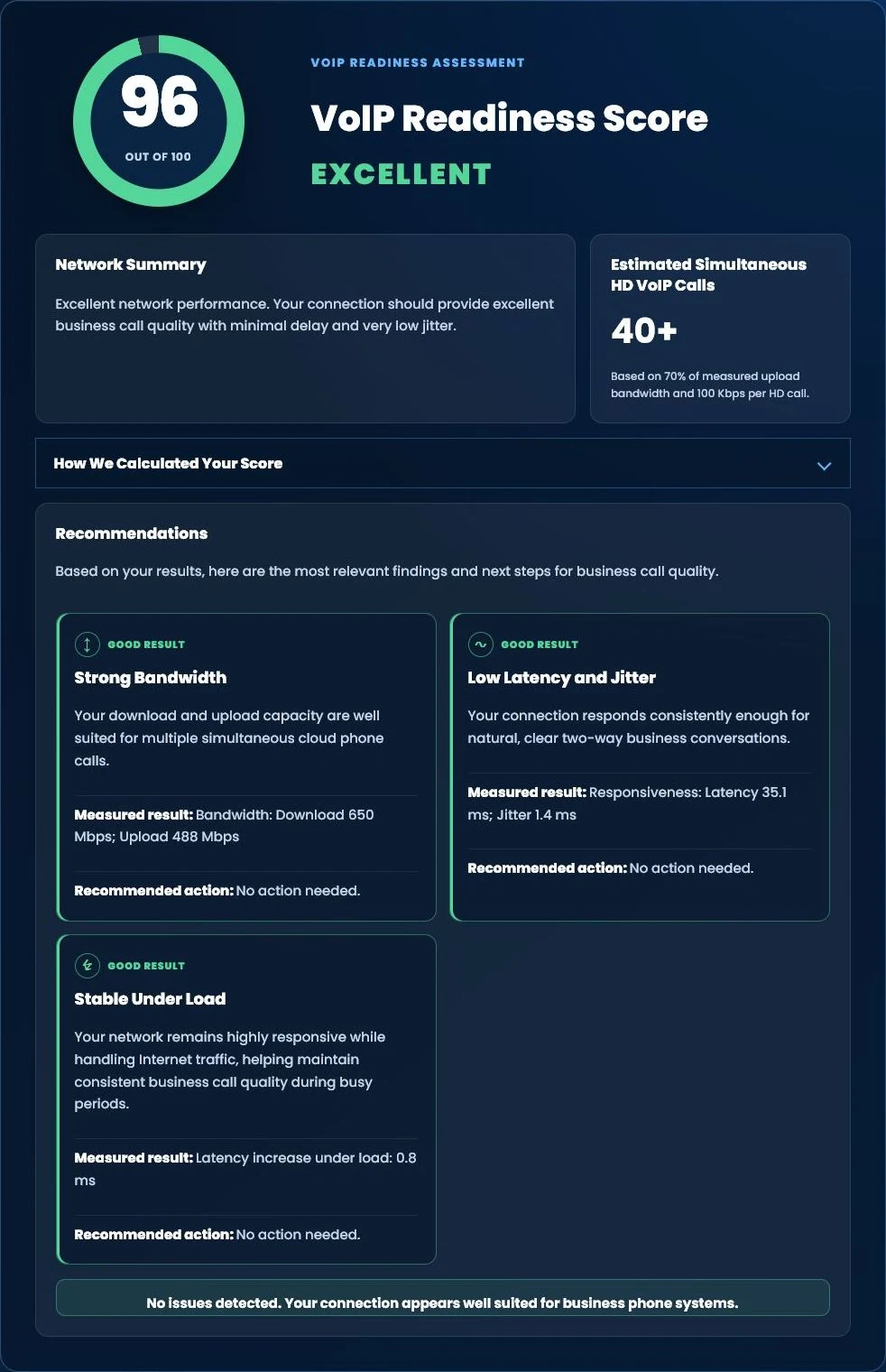
Run our free Tier 1 VoIP Readiness Assessment to measure latency, jitter, network responsiveness and overall VoIP readiness in about one minute.
- VoIP Readiness Score
- Latency & Jitter Analysis
- Network Stability Assessment
- Estimated HD Phone Capacity
FREE BUSINESS PHONE BILL REVIEW
Not Sure Which Numbers and Services Are on Your Account?
Tier 1 Telecom can review your current telephone bill, numbers, users, equipment, features, and known dependencies before planning a migration. There is no obligation to switch.