Make the Decision Around Your Current Environment
| Question | What to compare |
|---|---|
| Where will staff answer calls? | Office desks, remote staff, mobile users and other locations; demonstrate the tools each role needs. |
| What can be retained? | Numbers, compatible devices, cabling and any specialty services. Get reuse assumptions confirmed before planning a replacement. |
| Who will manage the system? | Name the owner for routing changes, users, updates, network support and provider escalation. |
| What happens during an outage? | Document the destination for incoming calls, local power/network dependencies and the return to normal service. |
| What is the complete cost? | Compare equipment, deployment, support, recurring service, usage and contract terms using the same requirements. |
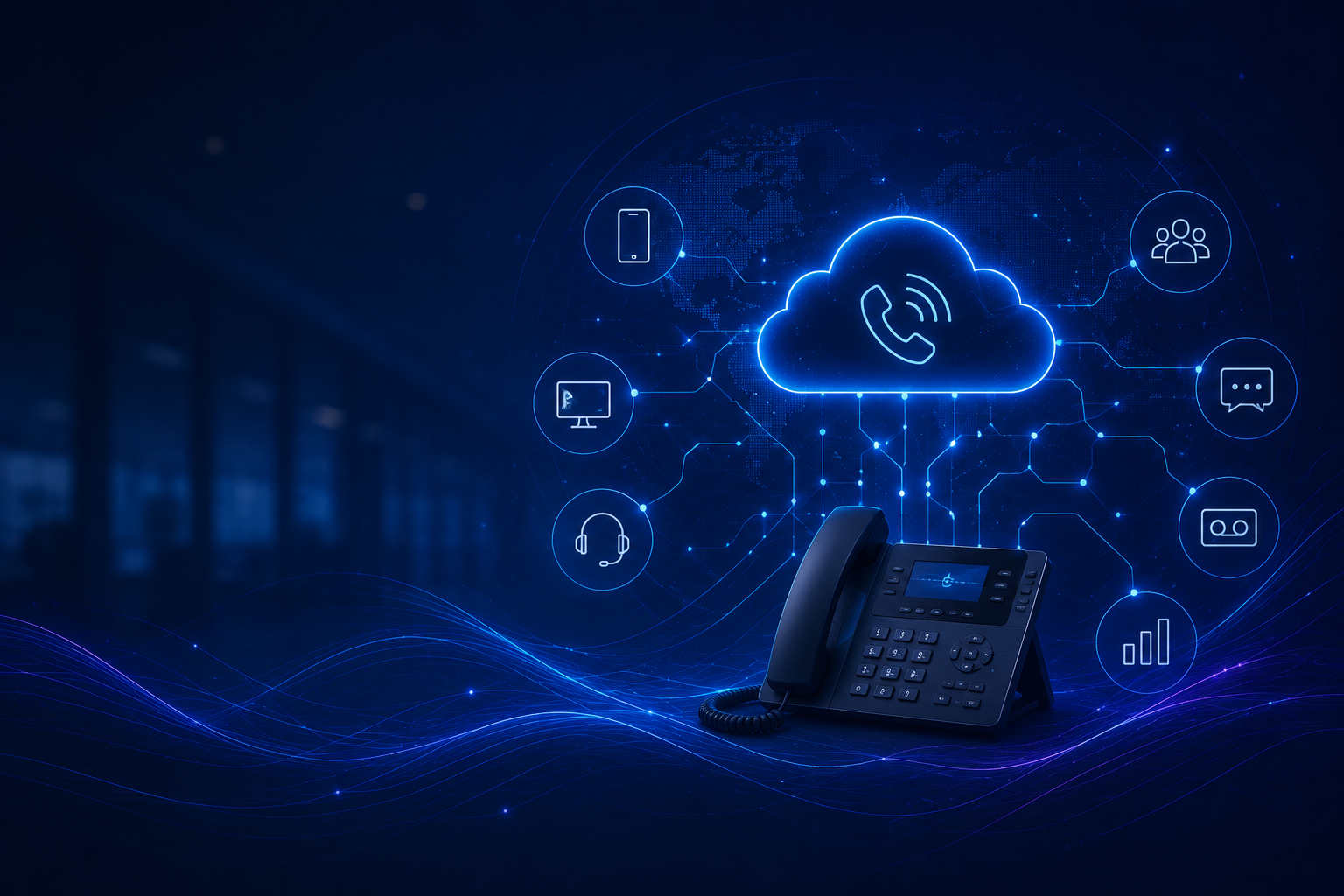
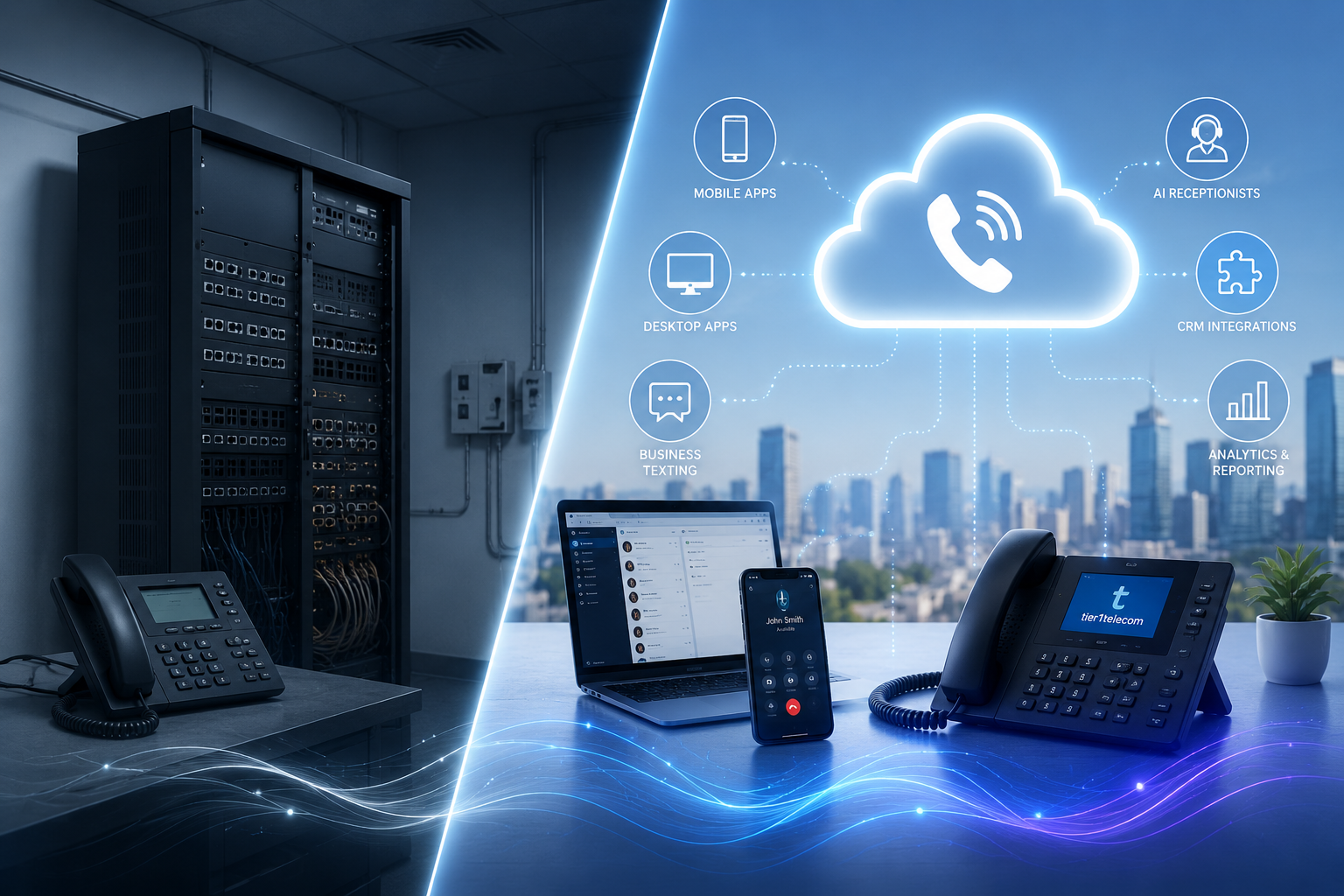
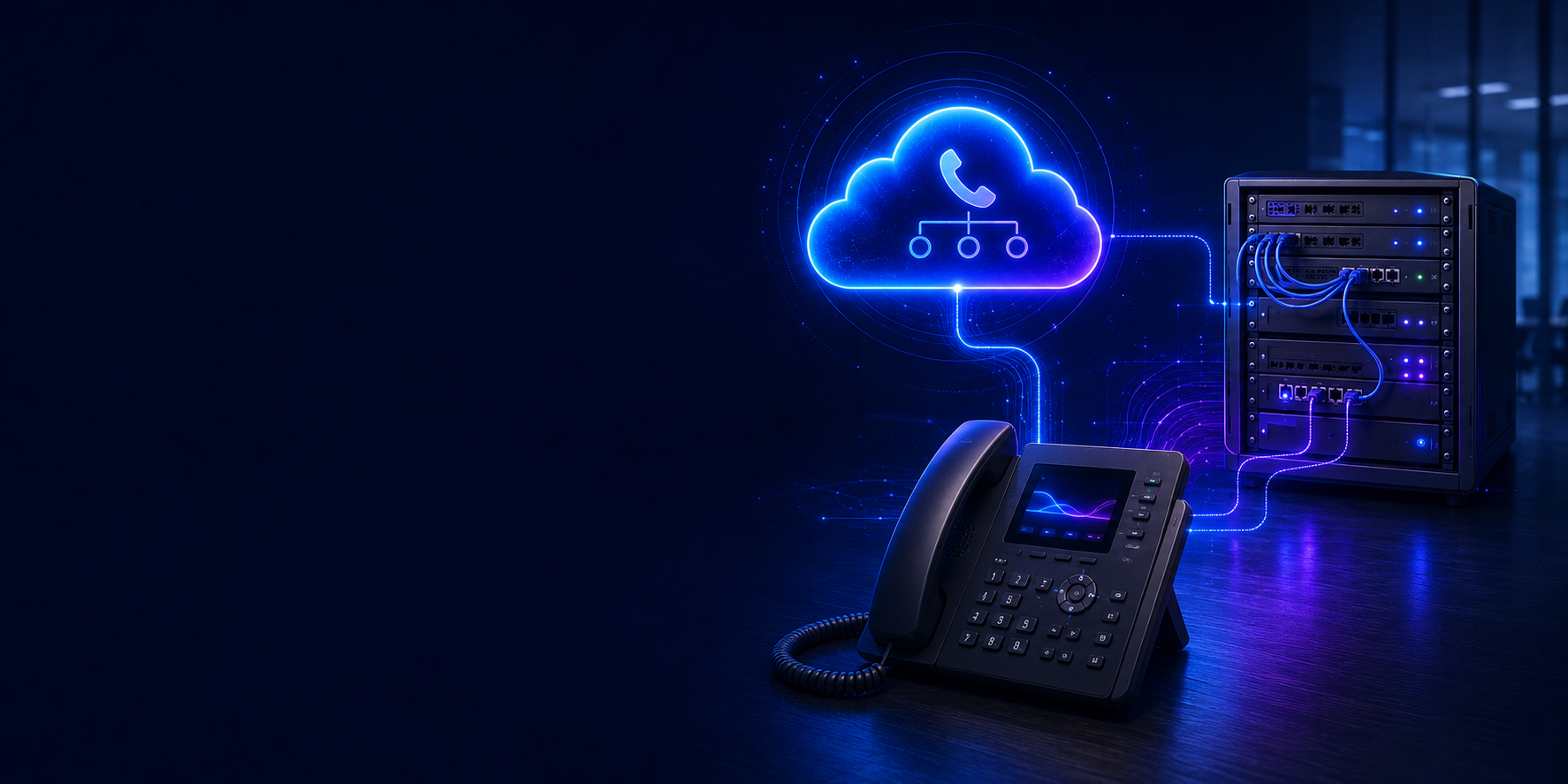
A functioning on-site system with limited change may be worth retaining. A business needing more remote access, multi-location calling or simpler expansion should compare those workflows on the proposed cloud system. The decision should follow a demonstrated fit and a written scope.
If hosted calling fits your requirements, explore Tier 1’s managed cloud phone systems for device options, number-transfer planning, service estimates and ongoing support.
Is a cloud phone system better than a traditional phone system?
Not necessarily. Cloud systems provide greater flexibility and modern features, while traditional systems may still be appropriate for some environments.
Can I keep my existing phone numbers?
Yes. In most cases, existing business phone numbers can be transferred to a cloud phone system.
Do cloud phone systems require special phones?
No. Many businesses use existing IP desk phones, while others use mobile apps, desktop applications, or a combination of devices.
Can remote employees use the same business phone system?
Yes. That's one of the primary advantages of a cloud-based communications platform.
Are cloud phone systems secure?
When properly implemented, reputable cloud providers include multiple security and redundancy features designed for business communications.
Can a cloud phone system work with AI receptionists?
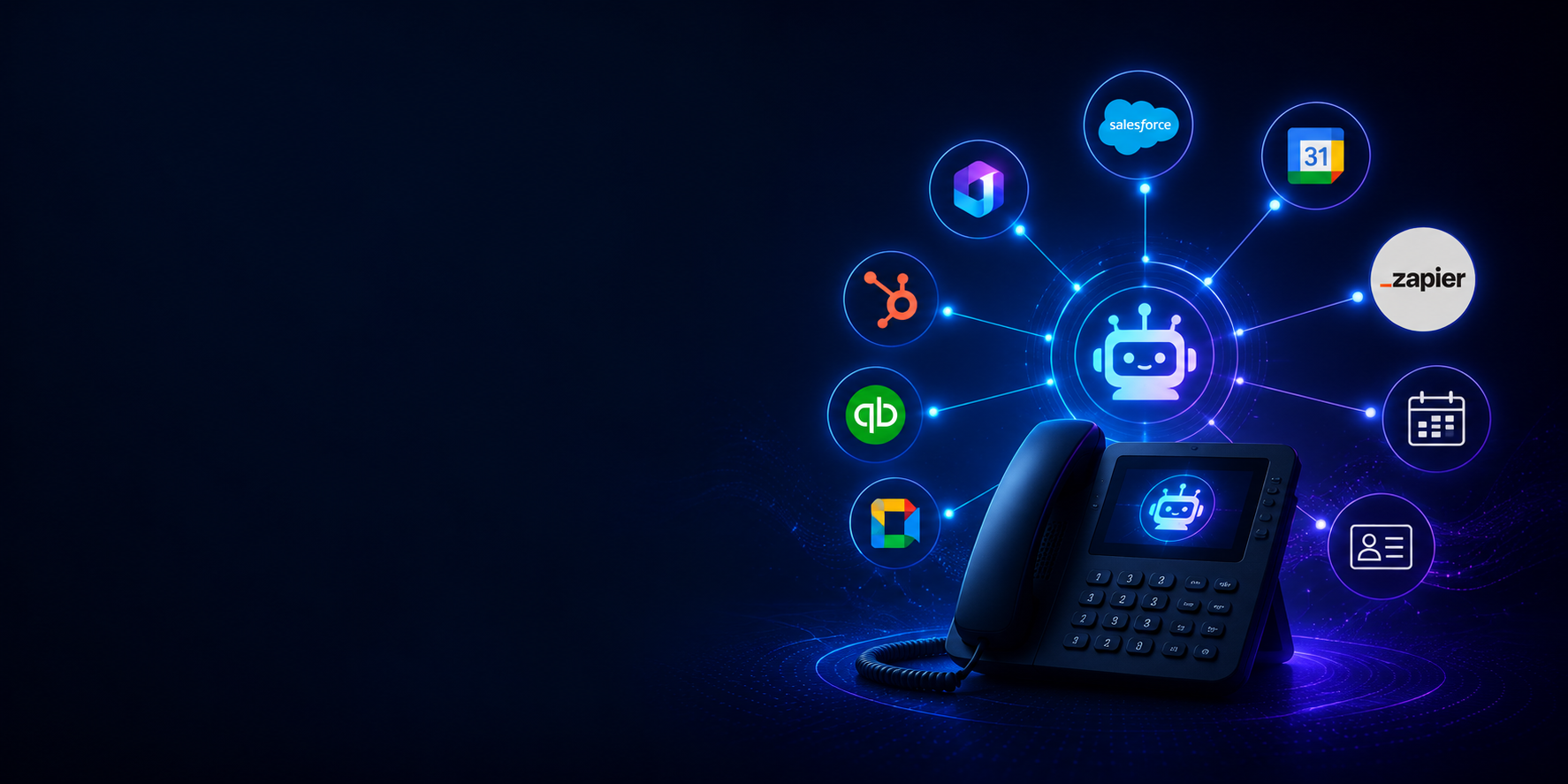
Yes. Modern cloud phone systems commonly integrate with AI receptionists, CRM platforms, business texting, and scheduling tools.
FREE BUSINESS RESOURCE
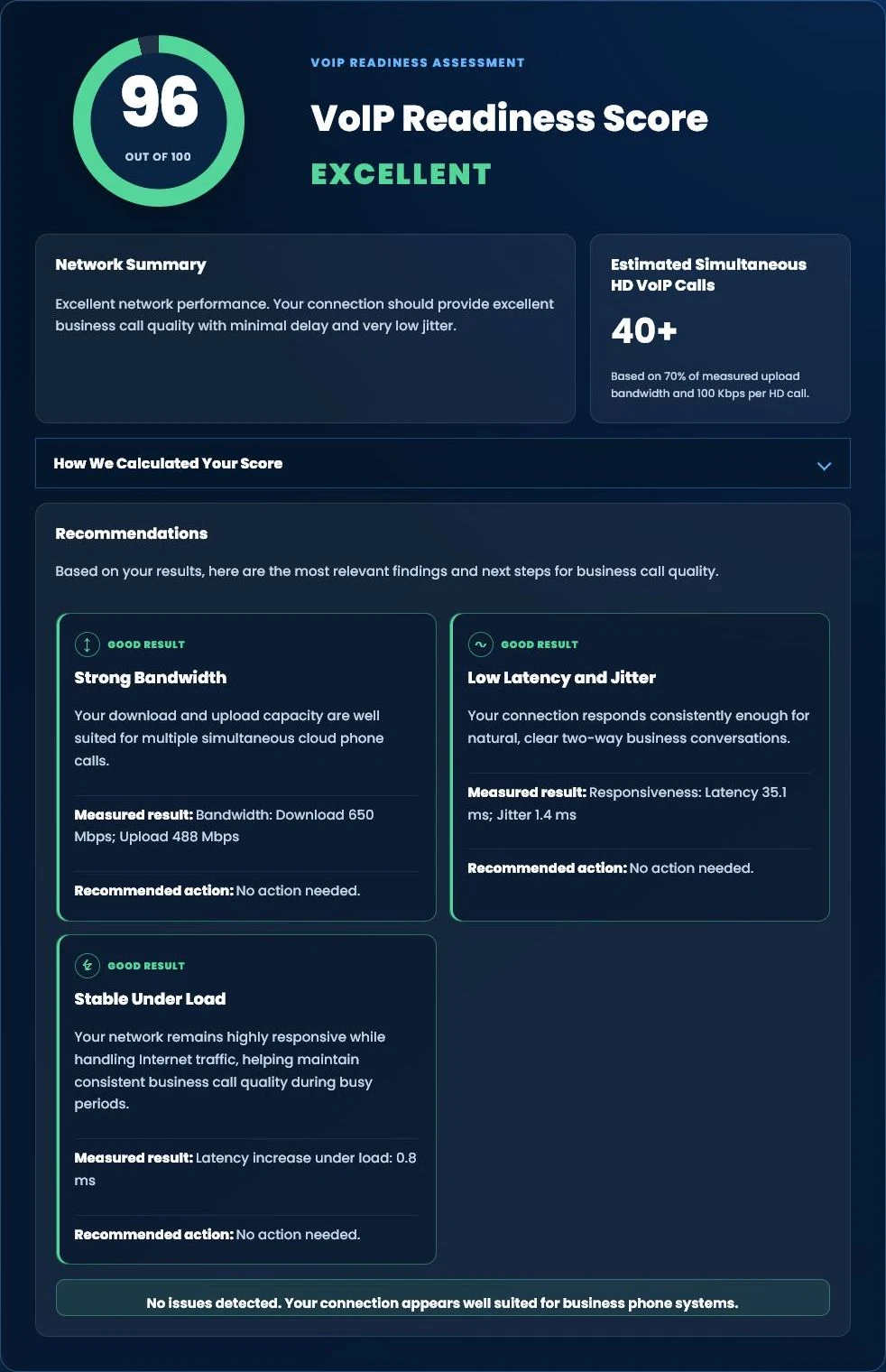
Test Your Internet for Business Phone Systems
Wondering whether your Internet connection is ready for cloud business phones?
Run our free Tier 1 VoIP Readiness Assessment to measure latency, jitter, network responsiveness and overall VoIP readiness in about one minute.
- VoIP Readiness Score
- Latency & Jitter Analysis
- Network Stability Assessment
- Estimated HD Phone Capacity