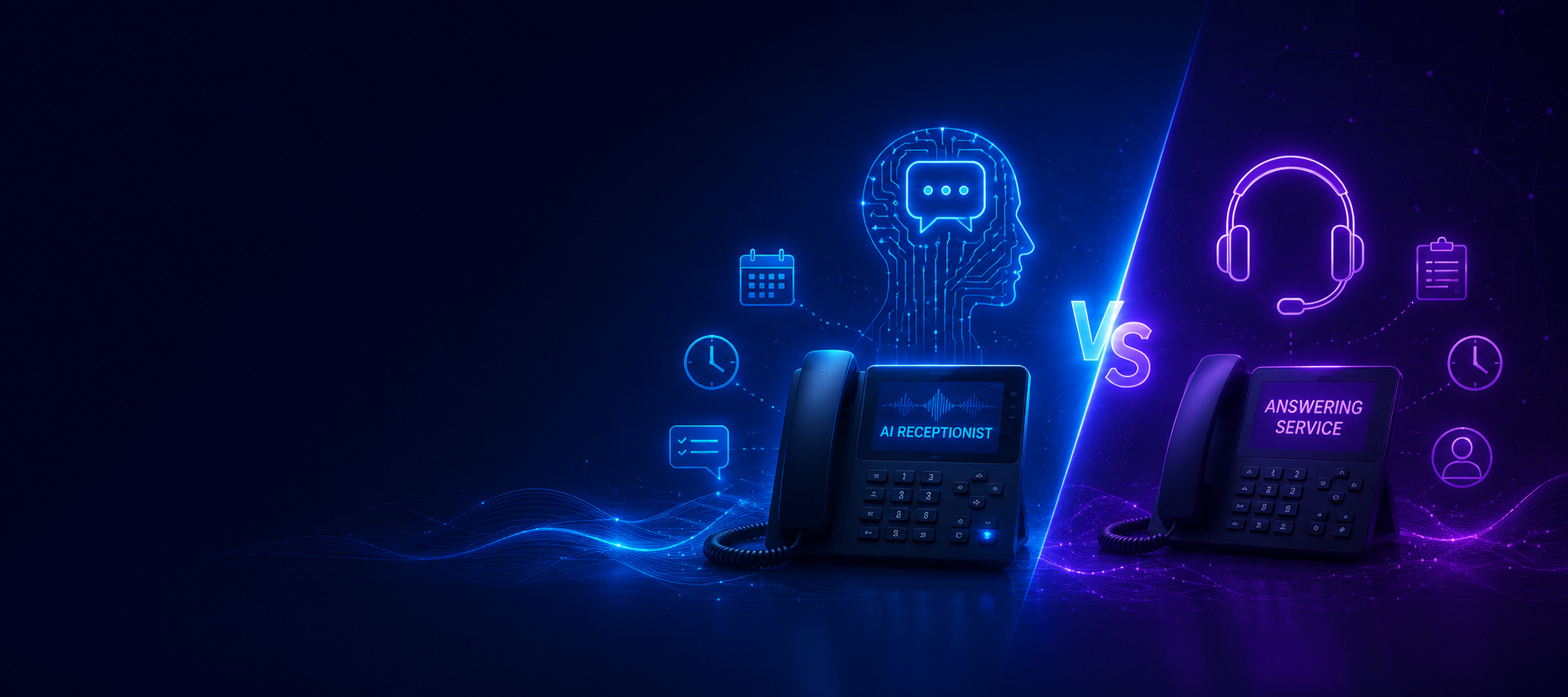
Both AI receptionists and answering services can keep calls from going to voicemail. The difference is how consistently they represent your business, how much they can accomplish during the call, and how easily they integrate with the way your company operates.
Many businesses begin using an answering service for a simple reason:
They cannot answer every call themselves.
The owner may be working in the field. That is especially common for contractors using an AI receptionist to cover calls while crews are on job sites. Employees may be helping customers. The office may be closed for the evening. Instead of sending every caller to voicemail, the business may use an outside answering service or an AI receptionist to handle the call.
That can be a meaningful improvement over missed calls.
But modern AI receptionists can now perform many of the same tasks—and often handle them with greater consistency, deeper business knowledge, and fewer handoffs.
So, which is the better choice?
The answer depends on what you need from the person—or system—answering your phone.
What Is an Answering Service?
An answering service uses live operators to answer calls on behalf of another business.
Depending on the service and plan, operators may:
- Greet callers
- Take messages
- Collect contact information
- Schedule appointments
- Transfer urgent calls
- Follow a basic script
- Provide after-hours coverage
Answering services have helped businesses avoid voicemail for decades.
For companies that simply need a live person to answer and document a call, they can still provide value.
The challenge is that the caller’s experience may depend heavily on which operator answers.
Different operators may speak differently, ask different follow-up questions, format notes differently, or interpret the business’s instructions differently.
That variability is where AI receptionists begin to stand apart.
What Is an AI Receptionist?
An AI receptionist is best understood as a virtual employee that answers your phone.
It can speak naturally with callers, understand what they need, answer questions, collect information, schedule appointments, route calls, and document the conversation.
Unlike a traditional answering service, the AI can be trained directly on your business.
It can learn from:
- Your website
- Company policies
- Product and service information
- Industry resources
- Custom instructions
- Your phone system
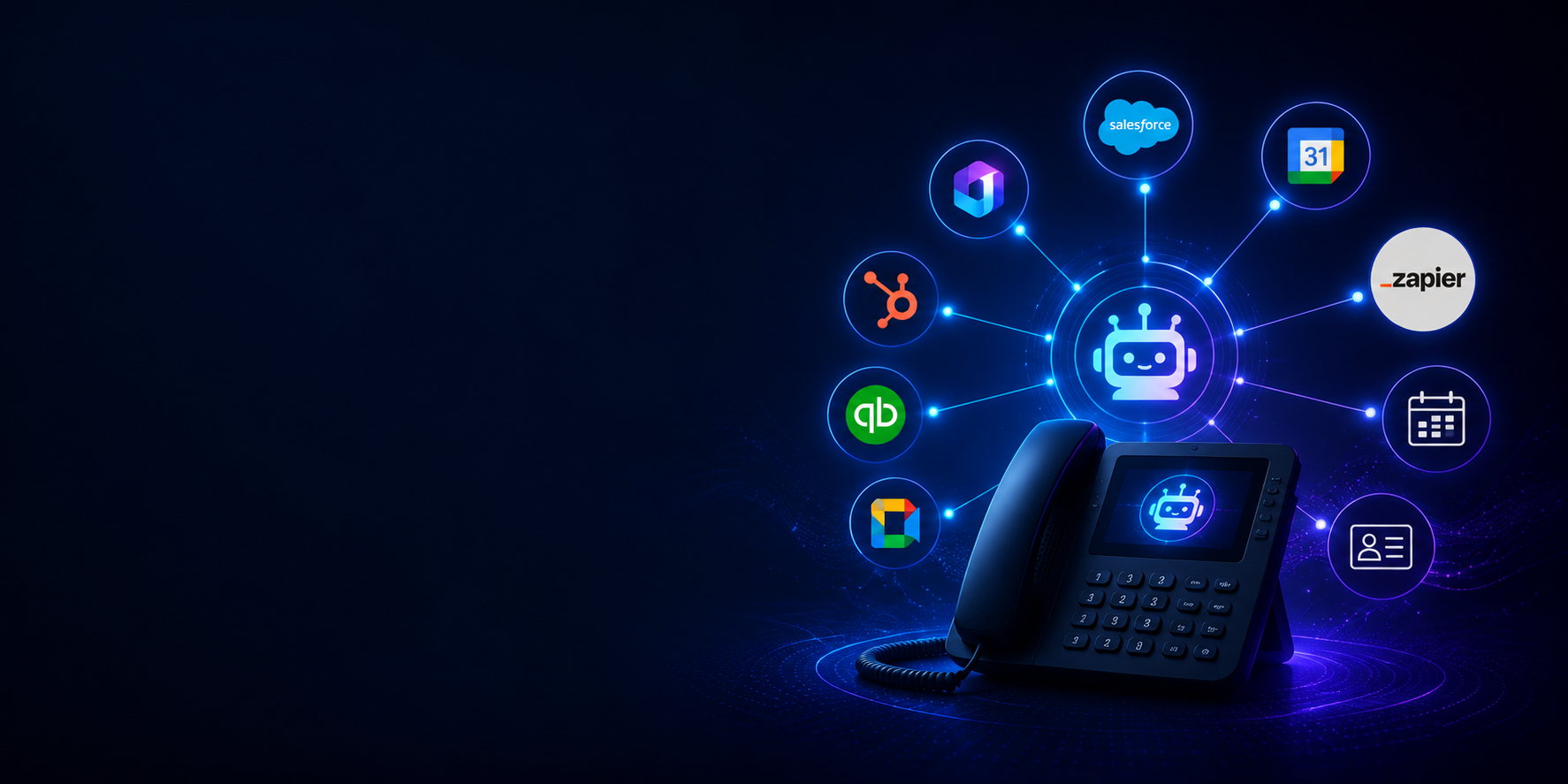
- Your CRM or other connected software
That allows it to do more than simply take a message.
It can become a knowledgeable extension of your team.
For a broader explanation, see our guide to AI Receptionists.
The Biggest Difference Is Consistency
Both an answering service and an AI receptionist can answer a phone.
The more important question is:
What experience does the caller receive after the phone is answered?
With a human answering service, every operator naturally works a little differently.
One operator may take detailed notes.
Another may record only the basics.
One may remember to set an appointment reminder.
Another may forget.
One may type the caller’s number correctly.
Another may make a simple transcription error.
None of this necessarily means the answering service is doing a poor job. It is simply the reality of relying on multiple people who each communicate and document information differently.
An AI receptionist follows the same process every time.
It asks the same required questions.
It applies the same routing rules.
It formats appointments consistently.
It creates structured summaries.
It provides a full transcript.
Every caller receives the same standard of service.
Customer Spotlight: Replacing an Overseas Answering Service
One small home-service company had minimal office staff.
During the day, employees were out performing service work, so most incoming calls were forwarded to an overseas answering service. The business owner generally answered calls personally only after hours.
The answering service kept calls from going straight to voicemail, but several problems developed.
The quality of the notes varied from one operator to another.
Some messages included everything the owner needed.
Others left out important details.
There were occasional misspellings and typographical errors, including incorrect callback numbers.
Customers also reported that some operators were difficult to understand.
The answering service placed appointments on the company calendar, but those appointments were not always formatted consistently. Some included reminders. Others did not. Details varied depending on the person who handled the call.
The company replaced the answering service with an AI receptionist.
The first improvement the owner noticed was the quality of communication.
Every appointment was created using the same format.
Every required reminder was included.
Every call summary contained the same categories of information.
The full transcript was available whenever the owner needed to review exactly what had been said.
Callback numbers were captured accurately.
Instead of wondering how a particular operator had handled the call, the business owner knew every caller followed the same reliable process.
Answering Service vs. AI Receptionist at a Glance
| Capability | Answering service | AI receptionist |
|---|---|---|
| Who answers | Rotating human operators | Consistent AI voice agent |
| Availability | Depends on provider and plan | 24/7 |
| Message quality | May vary by operator | Standardized summaries |
| Full transcript | Not always available | Included with every call |
| Business knowledge | Usually limited to a script | Trained on detailed business information |
| Appointment scheduling | Available, but execution may vary | Consistent workflow and formatting |
| Call routing | Usually rule-based | Intelligent, conversational routing |
| Language support | Depends on staffing | Naturally multilingual |
| CRM integration | Depends on service and platform | Available when supported and configured |
| Spam screening | Varies | Can screen spam, robocalls, and sales calls |
| Customization | Scripts and operator instructions | Knowledge, guardrails, personality, workflows, and integrations |
| Caller escalation | Transfer or message | Transfer, message, or intelligent escalation |
AI Receptionists Know More About Your Business
Most answering-service operators are working with a script.
That script may include:
- Business hours
- A list of employees
- Basic routing instructions
- A few common questions
- Information to collect from callers
That is often enough to take a message, but it limits how much help the operator can provide.
An AI receptionist can be trained on much more detailed business information.
For example, it may be able to explain:
- Services the business provides
- Service-area boundaries
- General pricing information
- Appointment requirements
- Company policies
- Product information
- Frequently asked questions
- What information a new client should provide
When connected to a CRM or scheduling system, it may also be able to retrieve information specific to the caller.
That could include:
- Existing appointments
- Account status
- Open balances
- Previous interactions
- Customer records
- Available scheduling times
The AI should only access and discuss information it is authorized to use, but when configured correctly, it can provide a much more complete caller experience than a basic message-taking service.
AI Creates Better Call Documentation
A message from an answering service is only as useful as the notes the operator creates.
If the caller gives five important details and the operator records three, the business must either call back for clarification or begin the next conversation without the full picture.
An AI receptionist can provide both:
- A structured call summary
- A complete call transcript
The summary gives employees the information they need at a glance.
The transcript allows them to review the complete conversation if something is unclear.
That combination is particularly useful when:
- The caller describes a complicated issue
- Several names or numbers are involved
- The business needs an exact record
- An employee must review the caller’s wording
- A dispute or misunderstanding occurs later
It removes much of the uncertainty from message taking.
Appointment Scheduling Is More Consistent
Both answering services and AI receptionists can schedule appointments.
The difference is often in execution.
A human operator may need to remember:
- Which appointment type to select
- How long the appointment should be
- Which employee should receive it
- Which reminder should be applied
- What notes should be included
- Which calendar format the business prefers
With multiple operators, small differences are common.
An AI receptionist can follow one defined workflow every time.
It can:
- Collect required intake information
- Select the correct appointment type
- Place the appointment on the appropriate calendar
- Add the agreed reminder
- Format the notes consistently
- Confirm the details with the caller
- Notify the business
That consistency reduces administrative cleanup and prevents important details from being lost between the call and the appointment.
AI Receptionists Are Naturally Multilingual
An answering service’s language capabilities depend on which employees are available.
Some services offer multilingual operators, but support may be limited to certain languages, schedules, or plan levels.
AI receptionists can often communicate naturally in many languages without routing the caller to a separate language queue.
In one memorable call, a conversation began in English.
During the call, the customer briefly spoke Spanish to someone in the background.
The AI recognized the change and naturally continued in Spanish.
The caller was surprised and spent the rest of the conversation switching between English and Spanish to see whether the AI could keep up.
It did.
That kind of flexibility can help businesses serve a wider range of customers without maintaining separate multilingual staffing.
What About Voice Quality?
Voice quality varies widely among answering services.
Some operators are polished and easy to understand.
Others may have inconsistent audio quality, distracting background noise, or speech patterns that are difficult for some callers to follow.
Modern AI receptionists use a consistent, professional voice.
They do not sound rushed.
They do not have poor phone connections from one call to the next.
They do not become tired near the end of a shift.
They speak at the same volume and pace throughout the day.
Tier 1 Telecom does not try to hide the fact that the caller is speaking with AI. The agent identifies itself appropriately at the start of the conversation.
Transparency matters.
If a caller is uncomfortable or asks for a person, the AI can transfer the call immediately.
The goal is not to fool anyone.
The goal is to provide fast, clear, professional service.
Can AI Handle More Than Message Taking?
Yes.
This is one of the largest differences between an AI receptionist and a traditional answering service.
An answering service usually collects information and passes it to the business.
An AI receptionist may be able to complete the task during the original call.
Depending on its configuration and integrations, it can:
- Schedule or change appointments
- Qualify leads
- Route calls intelligently
- Answer detailed questions
- Collect client intake information
- Update existing customer records
- Look up account information
- Request payment
- Send confirmation messages
- Filter spam and robocalls
- Escalate urgent calls
That reduces the number of callbacks your team must make.
The caller gets help sooner, and employees receive fewer routine interruptions.
AI Filters Calls Before They Reach Your Team
Not every incoming call deserves an employee’s immediate attention.
Businesses receive:
- Robocalls
- Telemarketing calls
- Wrong numbers
- Unqualified sales calls
- Spam
- Repetitive routine questions
An answering service may document many of those calls and send them to the business along with legitimate customer messages.
An AI receptionist can identify and filter many of them.
That helps ensure employees are interrupted by the calls that genuinely require their attention.
For many businesses, the unexpected benefit is not only that more customer calls are answered.
It is that the office becomes quieter.
Can an AI Receptionist Make Mistakes?
Yes.
AI is not perfect, and no responsible provider should claim otherwise.
The important issue is how the AI is configured to respond when it does not know something.
Tier 1 Telecom places guardrails around AI agents so they are instructed not to guess.
If the answer is available in approved business information, the AI can provide it.
If the answer is not available, it should say so.
It can then:
- Transfer the caller
- Take a detailed message
- Include the unanswered question in the notes
- Ask the caller how they would like to proceed
Inaccurate information is most likely when the source material itself is outdated or incorrect, such as an old policy or price still displayed on the business’s website.
That is why the quality of the training material matters.
The objective is not to create an agent that pretends to know everything.
It is to create one that knows its limits.
What Happens If an Answering Service Goes Down?
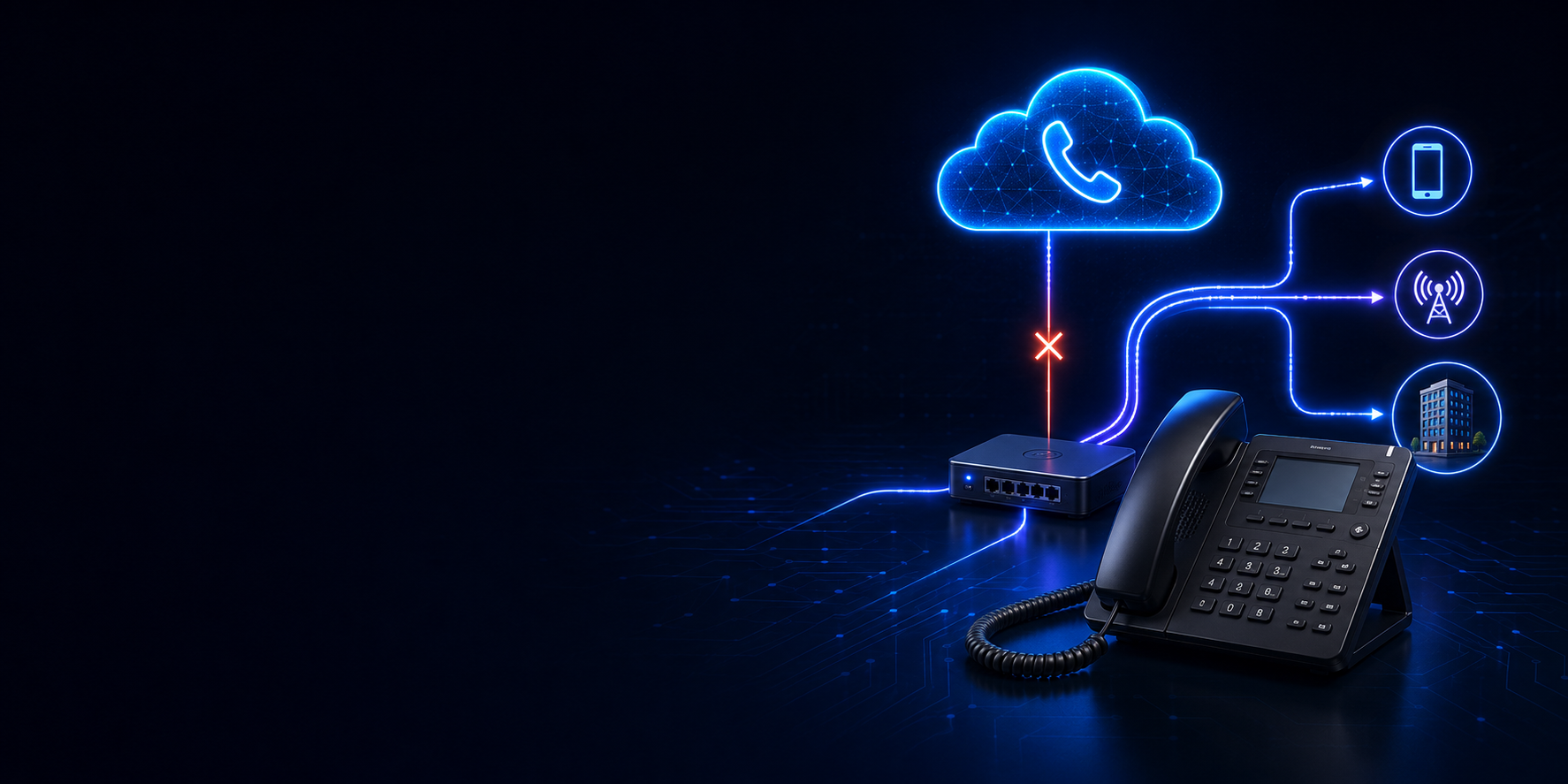
An answering service is another outside dependency in your call path. If the service has a platform outage, carrier problem, staffing disruption, internet failure, or other operational issue, calls may be delayed, sent somewhere unexpected, or go unanswered unless a backup route has been planned in advance.
The exact result depends on how your phone numbers and call routing are configured. A well-designed setup should not assume one answering destination will always be available.
Possible backup options include:
- Sending calls back to your internal staff
- Routing calls to mobile or on-call employees
- Sending calls to another office or location
- Using voicemail as a temporary fallback
- Routing calls to a secondary answering destination
- Using an AI receptionist as the primary or backup answering layer
The important point is that failover should be configured before an outage occurs. If the answering service is unavailable and the only plan is for someone to log in and manually change routing afterward, the business may already be missing calls.
Is an AI receptionist immune to outages?
No. An AI receptionist is still a technology service and can depend on cloud infrastructure, phone carriers, internet connectivity, integrations, and other systems. The advantage is not that AI can never fail. The advantage is that an AI receptionist can often be integrated directly into a cloud phone system with defined routing rules, alternate destinations, and failover paths that can be tested in advance.
Businesses evaluating either option should ask a practical continuity question: What happens to my callers if this answering layer is unavailable? The answer should identify the next destination, how quickly the change occurs, and whether the backup process has actually been tested.
For a broader explanation of cloud-phone failover and alternate routing, see What Happens to a Business Phone System When the Internet Goes Down?
When Might an Answering Service Still Be the Better Choice?
There are very few situations where an answering service clearly makes more sense than a properly configured AI receptionist.
One possible exception would be a business that depends on an older or highly customized CRM or operational platform that cannot be integrated with modern systems.
If a particular answering service already has direct access to that closed platform and the AI cannot access the information needed to perform the job, retaining the answering service could be practical.
That situation has not personally arisen in our deployments, but older or proprietary systems undoubtedly exist.
Another business may simply prefer live human operators as a matter of policy.
That preference is valid, even if the operational capabilities of AI are stronger.
The decision should be based on the business’s actual requirements—not on pressure to adopt technology.
What If a Caller Wants a Human?
They can ask for one.
A well-designed AI receptionist should never trap callers in an automated conversation.
The agent can be instructed to transfer the call immediately when someone requests a live person.
It can also escalate calls automatically when:
- A complaint requires management
- The situation is sensitive
- An executive decision is needed
- The caller is upset
- The issue falls outside the AI’s authority
- The necessary system or information is unavailable
AI is most effective when it handles the routine workload and recognizes when a person should take over.
Which One Costs Less?
Price varies by answering service, call volume, usage, and level of support.
A useful comparison should include more than the monthly invoice.
Consider the operational cost of:
- Inconsistent notes
- Incorrect callback information
- Missed appointment reminders
- Follow-up calls for missing details
- Limited business knowledge
- Language limitations
- Employee time spent reviewing unclear messages
- Customers who do not receive immediate answers
An answering service may appear inexpensive if it is judged only by the number of calls answered.
An AI receptionist may deliver greater value because it resolves more of the caller’s need during the initial conversation.
For Tier 1 Telecom’s current AI pricing, see How Much Does an AI Receptionist Cost?.
Which Is Better for a Small Business?
For many small businesses, an AI receptionist provides more capability with less variability.
This is especially true when the business:
- Has limited office staff
- Frequently works away from the phone
- Receives after-hours calls
- Needs appointment scheduling
- Wants consistent lead intake
- Needs multilingual support
- Wants every call documented
- Receives frequent spam interruptions
- Wants to answer questions without calling every customer back
An answering service still improves on voicemail.
But an AI receptionist can often do considerably more than take a message.
Frequently Asked Questions
Can an AI receptionist completely replace an answering service?
In many cases, yes. It can answer calls, take messages, schedule appointments, qualify callers, route calls, answer questions, and send detailed summaries. The exact responsibilities depend on how the agent is configured.
Will callers know they are speaking with AI?
Tier 1 Telecom discloses that the caller is speaking with an AI agent at the beginning of the conversation. We believe transparency creates a better customer experience.
Can callers ask for a live employee?
Yes. The agent can transfer callers immediately when they request a person or when the conversation requires human judgment.
Can an AI receptionist answer calls after hours?
Yes. AI receptionists can provide 24/7 coverage, including evenings, weekends, holidays, overflow periods, or any schedule selected by the business.
Can AI schedule appointments?
Yes. When connected to an appropriate calendar or scheduling system, it can book, reschedule, or cancel appointments according to the business’s rules.
Can it integrate with my CRM?
Many modern CRMs can be integrated. The exact capabilities depend on the CRM, its available APIs, permissions, and the workflow the business wants to create.
Will AI provide a transcript of every call?
Tier 1 Telecom’s AI deployments can provide a structured summary and a complete call transcript, allowing employees to review either the highlights or the complete conversation.
Is AI less personal than an answering service?
That depends on how both are implemented. A knowledgeable, natural-sounding AI that answers immediately may provide a better customer experience than an operator who has limited information or inconsistent instructions. Callers can still be transferred to a person whenever needed.
The Real Comparison Is Consistency
The decision between an answering service and an AI receptionist is not simply a choice between humans and technology.
It is a choice between two different ways of representing your business.
An answering service can keep calls from reaching voicemail.
An AI receptionist can do that while also providing:
- Consistent communication
- Accurate documentation
- Full transcripts
- Reliable scheduling
- Detailed business knowledge
- Intelligent call routing
- Multilingual support
- 24/7 availability
The goal is not to eliminate the human side of your company.
It is to make sure every caller receives the same professional experience—whether they are the first caller on Monday morning or the last caller on Friday afternoon.
Ready to Compare Your Current Answering Service?
If your business already uses an answering service, you do not have to guess whether AI would be an improvement.
Tier 1 Telecom can review how your calls are currently handled, identify the information your team needs from each conversation, and demonstrate how an AI receptionist would manage the same workflow.
\nOrganizations serving Central Florida can also explore AI voice agents for Orlando businesses.
We can compare:
- Call handling
- Appointment scheduling
- Message quality
- Transcripts
- Routing
- Integrations
- Language support
- Monthly usage
The objective is not to replace something that is working well.
It is to determine whether your callers and employees could receive a more consistent experience.