Contractors don’t spend their day sitting behind a desk waiting for the phone to ring. They’re on job sites, meeting customers, ordering materials, managing crews, and driving between locations. That makes every missed call a potential missed opportunity.
Whether you operate an HVAC company, plumbing business, electrical contractor, roofing company, landscaping business, restoration company, or general contracting firm, one challenge is almost universal:
The phone keeps ringing when nobody is available to answer it.
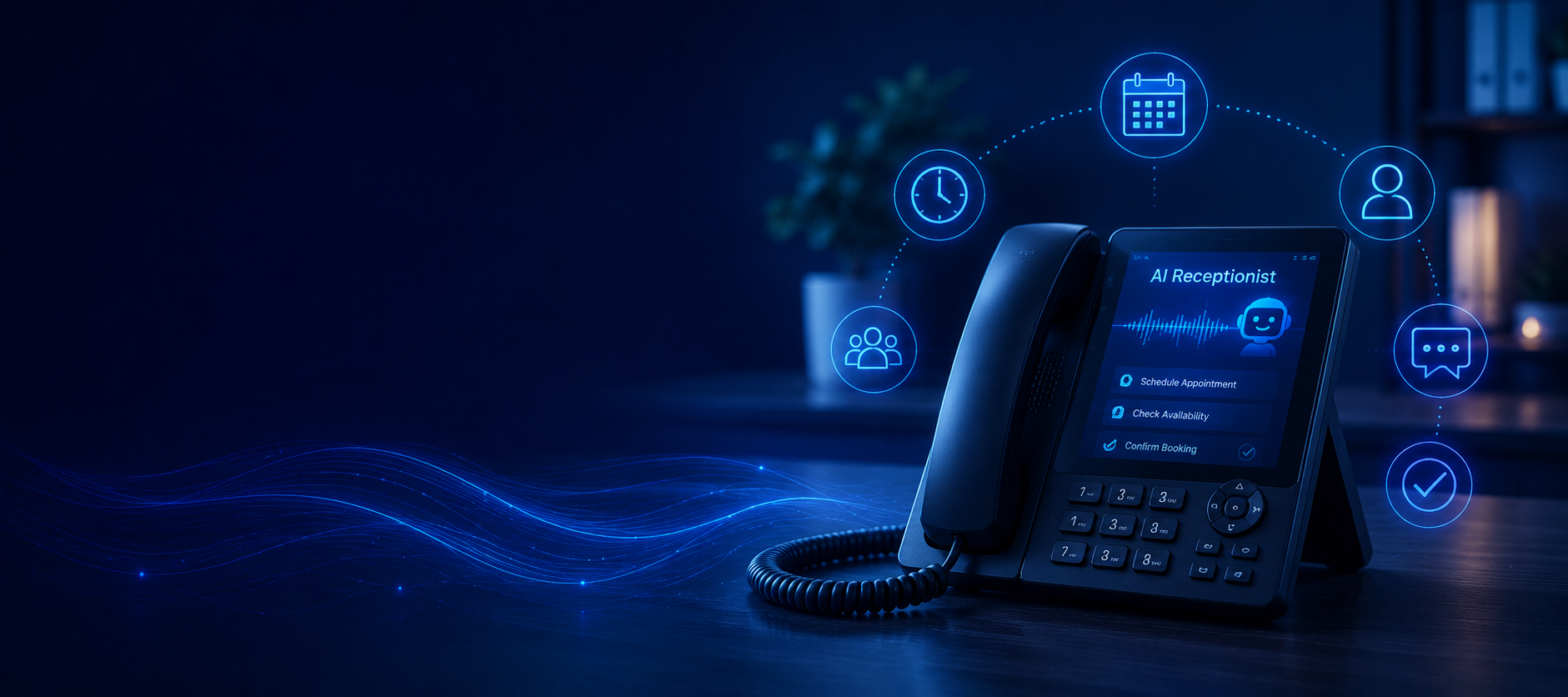
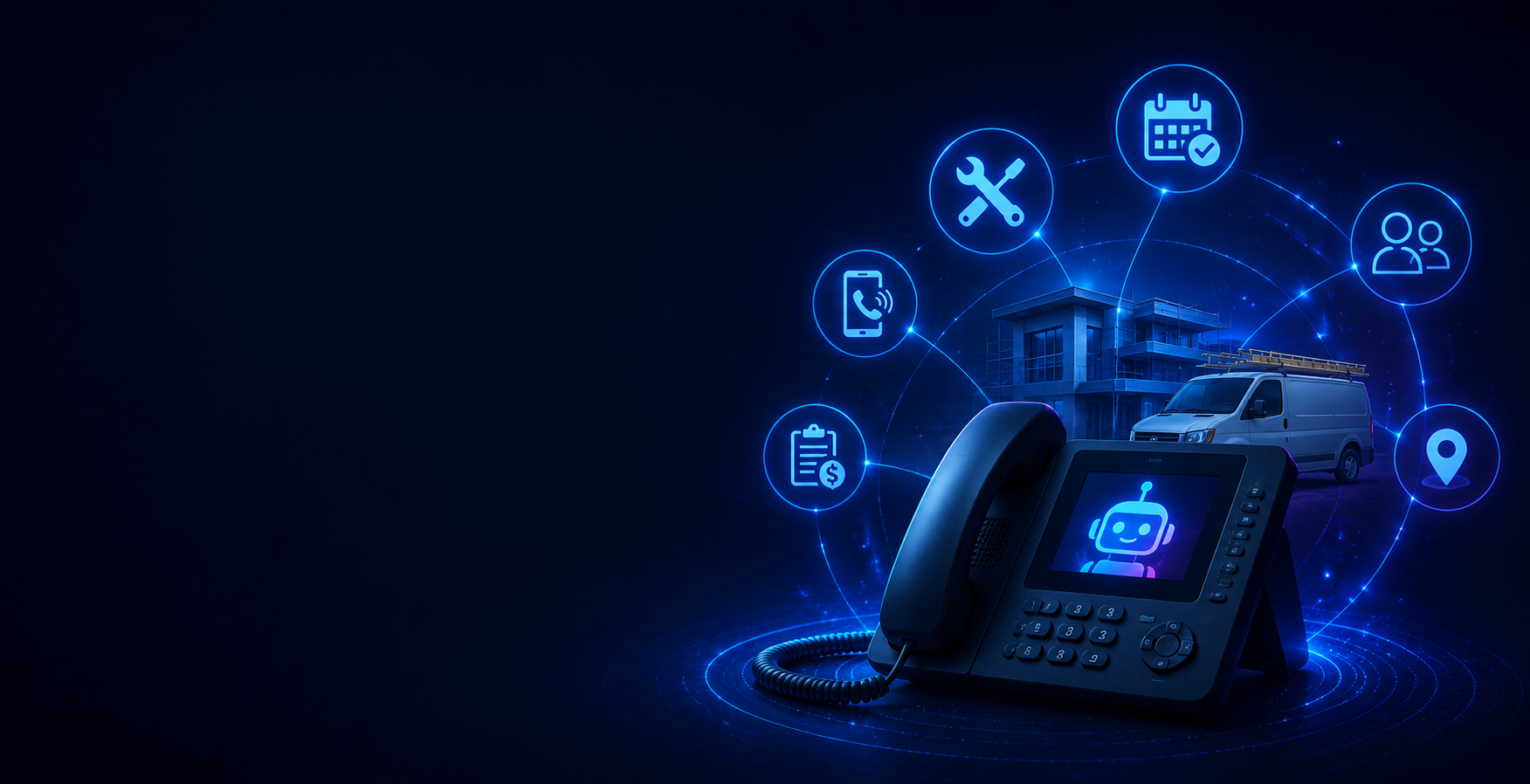
Quick answer: An AI receptionist for contractors is a voice agent that answers incoming calls 24/7, qualifies new leads, schedules estimates or service visits, identifies urgent calls, and routes customers according to your business rules. It helps crews stay focused on the job while callers still get an immediate response.
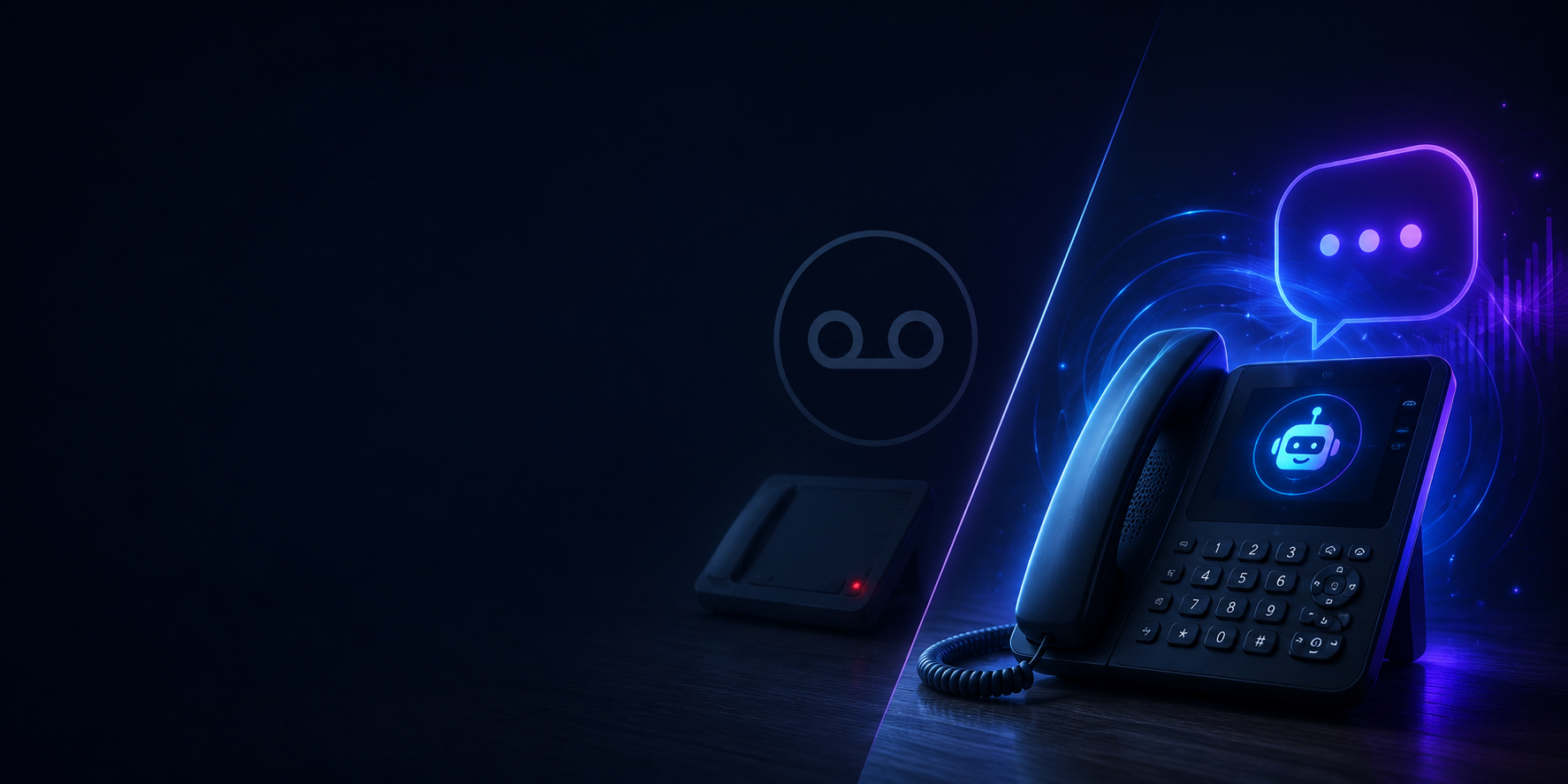
An AI receptionist can help capture new opportunities instead of sending every unanswered call to voicemail.
How Does an AI Receptionist Work for a Contractor?
The basic workflow is simple: the customer calls your normal business number, the AI receptionist answers in your company’s voice and follows the rules you define, and then it takes the next appropriate action.
1. Customer Calls
The AI answers immediately, even when your office is busy, after hours, or your entire crew is in the field.
2. AI Qualifies the Call
It can ask about the job type, service address, urgency, timeline, service area, and other details your team normally collects.
3. The Right Next Step Happens
The caller can be booked, transferred, routed to on-call staff, or summarized for follow-up based on your workflow.
That means a new lead does not have to wait for someone in the office to become available before the conversation moves forward.
Contractors Miss Calls for Good Reasons
Most contractors don’t ignore the phone. They’re simply busy.
They may be:
- Working on a roof
- Under a sink
- In an electrical panel
- Meeting a homeowner
- Driving between jobs
- Supervising a crew
- Loading materials
Stopping work every time the phone rings isn’t always practical—or safe.
Unfortunately, customers don’t know why nobody answered. They simply know the call wasn’t picked up.
Every Missed Call Could Be Revenue
Many contractor calls aren’t existing customers. They’re new opportunities.
Someone may be looking for:
- An estimate
- Emergency service
- A repair appointment
- Installation pricing
- Service availability
- A second opinion
If nobody answers, many callers simply move on to the next company.
An AI receptionist helps capture those opportunities immediately instead of sending them to voicemail.
Example: An Overflow Call While the Office Is Busy
This is an illustrative workflow to test with your team. A homeowner calls for an air-conditioning service visit while office staff are helping another customer.
- The AI collects the caller’s name, callback number, service address and a short description of the request.
- It checks your defined service area and asks the approved intake questions.
- A routine request is booked only through a supported scheduling connection and available appointment rules. Otherwise, it records a request for staff confirmation.
- A caller requesting urgent help follows your agreed on-call transfer path. If that destination does not answer, the agent uses the documented fallback and tells the caller what happens next.
- Your team receives the details through the configured workflow.
Test the normal call, an out-of-area request, a full calendar and an unanswered transfer before using this flow with customers.
Real Customer Examples Behind the Workflow
Just Chillin HVAC replaced one shared on-call cell phone with Tier 1 business phones connecting its office and field staff. Its story demonstrates business calling, voicemail to email and texting.
For live AI examples, Realty ONE Group Engage routes callers to agents by name, while Tax Americano uses calendar and CRM integration for intake and scheduling. Those workflows offer useful examples when planning a contractor configuration.
What Can an AI Receptionist Collect From a New Lead?
A contractor rarely needs only a caller’s name and phone number. The value comes from gathering enough information to help your team decide what should happen next.
Depending on the type of business, an AI receptionist can collect details such as:
- Customer name and callback number
- Service or project address
- Type of work requested
- Equipment or system involved
- Whether the issue is urgent
- Preferred appointment or estimate time
- Whether the property is inside your service area
- Existing-customer versus new-lead status
- Photos, text follow-up, or other information when the workflow supports it
That information can then be used to schedule the customer, transfer the call, notify the right person, or give your office a concise call summary for follow-up.
Answering Common Questions
Contractors receive many of the same questions every day.
For example:
- Do you service my area?
- Do you provide emergency service?
- How soon can someone come out?
- Do you install this equipment?
- Can I schedule an estimate?
- What are your business hours?
- Do you offer financing?
An AI receptionist can answer many of these routine questions using information specific to your business.
That saves time for both your employees and your customers.
Scheduling Estimates and Service Calls
One of the biggest advantages for contractors is appointment scheduling.
Instead of asking customers to leave a message, the AI can often:
- Schedule estimates
- Schedule service appointments
- Collect customer information
- Verify addresses
- Confirm appointment details
- Send reminders
By the time your employees arrive at the office—or finish their current job—the appointment may already be on the calendar.
Supporting Dispatch and On-Call Routing
Many contractor businesses rely on dispatchers to coordinate technicians. An AI receptionist doesn’t replace dispatch. It helps dispatch work more efficiently.
For example, it can:
- Collect service information before a dispatcher becomes involved
- Identify emergency or priority calls
- Route callers to the appropriate department
- Notify or transfer to on-call employees
- Apply different rules by time of day or call type
- Provide detailed notes or call summaries
That gives dispatchers better information before they even pick up the phone.
Want to Hear What This Sounds Like?
Tier 1 Telecom can demonstrate an AI voice agent handling a contractor-style call, including lead qualification, scheduling, transfers, and after-hours routing.
After-Hours Calls
Contractors don’t stop receiving calls after 5:00 PM.
Homeowners discover broken furnaces. Water heaters fail. Pipes burst. Air conditioners stop working.
Instead of directing every caller to voicemail, an AI receptionist can continue answering calls after hours.
Depending on your workflow, it may:
- Answer common questions
- Collect emergency information
- Notify the on-call technician
- Schedule appointments
- Take detailed messages
That creates a better customer experience while helping ensure urgent calls receive the attention they need.
Which Types of Contractors Benefit Most?
AI receptionists are useful anywhere calls arrive while the people who can answer them are also responsible for field work.
- HVAC companies: Capture no-cool and no-heat calls, book maintenance, and route emergencies.
- Plumbers: Identify leaks, water-heater issues, drain calls, and after-hours emergencies.
- Electricians: Collect project details, schedule estimates, and route urgent safety-related calls.
- Roofers: Qualify storm-damage and replacement leads while crews are on roofs or traveling between jobs.
- Restoration companies: Quickly identify water, fire, mold, or emergency-loss calls that may need immediate escalation.
- Landscapers and outdoor-service companies: Capture quote requests, property details, and recurring-service inquiries.
- General contractors and remodelers: Prequalify project inquiries, collect scope and location details, and schedule consultations.
The exact questions and routing rules should match the way your company actually sells and delivers service.
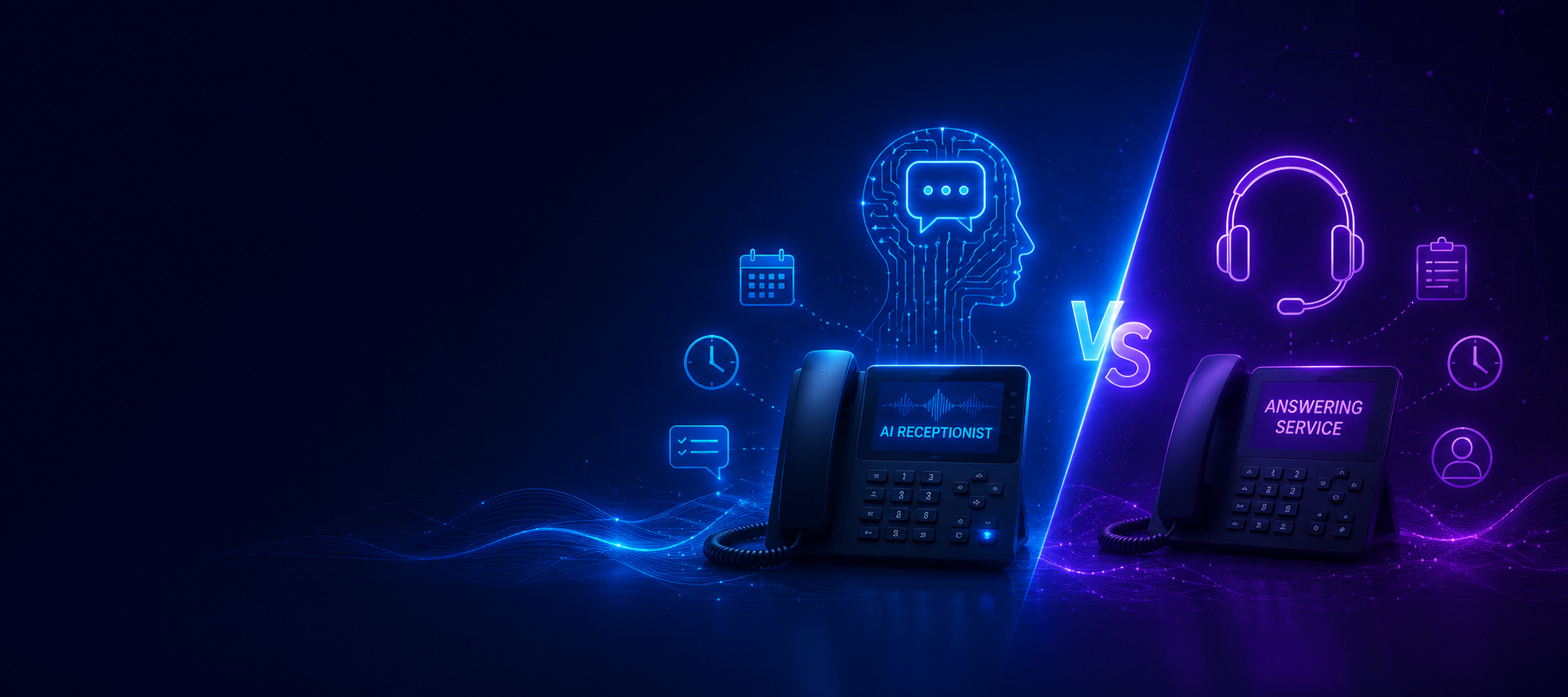
AI Receptionist vs. Answering Service for Contractors
A traditional answering service can provide a live person to answer calls, but the workflow often stops at taking a message or following a limited script.
An AI receptionist can be configured to do more of the repetitive front-office work automatically, including qualification, scheduling, routing, after-hours triage, and structured information capture.
That does not mean an AI solution is automatically better for every contractor. Some businesses prefer live answering for certain calls, while others use AI for first-line coverage and transfer important calls to employees.
For a deeper comparison, see AI Receptionist vs. Answering Service.
Working With Your Existing Systems
Many contractors already use software to manage customers and scheduling.
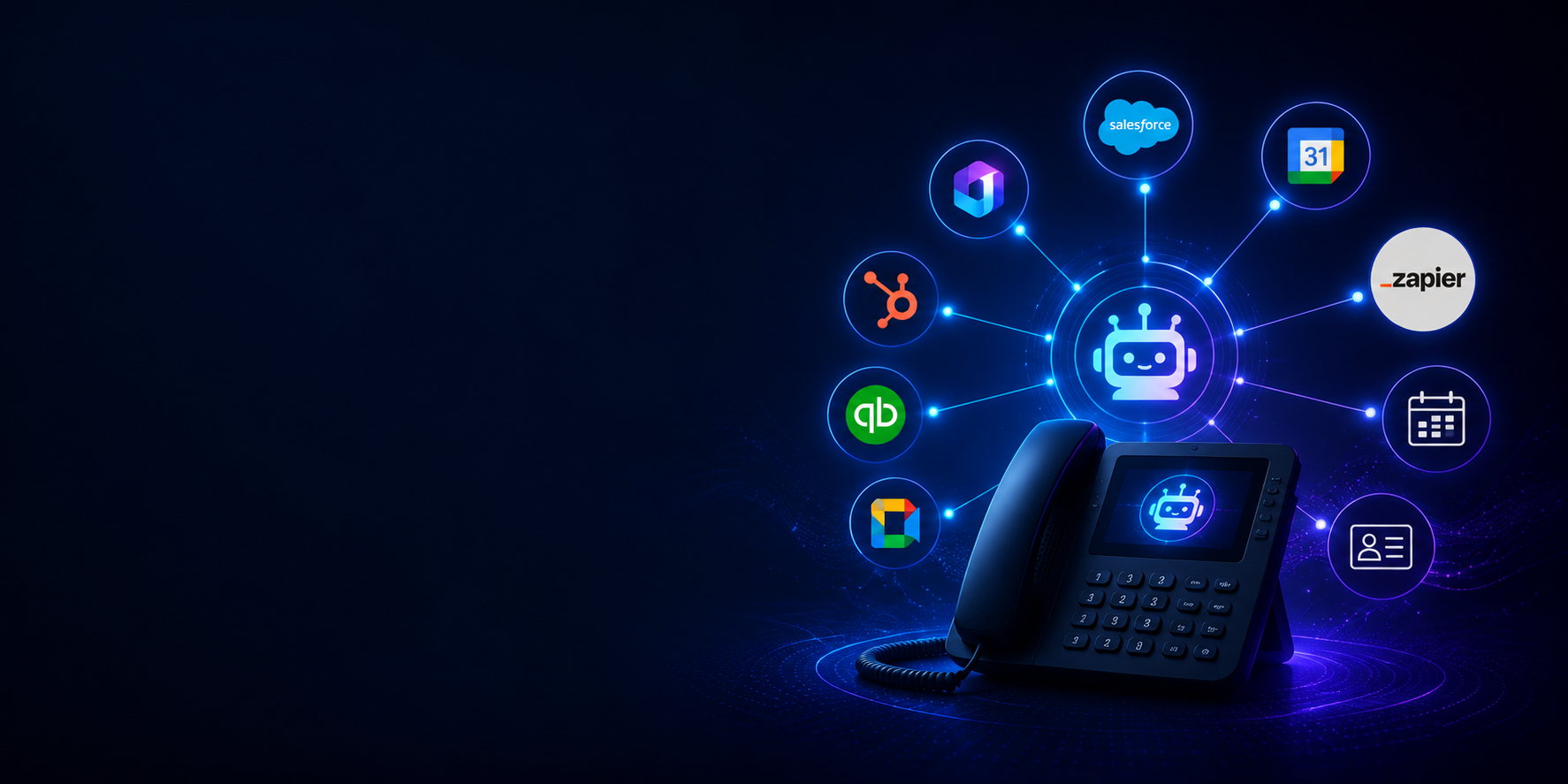
Depending on your environment, an AI receptionist may integrate with:
- ServiceTitan
- Jobber
- Housecall Pro
- Microsoft 365
- Google Workspace
- Other CRM and scheduling platforms
The goal isn’t to replace the tools you already use. It’s to make them more useful by automatically capturing information during customer conversations.
Try the Demo, Then Test Your Own Call Flow
Try Tier 1’s live AI voice demo to hear the conversational experience. For a contractor-specific demonstration, bring one routine service request, one scheduling request and one after-hours transfer scenario. The public demo is a demonstration, not your company’s live dispatch line.
What Goes Into an AI Receptionist Quote?
Choose after-hours or overflow coverage, intake and scheduling, or a workflow connected to your CRM. Your quote should identify expected call minutes and overage, setup, ongoing management, number routing and any integration work. We confirm the software access and supported actions before promising a connection to a particular contractor platform.
Request a contractor AI demo and quote, or explore Tier 1’s managed business phone systems nationwide.
Contractors Need More Time in the Field
Every minute spent answering routine phone calls is a minute not spent serving customers.
An AI receptionist helps reduce those interruptions so your employees can stay focused on completing projects, serving customers, managing crews, and growing the business while the AI handles many of the repetitive conversations that arrive throughout the day.
Frequently Asked Questions
How does an AI receptionist work for a contractor?
It answers the contractor’s business line, talks with the caller in real time, follows the company’s rules, gathers job details, and then schedules, routes, transfers, or records the call based on the requested service and urgency.
Can an AI receptionist schedule estimates?
Yes. Depending on your scheduling workflow, it can collect customer information and schedule estimate appointments.
Can it answer after hours?
Yes. AI receptionists are available 24 hours a day and can continue helping customers when your office is closed.
Can it handle emergency service calls?
It can identify emergency situations, collect information, and follow your after-hours routing procedures.
Can it work with contractor software?
Many contractor businesses use platforms such as ServiceTitan, Jobber, Housecall Pro, Microsoft 365, and Google Workspace. Available integrations depend on your specific software.
Does it replace my office staff?
No. It reduces routine interruptions so your office staff can focus on more complex customer needs.
Will customers know they’re talking to AI?
That depends on how your solution is configured. Many businesses choose to be transparent, while others focus on creating a smooth, helpful customer experience regardless of the technology involved.
Better Customer Service Starts With Answering the Phone
Most contractors don’t lose business because they provide poor service. They lose opportunities because they simply can’t answer every call while running a busy business.
An AI receptionist helps bridge that gap. It answers immediately, gathers the right information, schedules appointments, and supports your team without replacing the personal relationships that make your business successful.
For contractors, that can mean fewer missed opportunities and a better experience for every customer who calls.
Ready to See How It Works?
Wondering whether an AI receptionist is a good fit for your contracting business?
We’ll show you how it can:
- Answer incoming calls
- Schedule estimates
- Capture and qualify new leads
- Support dispatch and on-call routing
- Handle after-hours inquiries
- Integrate with the systems you already use
Every contracting business operates differently.
We’ll help configure an AI receptionist that fits the way your team works. Call (866) 808-4371 or contact Tier 1 Telecom.