HVAC companies have one of the toughest call-answering problems in home services: the phone often rings hardest when technicians and office staff are already overloaded.
Heat waves, cold snaps, seasonal tune-up campaigns, and after-hours failures can create sudden spikes in calls. A missed call during those periods is often more than an inconvenience—it may be a lost service job.
An AI receptionist for contractors can be configured specifically for HVAC workflows so callers receive an immediate response even when dispatchers and technicians are busy.
Quick answer: An AI receptionist for HVAC companies can answer calls 24/7, identify no-cool and no-heat emergencies, collect equipment and address details, schedule service or estimate appointments, answer common questions, and route urgent calls to on-call staff based on your rules.
How an AI Receptionist Works for an HVAC Company
The goal is not to replace your dispatcher or office staff. The goal is to make sure every caller gets through the first layer of intake immediately.
- The customer calls your normal business number. The AI answers in real time, including during overflow or after hours.
- The AI determines why they are calling. It can ask whether the issue is no cooling, no heat, maintenance, replacement, a new estimate, an existing appointment, or another service need.
- The call follows the correct workflow. Depending on your setup, the caller can be scheduled, transferred, routed to on-call staff, or documented for follow-up.
This helps keep routine calls from interrupting technicians while making urgent calls easier to identify quickly.
Qualifying HVAC Calls Before Dispatch Gets Involved
A good HVAC intake process collects more than a name and phone number. An AI receptionist can be configured to ask for information such as:
- Service address and ZIP code
- No-cool, no-heat, maintenance, repair, or replacement request
- Whether the system is completely down or still operating
- Residential or commercial property
- Existing customer or new customer
- Equipment type or brand when relevant
- Preferred appointment time
- Whether the customer is inside your service area
That information can be placed into a call summary, passed to dispatch, or used in a scheduling workflow depending on the systems your company uses.
Handling No-Cool and No-Heat Emergency Calls
HVAC demand is highly seasonal. During a Florida heat wave, a failed air conditioner can generate the kind of urgent call that customers will place to several companies until somebody answers.
An AI receptionist can identify the urgent nature of the call and follow your escalation policy. For example, it may collect the service address, confirm whether the system is completely down, determine whether the caller is an existing maintenance-plan customer, and then route the call to the appropriate on-call person.
The exact rules should be defined by your company. The AI should not make technical safety decisions that belong to a licensed technician; its role is to collect the right information and move the caller to the right next step.
Hear an AI Voice Agent Handle an HVAC Call
Tier 1 Telecom can demonstrate how an AI agent handles lead qualification, scheduling, transfers, and after-hours escalation for an HVAC-style call.
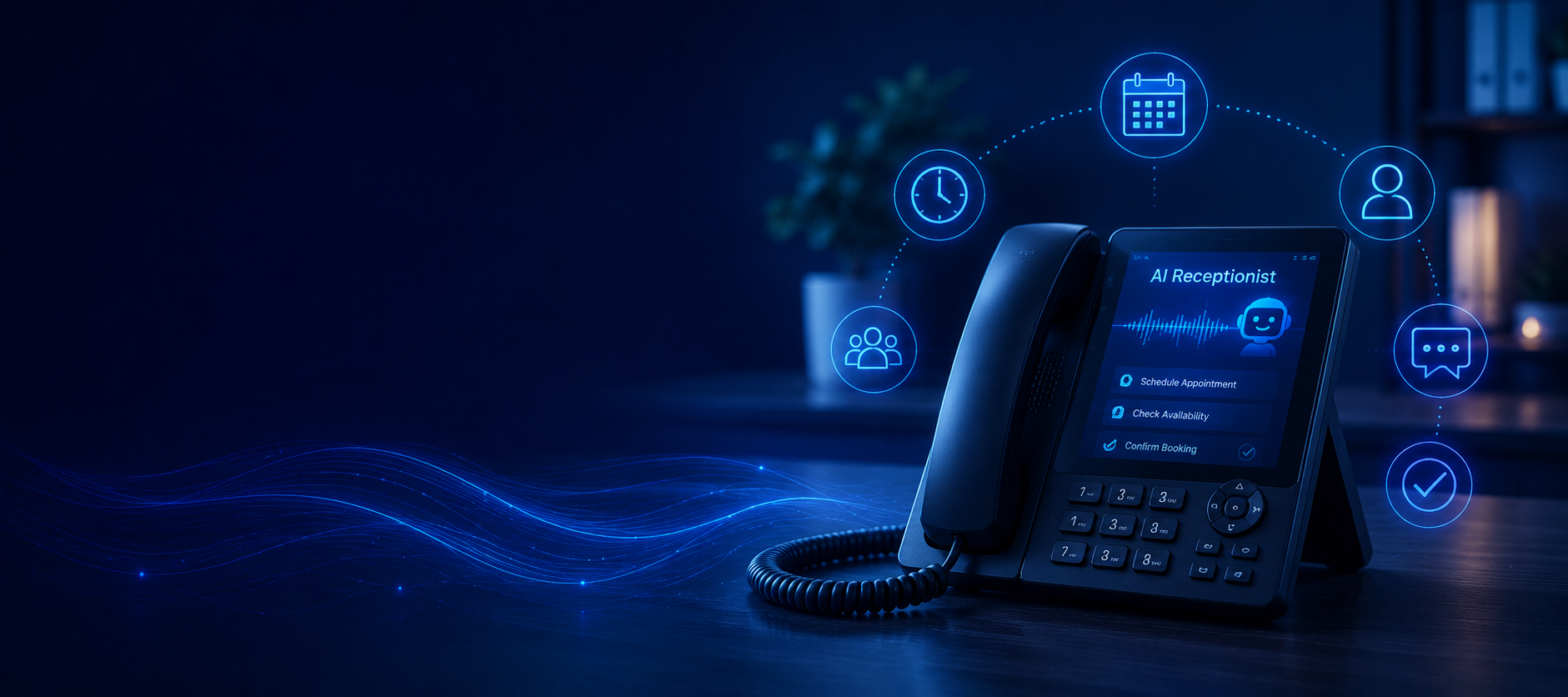
Scheduling Service Calls, Estimates, and Maintenance
HVAC offices spend a large amount of time coordinating appointments. Depending on the scheduling tools and integrations available, an AI receptionist can help with:
- Service appointments
- Replacement estimates
- Maintenance and tune-up visits
- Appointment confirmations
- Basic rescheduling requests
- Collecting information before the technician arrives
For a deeper look at appointment workflows, see Can an AI Receptionist Schedule Appointments?
After-Hours and On-Call Routing
HVAC companies often need different call handling after the office closes. Routine maintenance requests can wait for the next business day, while an emergency may need immediate escalation.
An AI receptionist can apply different rules by time of day and by call type. It can answer common questions, collect a detailed message, schedule an available appointment, or transfer an urgent call to the designated on-call technician.
This can reduce the number of unnecessary after-hours interruptions while still giving genuine emergency callers a clear path forward.
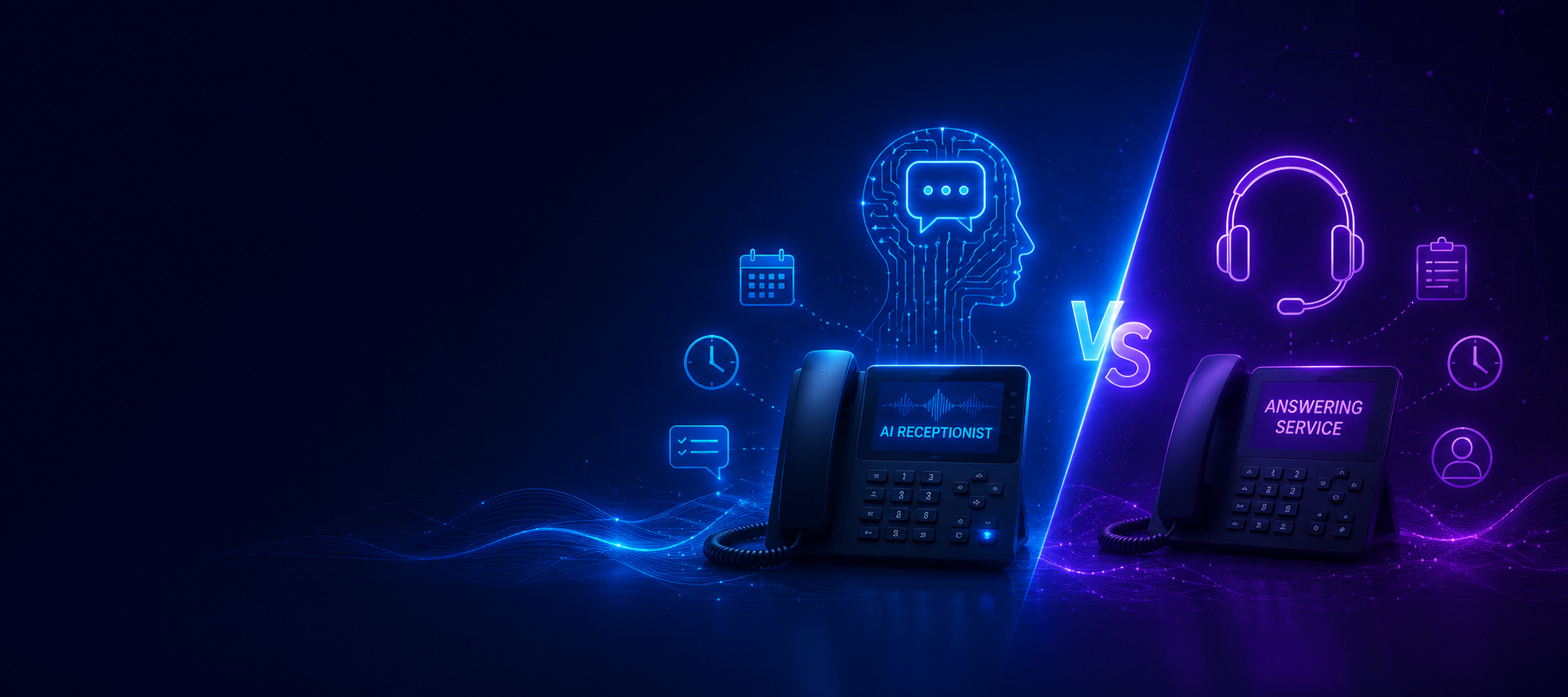
AI Receptionist vs. Answering Service for HVAC
A traditional answering service can keep HVAC calls from going straight to voicemail, but many services are primarily designed to take a message and pass it along.
An AI receptionist can be configured around a more structured HVAC workflow: qualify the call, confirm the service area, collect system details, schedule where appropriate, and route based on urgency.
Some HVAC companies will still prefer a live answering service for certain situations. Others may use AI for first-line coverage and transfer calls to employees when a person is needed. See our full AI Receptionist vs. Answering Service comparison.
Working With Your HVAC Software and Phone System
The most useful AI receptionist is one that fits into the tools your company already uses. Depending on the platform and available integrations, that may include CRM, dispatch, calendars, business texting, and cloud phone-system workflows.
Learn more about AI receptionist CRM integration and our broader guide to phone systems for HVAC, plumbing, and electrical companies.
Frequently Asked Questions
Can an AI receptionist answer HVAC calls after hours?
Yes. It can answer 24/7 and follow different after-hours rules for routine calls, emergency calls, scheduling, messages, or transfers.
Can it identify a no-cool or no-heat emergency?
It can ask the questions you define, identify the caller’s stated problem, collect the required details, and follow your escalation workflow. Technical diagnosis should remain with qualified HVAC staff.
Can an AI receptionist schedule HVAC service calls?
Yes, when the scheduling workflow and integration support it. It can also collect appointment details and prepare the call for office follow-up.
Will it replace my dispatcher?
No. The best use is usually to reduce repetitive intake work and give dispatch better information before an employee becomes involved.
Can it route maintenance-plan customers differently?
Potentially. If your system can identify or ask about customer status, the AI can follow different routing rules based on the information available.
Stop Letting Busy Season Send Good Calls to Voicemail
Tier 1 Telecom can build an AI call flow around the way your HVAC company actually handles service, estimates, dispatch, and after-hours calls.
(866) 808-4371