The Short Answer
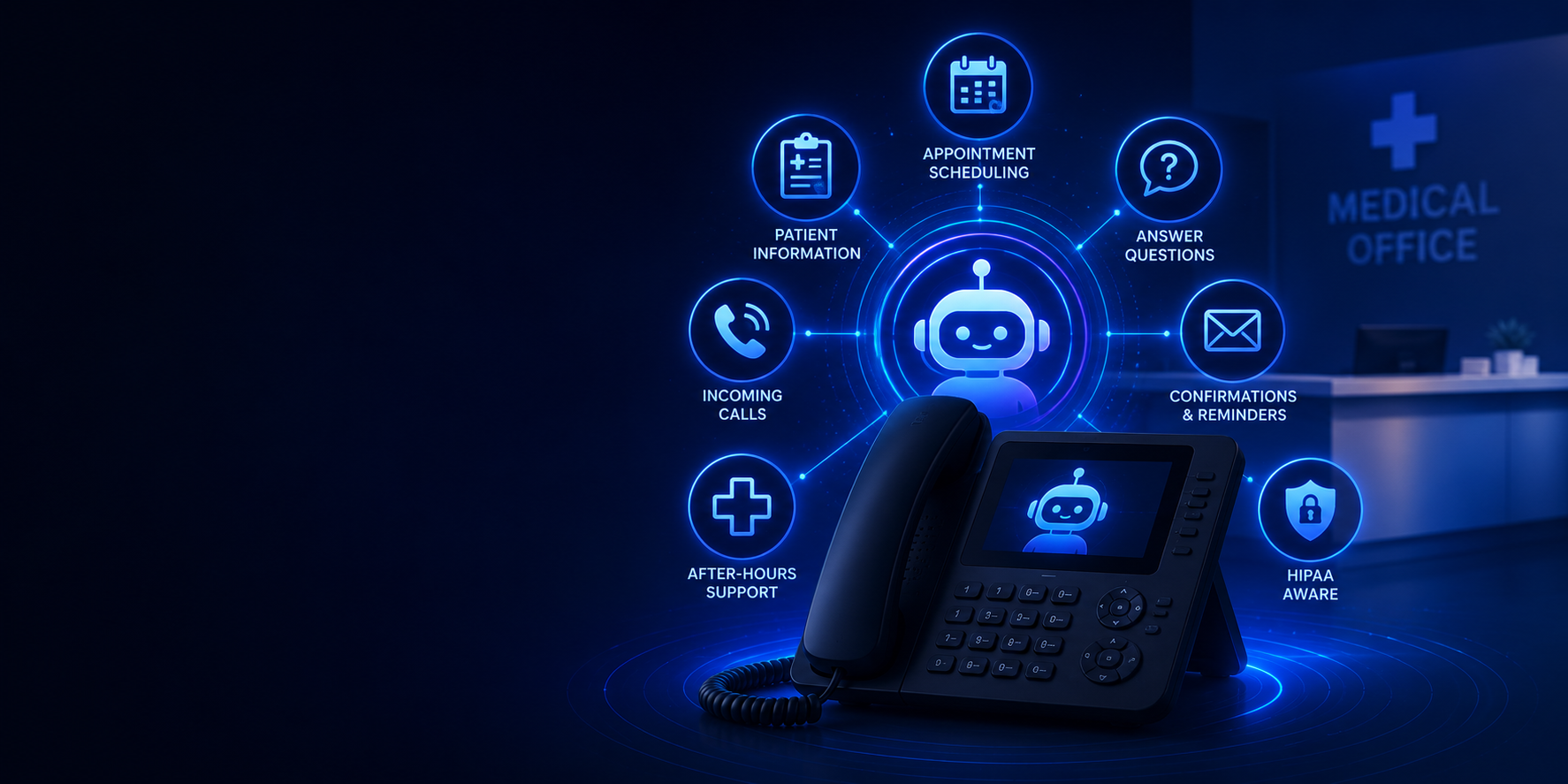
The best phone system for a medical or dental office is designed around patient access, front-desk workload, privacy, emergencies and continuity—not simply the number of employees. It should make routine scheduling easy, send urgent calls to the right person, protect sensitive information, support direct 911 dialing with accurate location data and keep the practice reachable when a site loses power or internet.
Key Takeaways
- Map patient call types before choosing features or phones.
- Give reception and scheduling roles queue visibility and comfortable headsets.
- Treat texting, voicemail, recording and cloud storage as privacy-governed workflows.
- Separate business-hours, after-hours and emergency call paths.
- Register dispatchable location information for each site and device scenario.
- Compare full implementation and support costs—not the advertised seat price.
Why Healthcare Phone Systems Are Different
A practice phone line is part of patient access. It carries new-patient inquiries, scheduling, referrals, prescription questions, billing calls, laboratory or imaging coordination and sometimes time-sensitive clinical concerns. A generic ring group can leave the front desk overwhelmed while important calls wait behind routine requests.
The design should separate administrative access from clinical escalation without asking callers to diagnose themselves. It also needs clear ownership: who watches each queue, what happens after a defined wait, where voicemail lands and who verifies that an urgent message was received.
A Practical Main-Number Call Flow
During business hours, keep the first menu short. Common choices include appointments and new patients, existing-patient questions, referrals or provider offices, and billing. A caller should always have a reasonable path to a person, and every queue should have an overflow rule.
After hours, use a different schedule. Routine callers can hear office information or leave a message; callers with an urgent concern can reach the documented answering-service or on-call workflow. Do not imply that a phone menu replaces 911 or clinical triage.
See the detailed guide to medical and dental office call routing.
Equipment by Role
Reception and scheduling
A business-class desk phone or supported softphone, a comfortable headset, wired network connectivity and clear queue controls.
Clinical staff
Simple phones with transfer, hold and paging access; mobile access only where policy and workflow justify it.
Provider offices
A desk phone or desktop app with presence, secure voicemail handling and appropriate caller-ID controls.
Shared spaces
Purpose-built common-area phones, paging endpoints and emergency-location configuration tied to the actual site.
Review the full equipment guide for medical and dental offices.
Features That Usually Matter Most
Prioritize queues, schedules, ring groups, callback or overflow options, voicemail management, business texting, mobile and desktop apps, presence, reporting, paging integration, E911 administration and role-based access. Recording can be useful, but only with a defined purpose, consent process, access model and retention period.
Integrations with scheduling or practice-management software should reduce duplicate work and expose only the minimum information needed. A vendor saying a product is “HIPAA compliant” is not enough; practices should evaluate how the service handles electronic protected health information, access, auditability, retention, incident response and business associate obligations.
Privacy and HIPAA Questions
HIPAA does not prohibit routine communication by phone or appointment reminders. HHS says providers may communicate for treatment by phone and may leave messages, but should use reasonable safeguards and limit what is disclosed. When a cloud communications vendor creates, receives, maintains or transmits ePHI for a covered entity, a business associate agreement may be required.
Start with a documented risk analysis. Identify where voicemail, transcripts, recordings, faxes, texts and contact data are stored; who can access them; how access is removed; and what happens when an employee uses a mobile device. See Tier 1’s HIPAA and VoIP overview.
Reliability, E911 and Outage Planning
Cloud service can continue receiving and rerouting calls when an office is offline, but local phones still need power and connectivity. Each site should document primary and backup internet, UPS runtime, mobile failover, call-forwarding authority, paging dependencies and restoration steps.
Kari’s Law and RAY BAUM’S Act shape modern multi-line telephone-system expectations, including direct 911 dialing, onsite notification and dispatchable location information. Practices with suites, floors, wings or detached buildings need location data specific enough to help responders find the caller. Read the E911, paging and outage planning guide.
What the System Really Costs
Total cost may include user licenses, shared devices, numbers, texting, recording, fax, integrations, hardware, switches, cabling, headsets, implementation, number porting, training, taxes and ongoing support. Multi-location practices should also price site surveys, emergency-location administration and standardized replacement equipment.
Compare a complete working design over the same term. A low seat price is not a bargain if the practice must separately buy onboarding, support, compliance features or replacement hardware.
Frequently Asked Questions
Is VoIP appropriate for a medical or dental office?
Yes, when the network, privacy controls, continuity plan and support model are designed for the practice’s workflow.
Does HIPAA certify phone systems?
No. HIPAA does not create a universal product certification. Compliance depends on how the practice and its vendors configure, use and safeguard information.
Can one number serve several locations?
Yes. A shared identity can route by location or function, but each site still needs local workflows and accurate emergency-location information.
How many phones should a practice buy?
Count roles and call-handling needs, not just employees. Some users need full accounts; others need shared or common-area devices.
Continue Learning
Design Around Patient Access, Staff Workflow and Risk
Tier 1 Telecom helps Florida medical and dental practices map call flows, locations, equipment, continuity and support requirements before recommending a platform.
Plan Your Practice Phone System
We can review your current numbers, call paths, sites, internet, paging and patient-contact workflows.