The Short Answer
The best phone system for an independent insurance agency organizes callers by intent without making the menu feel like an obstacle. It should separate new quotes, existing-policy service, billing, claims guidance and renewals; preserve context during transfers; support licensed and administrative roles; keep business calls off personal numbers; and provide tested continuity for storms, carrier events and office closures.
The phone platform should support the agency’s workflow, not decide coverage. Quoting, interpreting policies, advising and binding may require licensed or appointed personnel. Automation can gather approved facts and arrange the handoff, but the agency must define where the human professional takes over.
Key Takeaways
- Route new quotes, service, claims and renewals to distinct accountable destinations.
- Keep the main menu short and provide overflow before voicemail.
- Use AI for approved administrative work, with a fast human handoff.
- Keep calls and texts on the agency’s business identity.
- Choose equipment by role rather than buying the same device for everyone.
- Compare implementation, numbers, devices, messaging and support—not only the seat price.
Why Insurance Agencies Are Different
A single published number may receive a high-value new-business opportunity, a policyholder requesting an ID card, a caller reporting a loss, a mortgagee asking for evidence, or a carrier representative trying to reach a specific agent. Those calls have different urgency, required expertise and documentation needs.
Agencies also operate within carrier appointments, state licensing rules and internal quality controls. The communications design should make those boundaries visible: administrative staff can complete approved service tasks, while questions about coverage, limits, exclusions or binding move to the appropriate authorized person.
A Practical Main-Number Design
New quotes
Send to a visible sales queue with overflow, callback ownership and campaign attribution where appropriate.
Existing-policy service
Route routine service to trained staff without interrupting every producer.
Claims and urgent losses
Provide clear carrier-claims instructions and an agency escalation path without implying the agency controls the carrier’s decision.
Billing, renewals and certificates
Use specialized queues or shared teams with accountable mailboxes and response targets.
Preserve the caller’s choice and any approved intake information when transferring. A warm transfer is worth more than a perfect menu if the receiving person understands why the customer called.
Features Worth Prioritizing
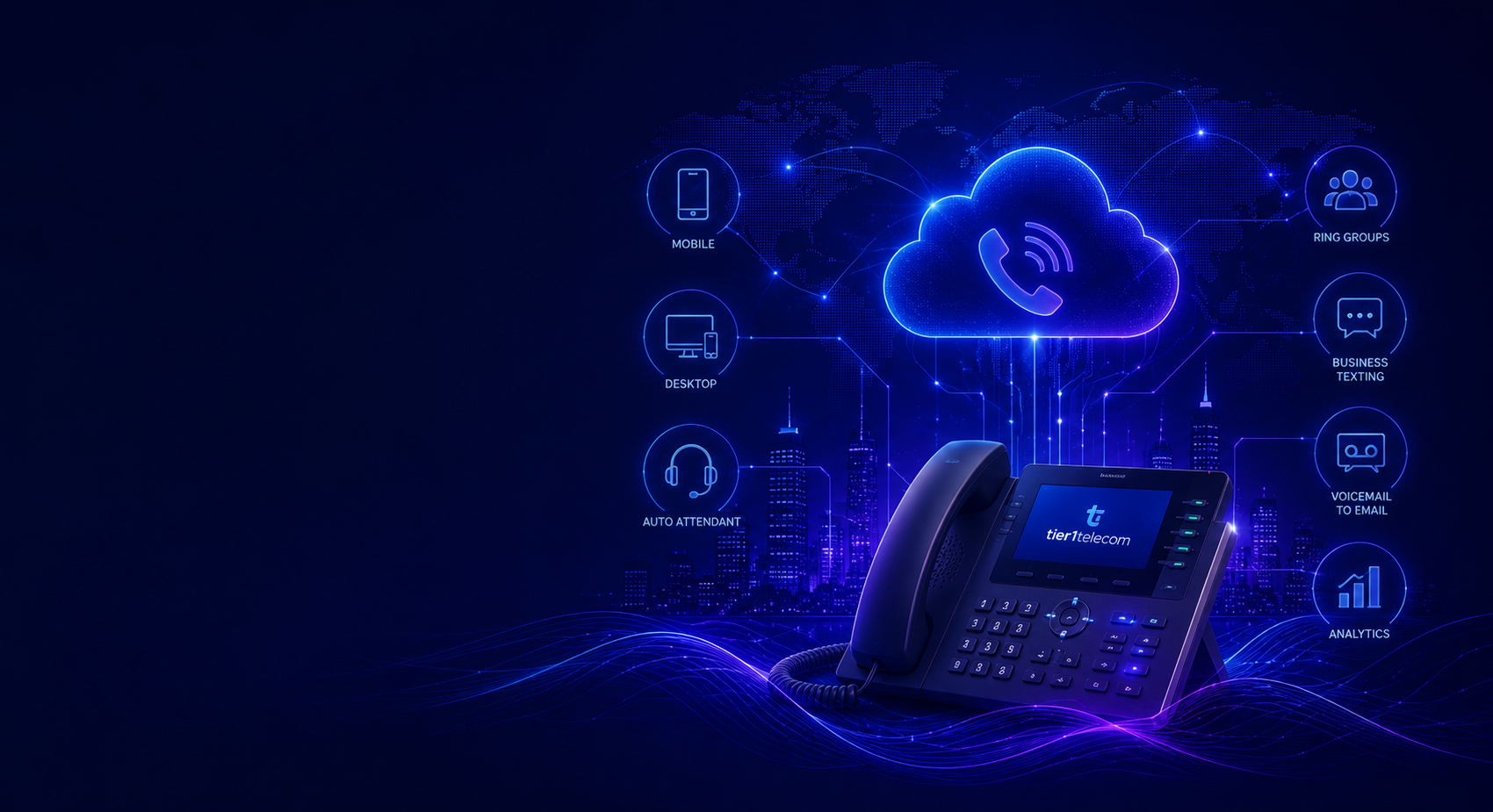
Prioritize schedules, queues, overflow, warm transfer, presence, shared voicemail, business texting, mobile and desktop apps, call reporting, role-based administration and E911. CRM or agency-management integrations can improve screen-pop and note-taking, but confirm exactly what data moves between systems and what happens when the integration fails.
Optional AI answering should use a narrow approved knowledge base, disclose its role when appropriate, avoid coverage conclusions, and offer human escalation. See the guide to AI receptionists for insurance agencies.
Equipment by Role
Reception and service
Business-class desk phone or supported desktop app, wired headset and live queue visibility.
Producers
Desk, desktop or mobile endpoint with business caller ID, presence and easy warm transfer.
Remote and field users
Managed app or supported device, professional headset and a defined connectivity fallback.
Shared rooms
Purpose-built conference audio and correctly maintained emergency-location information.
Security, Recording and Messaging
Use individual accounts, multifactor authentication where available, least-privilege administration and documented offboarding. Decide whether voicemail transcription, call recording, AI summaries and message attachments are necessary before enabling them. Every additional copy creates another retention and access question.
Florida recording rules and texting obligations need a deliberate policy, not a default toggle. Review the detailed guides to call recording and business texting.
Understanding Total Cost
Build the budget from year-round users, occasional users, numbers, toll-free usage, devices, implementation, porting, taxes and regulatory fees, messaging registration, optional fax or AI services, network readiness and support. Ask whether carrier integrations, call-recording storage, advanced reports and after-hours changes are included.
A low advertised seat price can be expensive if implementation, phones, porting or ongoing support are separate. The right comparison is the complete working system over the expected term.
Tier 1’s Practical Recommendation
Map the agency’s five most common caller intents and five most costly failure points before comparing platforms. That exercise usually reveals more than a long feature checklist.
Frequently Asked Questions
Can an agency keep its existing numbers?
Usually yes. Local and toll-free numbers can generally be ported after account ownership and porting details are verified.
Should producers use personal cell numbers?
Usually no. A managed business app preserves the agency identity, routing and offboarding control.
Can AI provide insurance quotes?
Automation can gather approved information and support a workflow, but the agency must determine which activities require licensed or appointed staff and where human review occurs.
Can the system route around an office outage?
Yes, when alternate destinations and emergency modes are configured and tested before the outage.
Continue Learning
Build Around the Agency’s Real Workflow
Tier 1 Telecom helps Florida insurance agencies map quote intake, service, claims, licensed-role boundaries, equipment and continuity before recommending a platform.
Plan Your Insurance Agency Phone System
We can review your current numbers, call paths, equipment, internet, agency roles and customer-communication workflow.