The Short Answer
After-hours routing should separate true emergencies from routine requests, follow a published on-call schedule and include a backup destination when the primary responder does not answer. The caller should receive clear expectations, while employees should know exactly when they are responsible.
Key Takeaways
- Use schedules instead of manually forwarding the main number every night.
- Define what qualifies as an emergency.
- Use acknowledgment or escalation so urgent calls do not disappear.
- Keep personal numbers hidden where possible.
- Test the route regularly from an outside telephone.
- Document holiday, storm and backup coverage.
What a Good After-Hours Flow Looks Like
When the office closes, the main number changes behavior automatically. The greeting explains available choices without promising a response the company cannot provide. Emergency callers reach the scheduled responder or an answering resource. Routine callers can leave an organized message or use an approved scheduling option.
If the first responder does not answer, the system can escalate to a second person, queue or service. The exact design depends on staffing and provider capabilities.
Define Emergency Before Building the Menu
“Emergency” means different things for HVAC, plumbing, electrical and restoration companies. A broken air conditioner during extreme heat may be urgent. A leaking supply line may require immediate triage. A request for an annual maintenance estimate usually does not.
The greeting should not attempt to diagnose technical or safety problems. It should direct callers appropriately and advise them to contact emergency services when life safety is involved.
Scheduled On-Call Rotation
A cloud phone system can follow recurring weekly schedules, holiday schedules and temporary overrides. The schedule should identify the primary responder, secondary responder and manager responsible for exceptions.
A shared login or handwritten forwarding instruction is difficult to audit. Role-based users and documented schedule changes create clearer accountability.
Escalation and Acknowledgment
Primary alert
Send the call to the scheduled employee for a defined period.
Secondary path
Escalate to another approved person or answering destination if unanswered.
Voicemail notification
Deliver urgent messages through controlled notifications, not a mailbox nobody monitors.
Manager visibility
Provide reporting so repeated unanswered calls can be corrected.
Caller expectation
State whether the company offers 24-hour service and what response the caller should expect.
Fallback
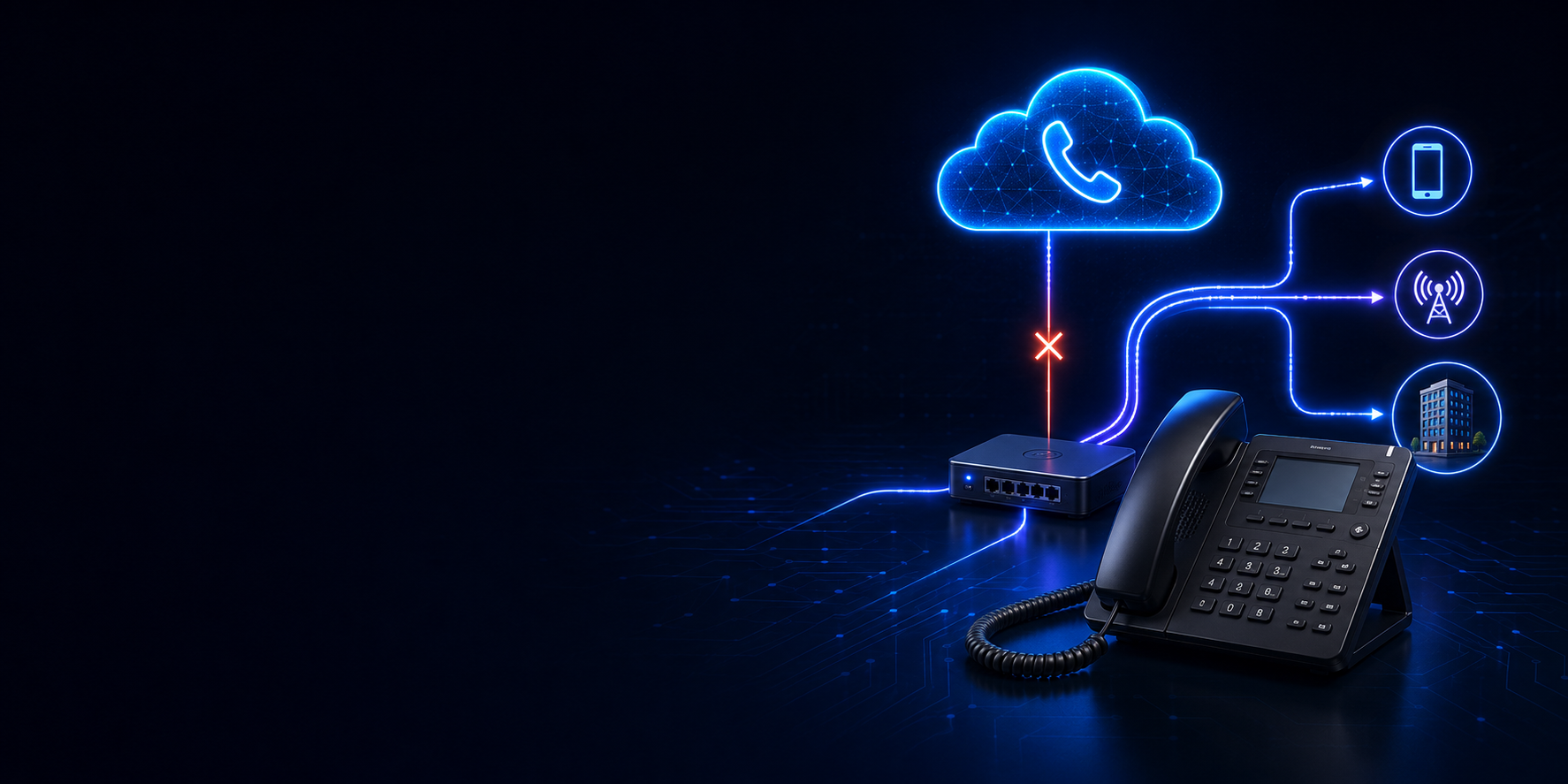
Maintain an alternate process for app, carrier, internet or power failures.
Real-World Example
A restoration company closes at 5:00 p.m. Water-loss calls select an emergency option that rings the weekly on-call coordinator for 25 seconds. If unanswered, the call escalates to the operations manager. Routine vendor and billing calls receive voicemail for the next business day.
The company tests the full path monthly and again before major storms. Employees know that simply being listed in the schedule is not enough; the mobile app must be signed in and able to use cellular data.
Avoid These Common Failures
- Forwarding to an employee who is on vacation.
- Routing every caller to the emergency technician.
- Letting office Wi-Fi block a mobile app when the internet fails.
- Leaving outdated holiday schedules active.
- Using personal voicemail with an unprofessional greeting.
- Assuming a missed-call notification proves someone responded.
Frequently Asked Questions
Can employees trade on-call shifts?
Yes, but the system and written schedule should both be updated so responsibility is unambiguous.
Can an AI voice agent handle after-hours calls?
It may collect information, answer defined questions or route calls, but urgent workflows need guardrails, escalation and human accountability.
Should emergency calls go straight to a technician?
Sometimes. Other companies use a coordinator or answering service for triage. The correct choice depends on training, staffing and risk.
Continue Learning
About Tier 1 Telecom
Tier 1 Telecom helps home-service companies design, deploy and support cloud phone systems built around dispatch, field employees, after-hours coverage and customer response. We combine business communications expertise with practical IT and network experience throughout Port St. Lucie and Florida’s Treasure Coast.
Make After-Hours Coverage Predictable
Tier 1 can map your schedules, escalation rules and backup destinations into a call flow your team can actually follow.