For decades, businesses relied on traditional office phone systems installed in a wiring closet somewhere in the building. Today, many organizations are moving to cloud phone systems that offer greater flexibility, easier management, and modern communication features. Understanding the differences can help you choose the right solution for your business.
After comparing the technology, use this buyer’s checklist for choosing a business phone system provider to evaluate the company that will design, migrate, and support it.
If you're replacing an older business phone system, you've probably heard terms like:
- Cloud Phone System
- Hosted PBX
- VoIP
- Traditional PBX
- On-Premise Phone System
The question most business owners really want answered is simple:
Which one is right for my business?
The answer depends on how your employees work, how your customers communicate, and how much flexibility your business needs. If you are still defining the basics, start with What Is a Business Phone System?
What Is a Traditional Phone System?
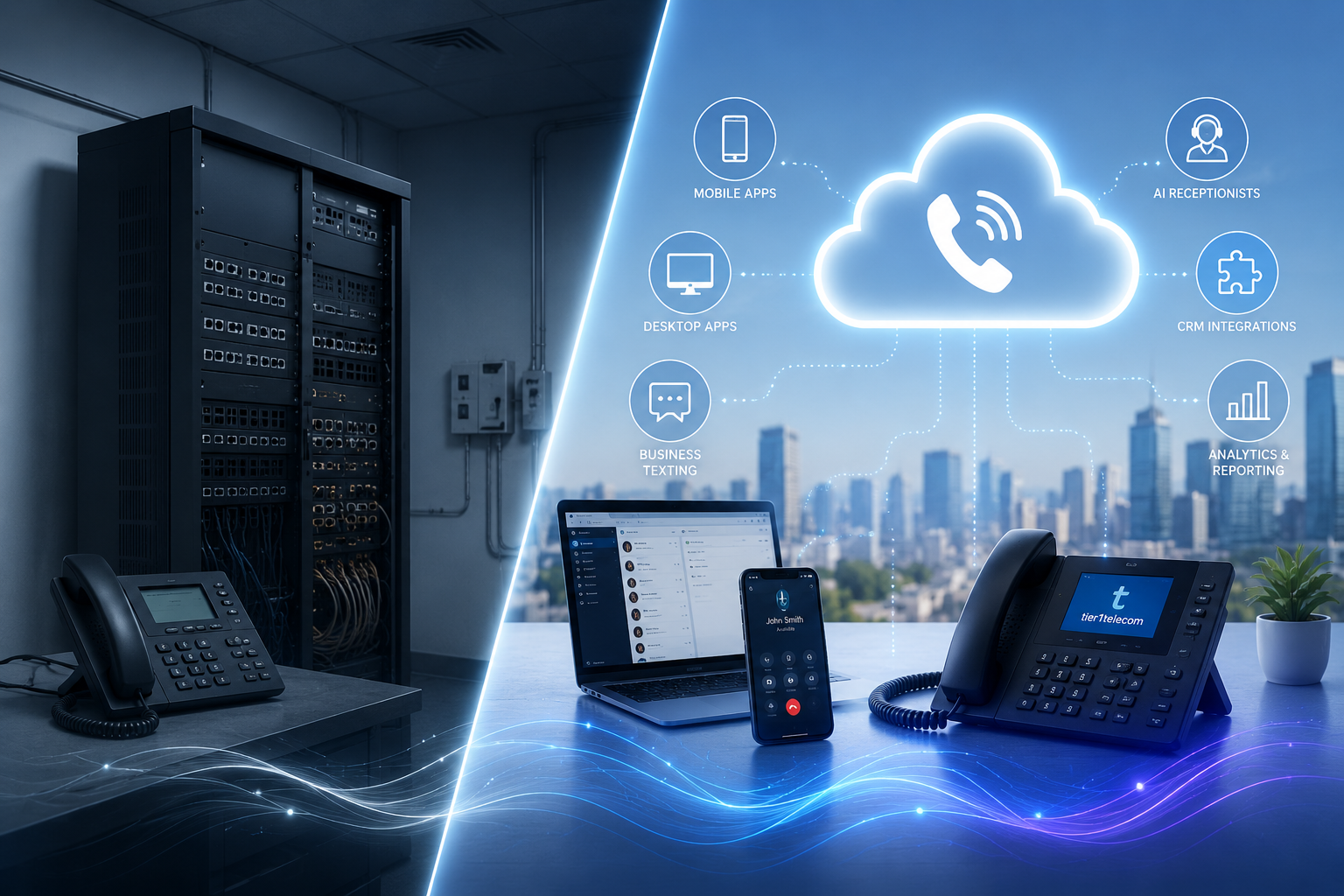
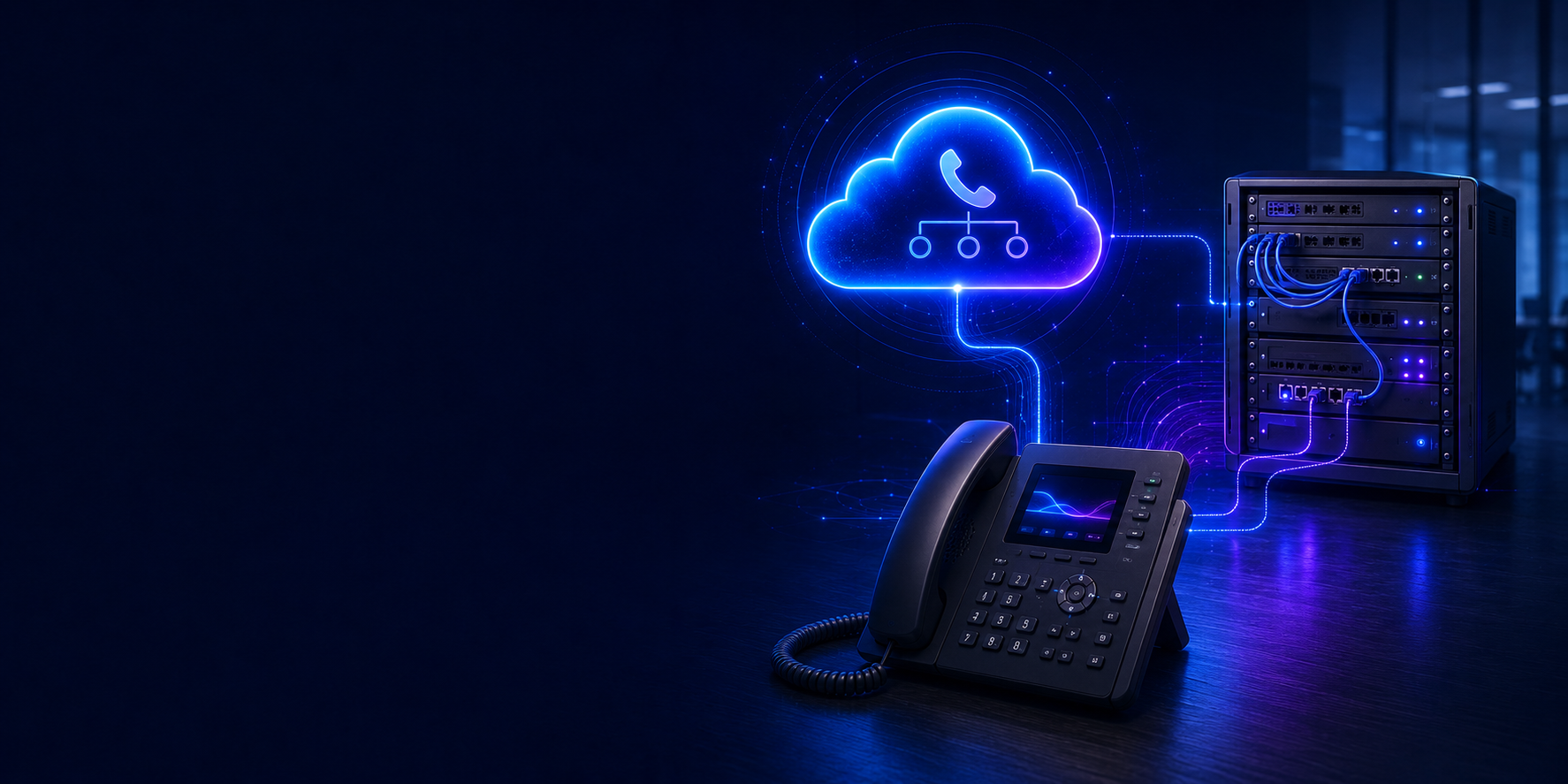
Traditional business phone systems are installed on equipment physically located at your office.
That equipment may include:
- PBX hardware
- Telephone wiring
- Network switches
- Expansion modules
- Voicemail hardware
Every desk phone connects back to equipment maintained inside your building.
For many years, this was the standard approach for business communications.
Many companies still use these systems successfully today.
What Is a Cloud Phone System?
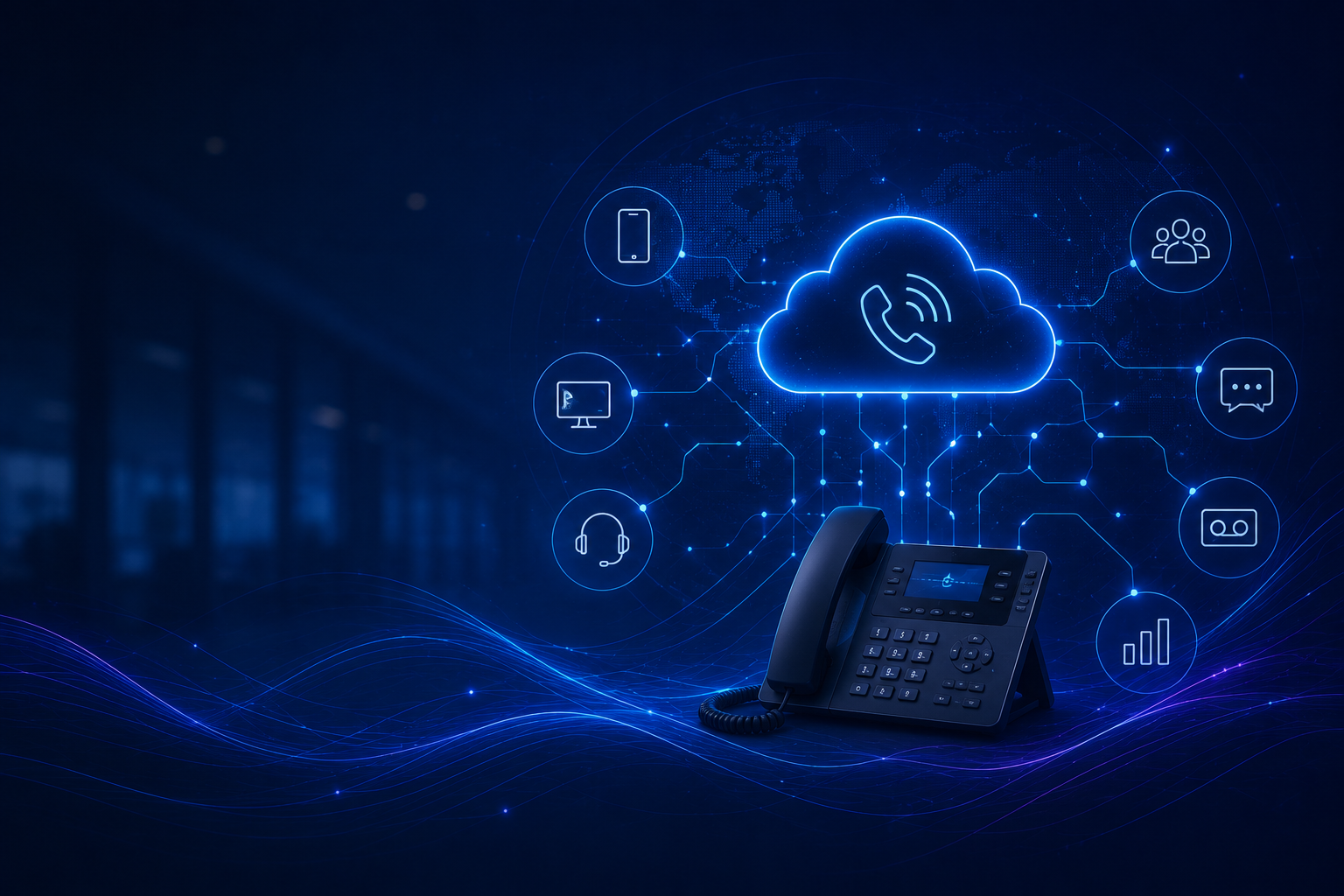
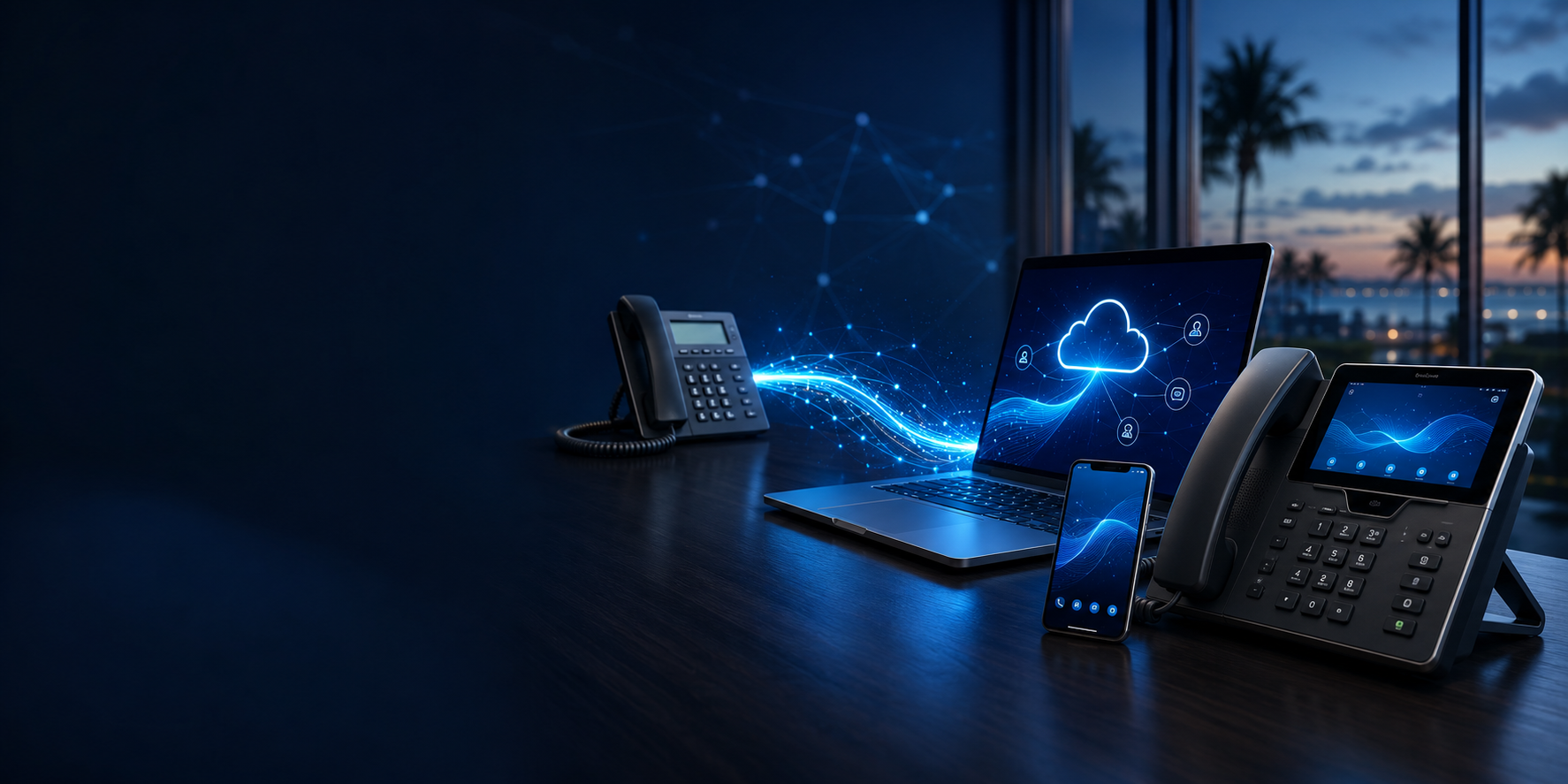
A cloud phone system moves the communications platform out of your building and into professionally managed data centers.
Instead of relying on hardware sitting in a phone closet, calls are managed securely through the cloud.
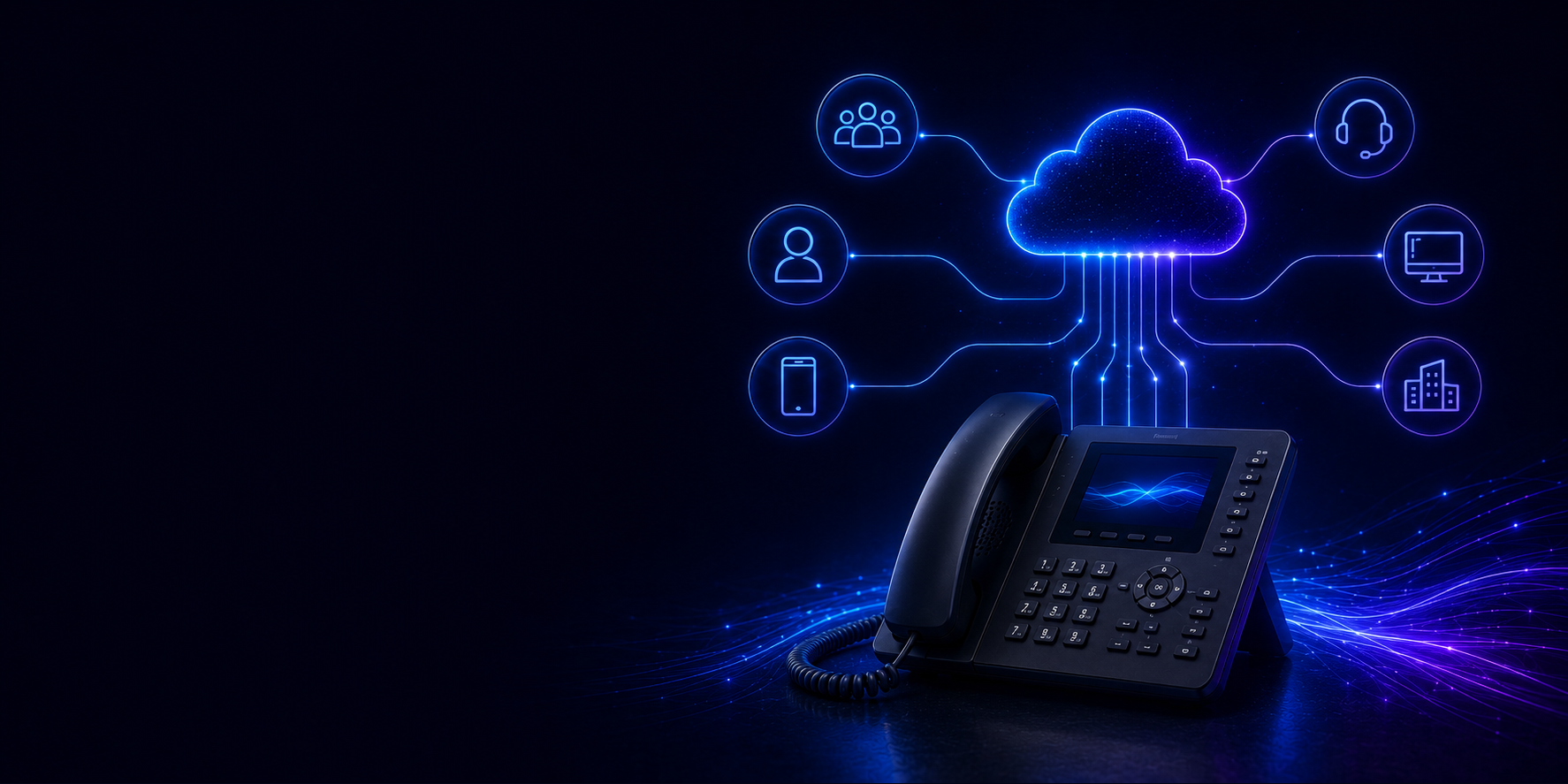
Employees can answer calls using:
- Desk phones
- Mobile apps
- Desktop apps
- Web browsers
- Remote offices
The business keeps one unified phone system regardless of where employees are working.
When planning the move, confirm how long a business phone system takes to install based on network readiness, equipment, configuration, testing, and number porting.
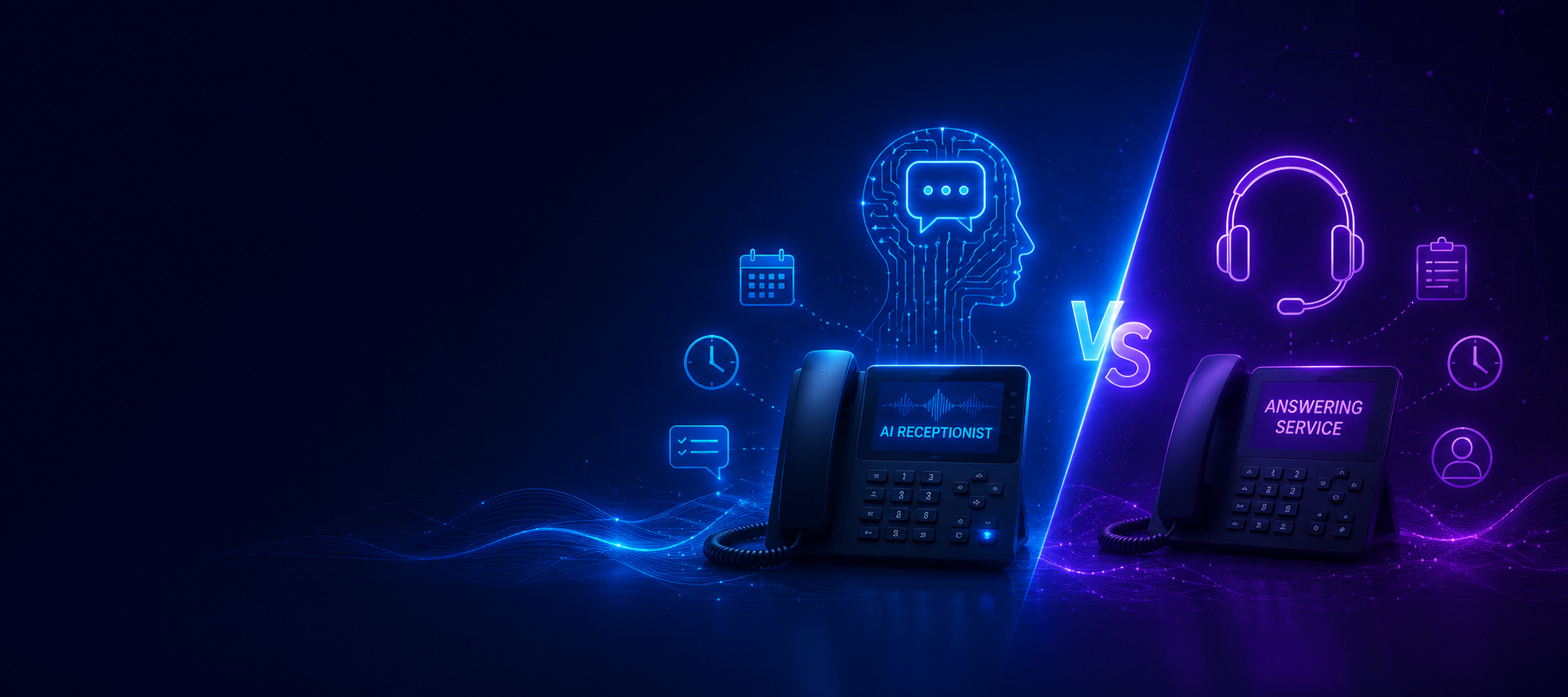
Side-by-Side Comparison
| Traditional Phone System | Cloud Phone System |
|---|---|
| Equipment located on-site | Platform hosted in the cloud |
| Hardware upgrades required | Software updates handled automatically |
| Office-focused | Office, remote, and mobile friendly |
| Expansion may require new hardware | Easily scales as your business grows |
| Limited mobility | Employees work from virtually anywhere |
| Higher maintenance responsibilities | Managed by the provider |
Neither approach is universally better.
The right choice depends on your business requirements.
Make the Decision Around Your Current Environment
| Question | What to compare |
|---|---|
| Where will staff answer calls? | Office desks, remote staff, mobile users and other locations; demonstrate the tools each role needs. |
| What can be retained? | Numbers, compatible devices, cabling and any specialty services. Get reuse assumptions confirmed before planning a replacement. |
| Who will manage the system? | Name the owner for routing changes, users, updates, network support and provider escalation. |
| What happens during an outage? | Document the destination for incoming calls, local power/network dependencies and the return to normal service. |
| What is the complete cost? | Compare equipment, deployment, support, recurring service, usage and contract terms using the same requirements. |
A functioning on-site system with limited change may be worth retaining. A business needing more remote access, multi-location calling or simpler expansion should compare those workflows on the proposed cloud system. The decision should follow a demonstrated fit and a written scope.
Illustrative Business Scenario
The scenario below illustrates a planning situation; it is not a named Tier 1 customer case study.
Growth Changed Everything
One growing company originally installed a traditional phone system because everyone worked from a single office.
As the business expanded, employees began working remotely.
Sales representatives traveled frequently.
Managers wanted mobile access.
Adding those capabilities to the older phone system became increasingly difficult.
After migrating to a cloud phone system, employees kept the same business phone numbers while working from virtually anywhere. Businesses can usually transfer existing telephone numbers as part of that move.
The company gained flexibility without changing how customers reached them.
Planning phone lines, users, and call capacity became a matter of real activity rather than one physical line per employee.
Mobility Has Changed Business Communication
One of the biggest differences between traditional and cloud phone systems is mobility.
Today's employees expect to answer business calls:
- From home
- While traveling
- Between customer visits
- From multiple office locations
Cloud systems make those scenarios much easier because the communications platform is no longer tied to one physical office.
Features Continue to Evolve
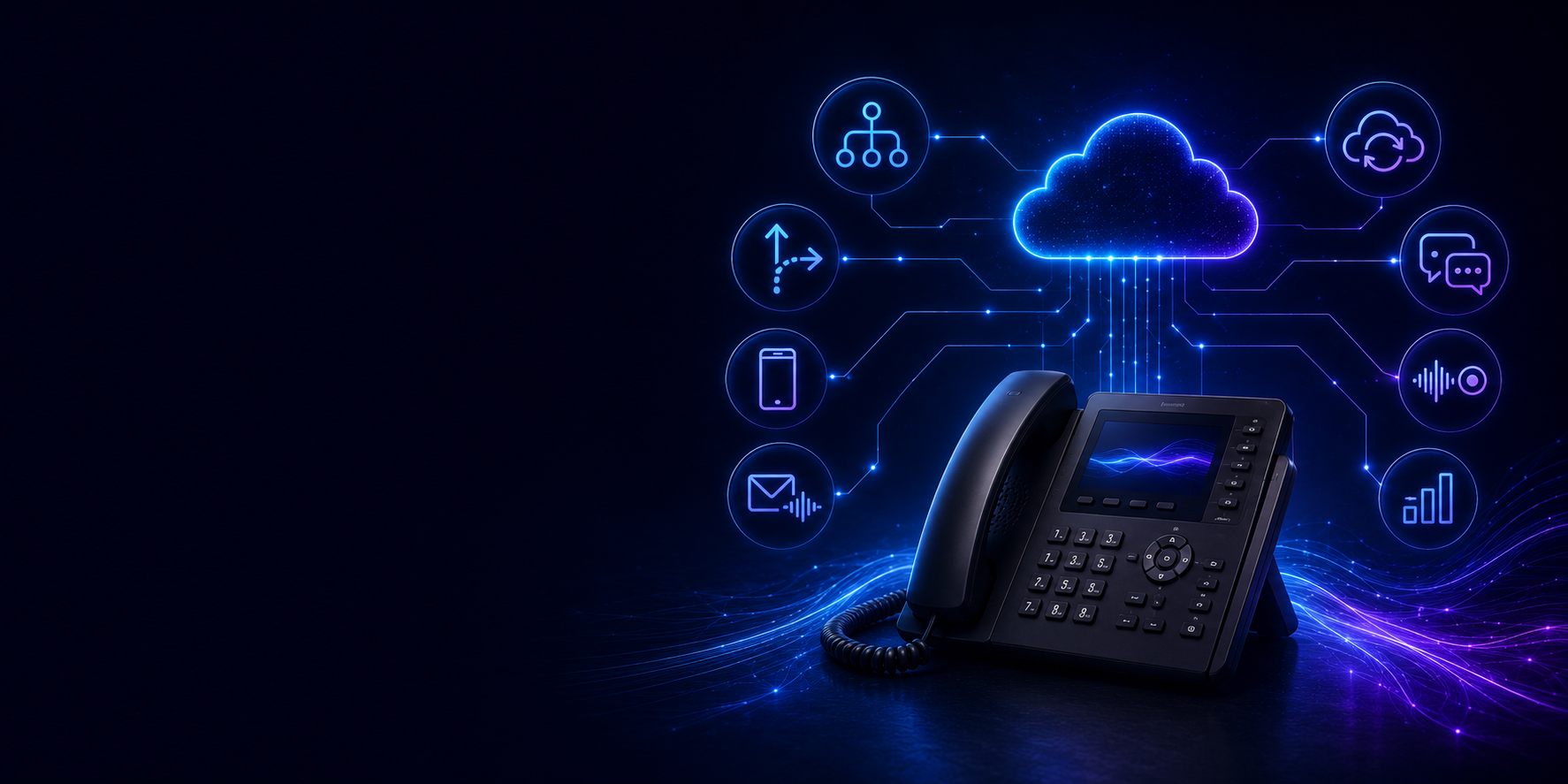
Modern businesses often expect modern business phone system features such as:
- AI receptionists
- Business texting
- Mobile applications
- Desktop applications
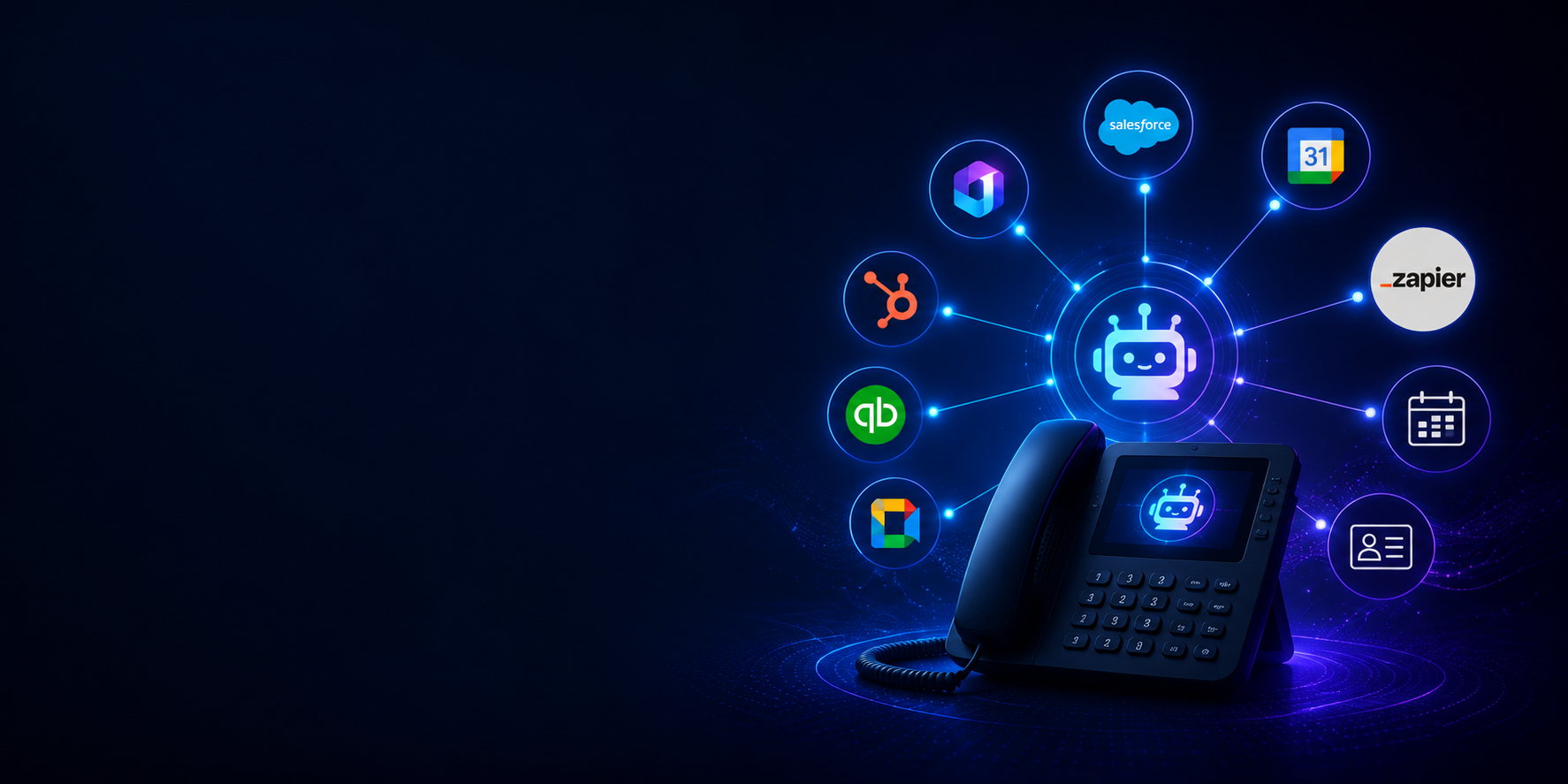
- CRM integration
- Video meetings
- Call analytics
- Voicemail to email
Cloud platforms generally make it easier to adopt these newer communication tools because they are designed to integrate with evolving technologies, including an AI voice agent.
Reliability Matters
Many people assume traditional systems are always more reliable because the equipment sits inside the office.
In reality, reliability depends on several factors, including:
- Internet connectivity
- Network design
- Power protection
- Provider infrastructure
- Redundancy
Modern cloud providers typically operate redundant data centers designed to keep communications available even when individual systems experience problems.
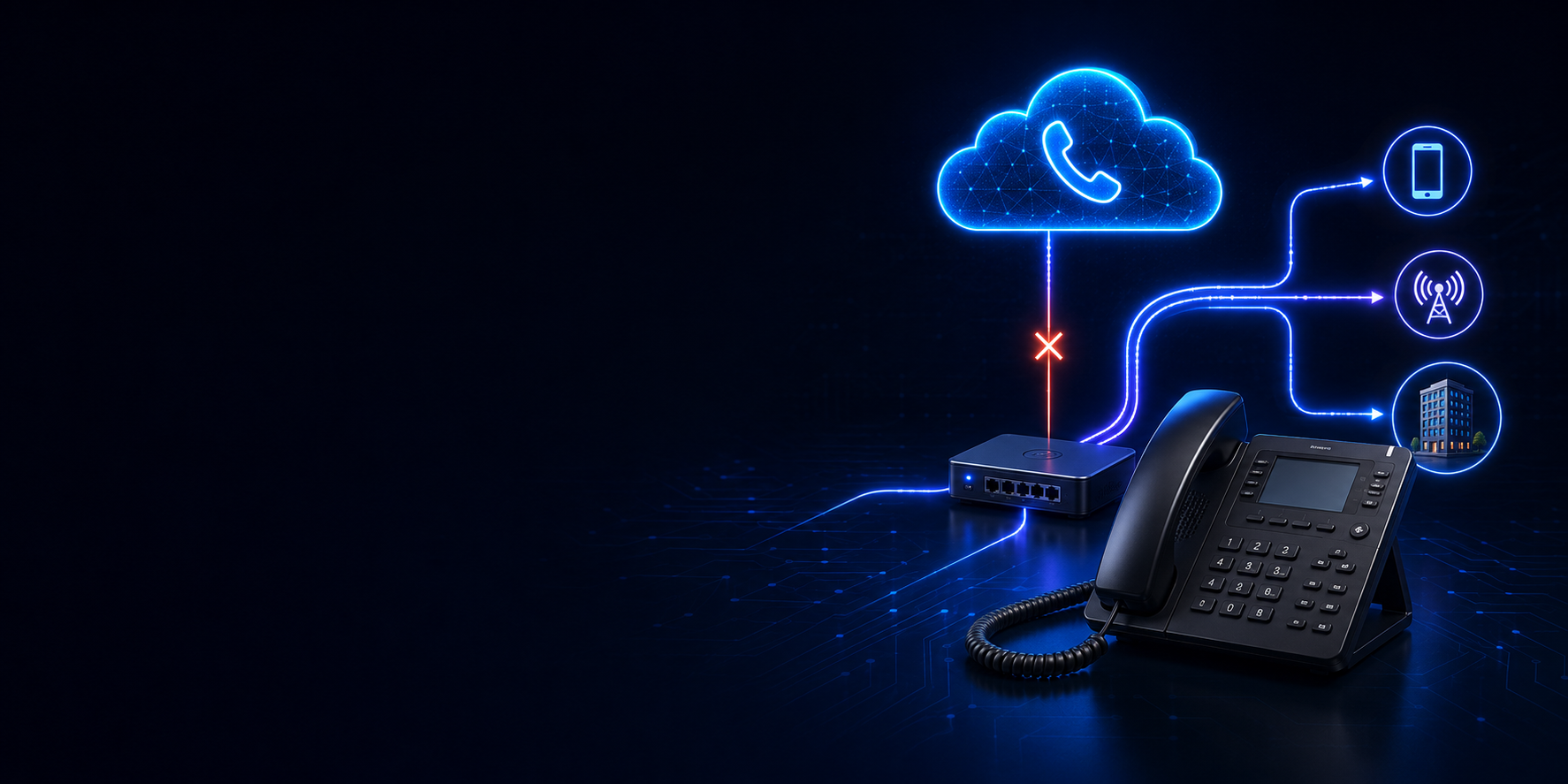
Provider redundancy does not remove an office’s dependence on its own network, power, and connectivity, so practical VoIP outage planning remains part of a reliable design.
Which Option Costs Less?
Cost depends on:
- Business size
- Number of employees
- Existing equipment
- Desired features
- Support requirements
Traditional systems often require a larger upfront investment in hardware.
Cloud systems generally spread costs over predictable monthly service while reducing the need for major hardware purchases. For a detailed pricing breakdown, see How Much Does a Business Phone System Cost?
Every business is different, so comparing total cost over several years is usually more useful than comparing only the initial purchase price.
Which Businesses Benefit Most from Cloud Systems?
Cloud phone systems are often a strong fit for businesses that:
- Have remote or hybrid employees
- Expect to grow
- Want mobile access
- Need business texting
- Plan to use AI receptionists
- Prefer predictable monthly costs
- Want easier administration
Organizations with specialized legacy equipment or unique operational requirements may still benefit from an on-premise solution.
The best answer depends on your business goals rather than simply following industry trends.
Because cloud phone systems depend on the business network, review the internet speed and stability VoIP requires when comparing cloud and traditional options.
Frequently Asked Questions
Is a cloud phone system better than a traditional phone system?
Not necessarily. Cloud systems provide greater flexibility and modern features, while traditional systems may still be appropriate for some environments.
Can I keep my existing phone numbers?
Yes. In most cases, existing business phone numbers can be transferred to a cloud phone system.
Do cloud phone systems require special phones?
No. Many businesses use existing IP desk phones, while others use mobile apps, desktop applications, or a combination of devices.
Can remote employees use the same business phone system?
Yes. That's one of the primary advantages of a cloud-based communications platform.
Are cloud phone systems secure?
When properly implemented, reputable cloud providers include multiple security and redundancy features designed for business communications.
Can a cloud phone system work with AI receptionists?
Yes. Modern cloud phone systems commonly integrate with AI receptionists, CRM platforms, business texting, and scheduling tools.
The Right Phone System Is the One That Fits Your Business
Technology has changed dramatically over the past decade.
Business communication has changed with it.
For many organizations, cloud phone systems provide the flexibility, mobility, and integration capabilities needed to support today's workforce.
For others, existing on-premise systems may continue to meet their operational needs.
The important decision isn't choosing the newest technology.
It's choosing the communications platform that best supports your employees, your customers, and your long-term business goals.
FREE BUSINESS RESOURCE
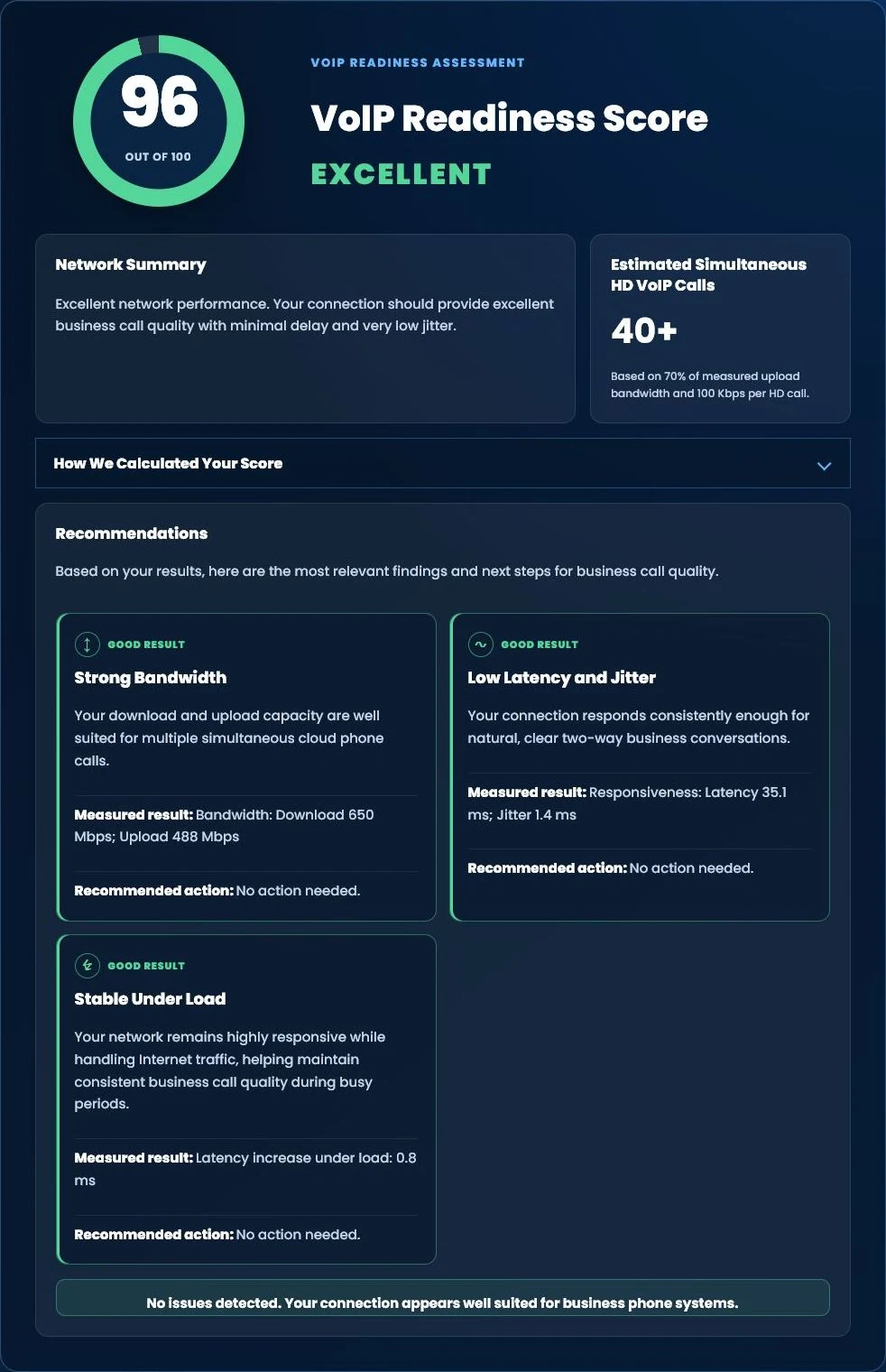
Test Your Internet for Business Phone Systems
Wondering whether your Internet connection is ready for cloud business phones?
Run our free Tier 1 VoIP Readiness Assessment to measure latency, jitter, network responsiveness and overall VoIP readiness in about one minute.
- VoIP Readiness Score
- Latency & Jitter Analysis
- Network Stability Assessment
- Estimated HD Phone Capacity
Ready to Compare Your Options?
Wondering whether a cloud phone system makes sense for your business?
We'll help you:
- Compare cloud and traditional systems
- Evaluate your current environment
- Keep your existing phone numbers
- Plan a smooth migration
- Integrate AI receptionists
- Build a communications platform that grows with your business
Every business is different.
We'll help you choose the solution that fits the way your business communicates.
Continue exploring practical communication guidance in the Tier 1 Telecom Knowledge Center.