The Short Answer
Most business owners think switching phone providers is complicated because that's exactly what their current provider wants them to believe. In reality, a properly managed migration is straightforward. At Tier 1 Telecom, we handle virtually the entire transition, allowing most businesses to upgrade their phone system, gain new features, and often reduce their monthly costs with little disruption.
Key Takeaways
- Switching providers is much easier than most businesses expect.
- Most businesses can keep their existing phone numbers.
- Many companies gain more features while lowering monthly costs.
Most business owners stay with the same phone provider for years because they believe switching will be difficult.
If you are ready to compare alternatives, use this practical business phone provider checklist to evaluate support, implementation, contracts, continuity, and local accountability.
The reality is that this is exactly what many providers want you to believe.
If switching sounds risky or complicated, fewer customers shop around.
Fortunately, the reality is very different.
At Tier 1 Telecom, we handle virtually the entire migration process. Once you decide to move forward, we build your new phone system to closely mirror your existing setup. Your employees continue working with a familiar system while benefiting from modern features and improvements.
For a closer look at the final transfer, see what happens on business phone number porting day.
If we identify opportunities to improve call routing, simplify workflows, or eliminate unnecessary complexity, we'll recommend those enhancements during the setup process.
One of the most common questions we hear is:
“Will our phones stop working during the switch?”
In a properly planned migration, the answer is typically no.
In fact, we've completed migrations where active phone calls remained connected while the phone number transfer was taking place. Those conversations finished normally, and new inbound calls immediately began routing through the new system after the transfer completed.
For most customers, the transition happens without their customers ever noticing.
A smooth transfer starts with accurate carrier records. Before choosing a cutover date, review why business phone number ports get rejected—and how to prevent avoidable delays.
So Why Switch?
Because many businesses discover they can receive more features while paying less than they currently spend.
If price is part of the decision, compare the full proposals—not just the advertised monthly rate. Our business phone provider quote comparison guide explains how to account for equipment, setup, support, usage charges and contract terms.
Modern cloud phone systems often include:
- Mobile apps
- Voicemail to email
- Business text messaging
- AI receptionists
- Call recording
- Advanced call routing
- Remote work support
Perhaps the biggest difference, however, is support.
Instead of calling a nationwide help desk where you speak with someone new every time, you work with a local company whose staff knows your business, understands your phone system, and responds quickly when you need assistance.
Our customers know us by name, and we know theirs.
That's a level of service national providers simply cannot match.
FREE BUSINESS RESOURCE
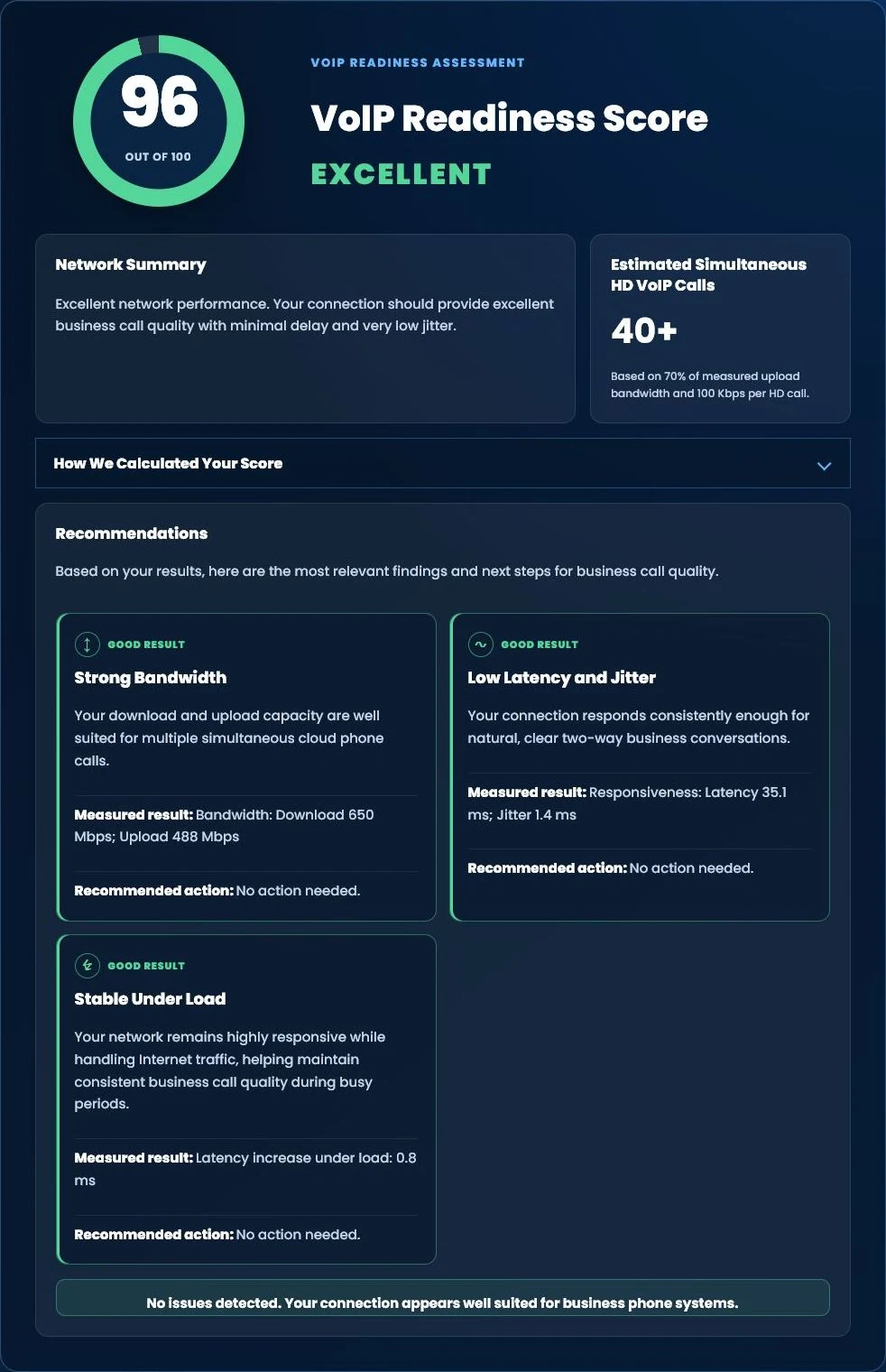
Test Your Internet for Business Phone Systems
Wondering whether your Internet connection is ready for cloud business phones?
Run our free Tier 1 VoIP Readiness Assessment to measure latency, jitter, network responsiveness and overall VoIP readiness in about one minute.
- VoIP Readiness Score
- Latency & Jitter Analysis
- Network Stability Assessment
- Estimated HD Phone Capacity
Ready to see what you're paying for?
We'll review your current business phone bill, compare your existing services, and show you exactly where you can save money or gain additional features.
No pressure.
Just honest advice from a local company that understands business communications.