The Short Answer
Insurance agencies should choose equipment by role. Reception and heavy service users benefit from a business-class desk phone or stable desktop app, wired headset and visible queue controls. Producers may prefer a desk phone plus mobile app. Remote users need a professional headset and tested network. Conference spaces need purpose-built audio. Budget for implementation, numbers, messaging, support and network readiness as well as licenses and devices.
Key Takeaways
- Choose by role and call volume, not one device for everyone.
- Prefer wired headsets for fixed high-volume workstations.
- Use agency-managed mobile apps instead of personal numbers.
- Verify PoE, switching, cabling, Wi-Fi and internet quality.
- Confirm E911 location responsibilities for movable devices.
- Compare total implementation and support cost over the term.
Equipment by Role
Reception and queue users
Multi-line business phone or desktop app, wired headset, expansion keys where useful and real-time queue visibility.
Producers
Simple desk phone or desktop app plus managed mobile access, presence and reliable warm transfer.
Remote staff
Supported computer or phone, professional USB headset, wired network where practical and documented fallback.
Conference rooms
Purpose-built speakerphone or room system tested for echo, pickup and emergency location.
Desk Phone or Softphone?
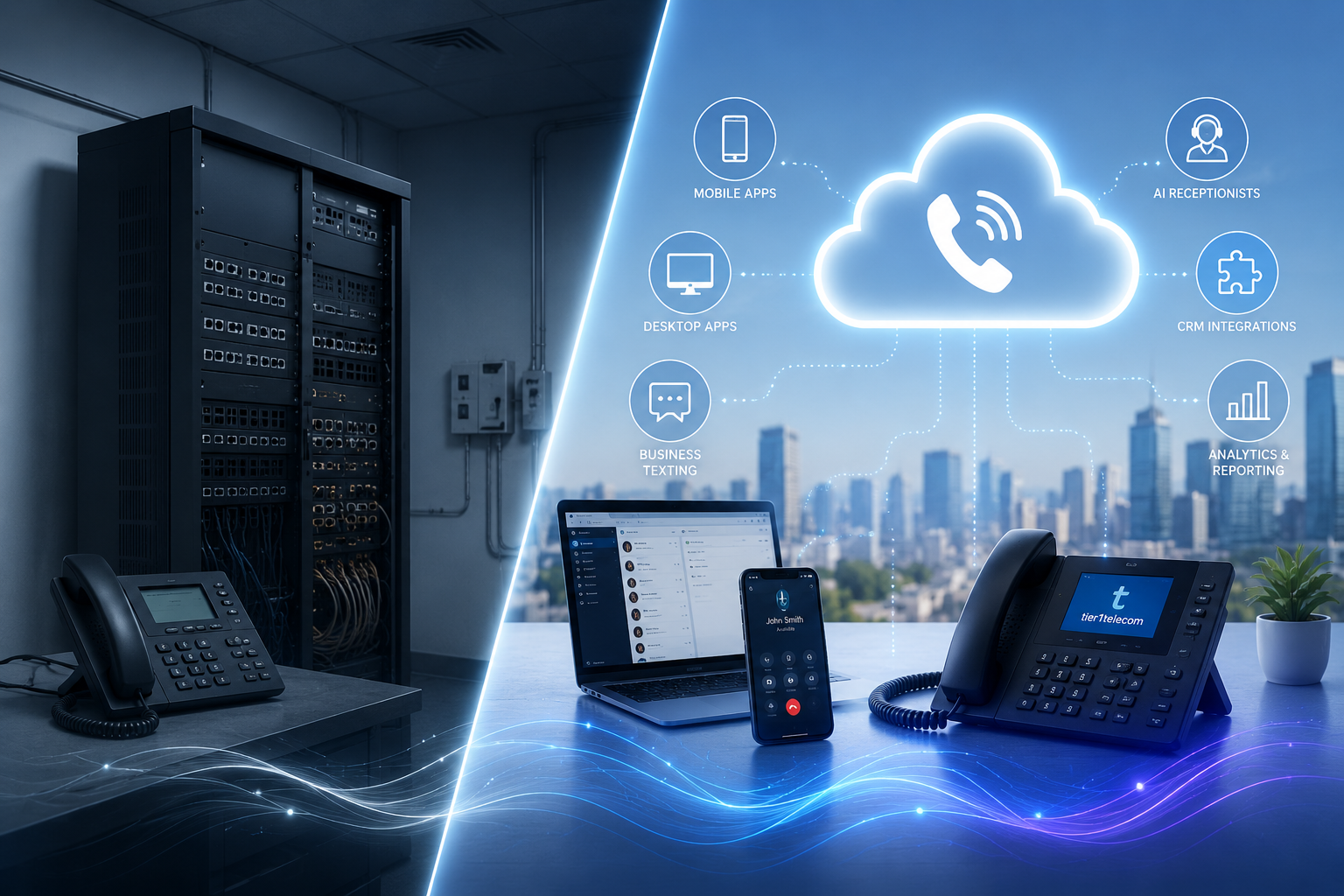
A desk phone offers a dedicated, predictable endpoint and can remain easier for high-volume transferring. A desktop app can reduce clutter and integrate with the user’s workflow, but depends on the computer, headset and operating system. Many agencies work best with a mix rather than choosing one endpoint for everyone.
Mobile apps are useful for producers away from the office, but they should present the agency caller ID and respect schedules. Mobility should not make every employee permanently on call.
Headsets Matter More Than They Look
For frequent calls, use a professional headset with a reliable microphone and comfortable all-day fit. Wired USB or supported desk-phone headsets reduce charging and pairing surprises at fixed workstations. Wireless models can work well for people who move, but confirm range, battery and compatibility.
Test headsets in the actual office. Open rooms, hard surfaces and nearby conversations affect customer experience more than a specification sheet suggests.
Network and Power Readiness
Confirm internet quality, firewall support, Power over Ethernet, switching, cabling, Wi-Fi coverage and UPS protection. Voice quality depends on latency, jitter and packet loss as well as bandwidth. Separate critical fixed devices from weak or congested Wi-Fi where practical.
Document the fallback when the local connection fails: mobile app, alternate office, cellular device or preconfigured cloud route.
Build the Complete Cost
Include user licenses, common-area devices, phone numbers, toll-free usage, taxes and regulatory fees, hardware, headsets, implementation, porting, messaging registration, fax, recording storage, AI services, network work and ongoing support. Ask what is one-time, recurring or usage-based.
Also price operational friction: unsupported phones, DIY porting, missing training and slow support can cost more than the difference between two monthly plans.
Tier 1’s Practical Recommendation
Run a role-and-device workshop before ordering hardware. Ten thoughtful endpoint decisions beat twenty identical phones that do not match how people work.
Frequently Asked Questions
Does every user need a desk phone?
No. Match endpoints to call volume, mobility, reliability and preference.
Are wireless headsets always better?
No. Wired headsets are often simpler and more reliable for fixed high-volume users.
Can existing phones be reused?
Sometimes, if they are supported, unlocked, current and worth provisioning. Verify before planning around them.
What cost is most often missed?
Implementation, support, network readiness, headsets, messaging and other add-on services are frequently omitted from seat-price comparisons.
Continue Learning
Build Around the Agency’s Real Workflow
Tier 1 Telecom helps Florida insurance agencies map quote intake, service, claims, licensed-role boundaries, equipment and continuity before recommending a platform.
Plan Your Equipment and Budget
We can review your current numbers, call paths, equipment, internet, agency roles and customer-communication workflow.