Restoration leads are different from ordinary service calls. Water damage, fire damage, sewage losses, and other property emergencies often create an immediate need for help—and the first company to answer may be the one that gets the job.
That makes 24/7 call intake especially important for restoration companies. A caller may be dealing with active water intrusion at 2:00 AM, an insurance-related loss on a weekend, or a property manager who needs emergency mitigation started immediately.
An AI receptionist for contractors can provide consistent first-line intake and escalation while your crews stay focused on the losses already in progress.
Quick answer: An AI receptionist for restoration companies can answer 24/7, collect loss details, identify water, fire, mold, sewage, or other emergency calls, qualify the property and location, capture insurance-related information, and escalate urgent leads according to your on-call workflow.
How an AI Receptionist Handles a Restoration Lead
The AI should follow a clear intake process built around the information your restoration team needs first.
- Identify the type of loss. Water, fire, smoke, mold, sewage, storm damage, or another property emergency.
- Collect the location and scope information. Property address, affected area, whether the source is active, and any initial details your company requires.
- Escalate or schedule according to your rules. Emergency mitigation calls can be routed to on-call staff while non-emergency inspections or estimates can be scheduled or documented.
That creates a repeatable intake process regardless of when the phone rings.
Why Speed-to-Answer Matters So Much in Restoration
A restoration customer is often under stress and may be calling several companies in rapid succession. If the first call goes to voicemail, they may never leave a message.
Immediate answering gives your company the chance to start the intake process while the caller is still actively looking for help.
The AI can also gather enough information for your team to understand the situation before returning or accepting the call, which can make the handoff faster and more useful.
Information the AI Can Collect From a Property-Loss Call
Depending on your process, an AI receptionist can ask for:
- Caller name and callback number
- Loss location and ZIP code
- Residential, commercial, multifamily, or managed property
- Water, fire, smoke, mold, sewage, storm, or other loss type
- Whether the source of water is still active
- When the loss occurred or was discovered
- Approximate affected rooms or areas
- Whether emergency services are already involved
- Insurance carrier or claim information when appropriate
- Property owner, tenant, manager, or other caller relationship
The exact questions should match your operation. The AI should collect information—not make coverage decisions, structural-safety judgments, or other determinations that belong to trained professionals.
Hear a 24/7 Restoration Intake Call
Tier 1 Telecom can demonstrate an AI agent collecting loss details, qualifying the caller, and escalating an emergency restoration lead to the on-call team.
24/7 Emergency Escalation Without Waking the Team for Every Call
Restoration companies need after-hours availability, but not every incoming call deserves the same level of escalation.
An AI receptionist can separate emergency-loss calls from routine vendor calls, existing-customer questions, job-status inquiries, and non-urgent estimate requests. Your routing rules can then determine which calls reach the on-call person immediately and which can wait for normal office hours.
That keeps the emergency line responsive while reducing unnecessary interruptions.
Handling Property Managers, Commercial Accounts, and Repeat Referrers
Restoration companies often receive calls from property managers, plumbers, roofers, insurance professionals, facilities teams, and other referral partners in addition to homeowners.
The intake workflow can ask who is calling, which property is affected, who has authority to approve work, and how the caller should be contacted. Different caller types can then be routed differently if your business process requires it.
This is especially useful for commercial and managed-property relationships where speed and documentation matter.
Scheduling Inspections and Non-Emergency Follow-Up
Not every restoration call requires immediate dispatch. Mold inspections, reconstruction estimates, follow-up visits, and non-active losses may be appropriate for scheduled appointments.
When supported by your scheduling system, an AI receptionist can offer available times and create the appointment. Otherwise, it can collect a complete intake record so office staff can schedule efficiently.
Consistent Call Summaries and Transcripts
Restoration calls can contain a lot of detail, and those details matter when several employees become involved in the same loss.
An AI receptionist can create a consistent summary and, depending on the platform, preserve the conversation transcript so staff can review exactly what the caller reported. That can reduce the chance that important intake details are lost between the initial call and the field response.
Connecting Intake to CRM, Dispatch, and Business Texting
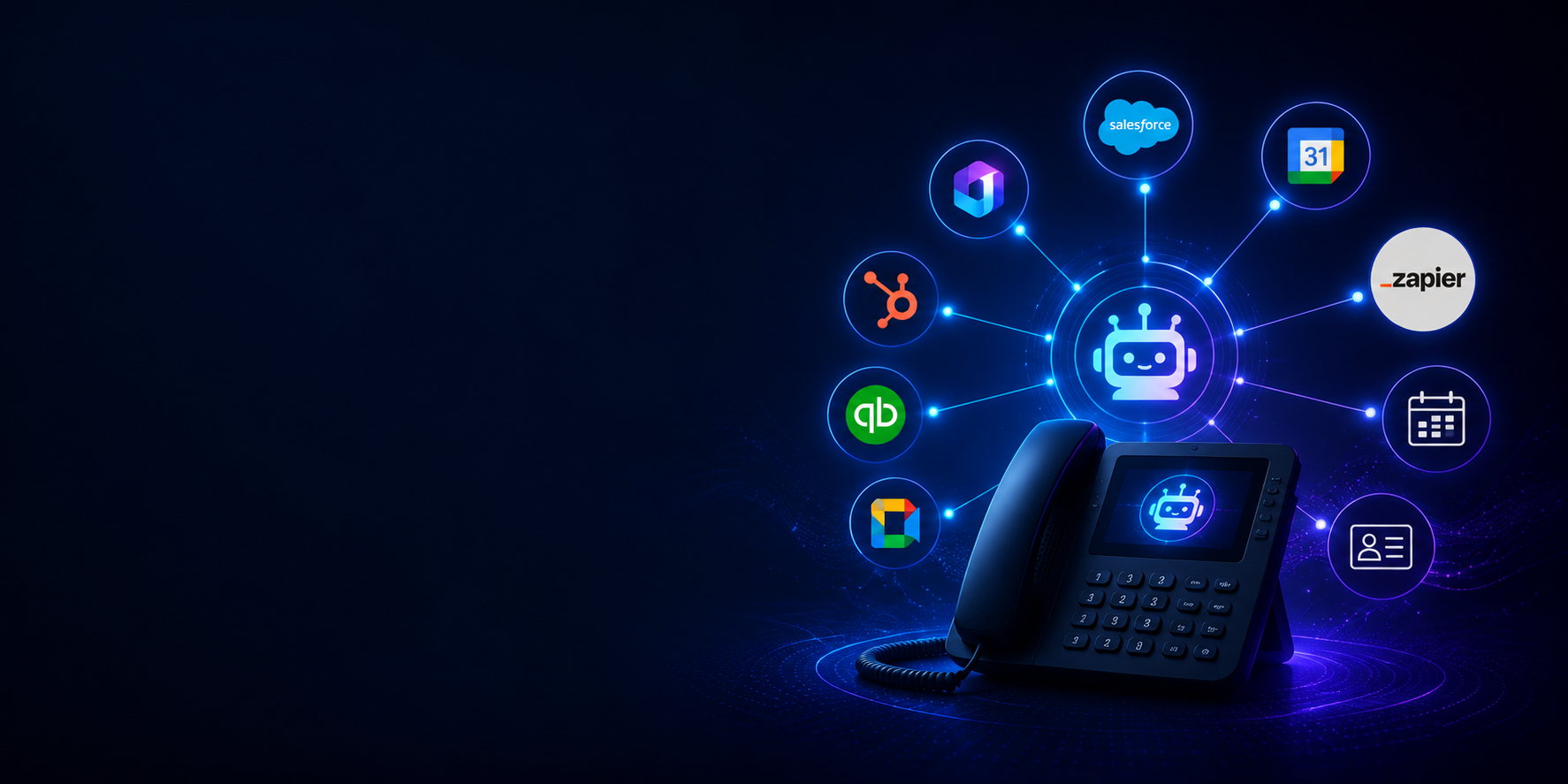
The value increases when the call does not end as an isolated message. Depending on your software and available integrations, AI intake can work alongside your CRM, dispatch process, calendars, cloud phone system, and business texting.
For a deeper explanation, see How AI Receptionists Integrate With Your CRM.
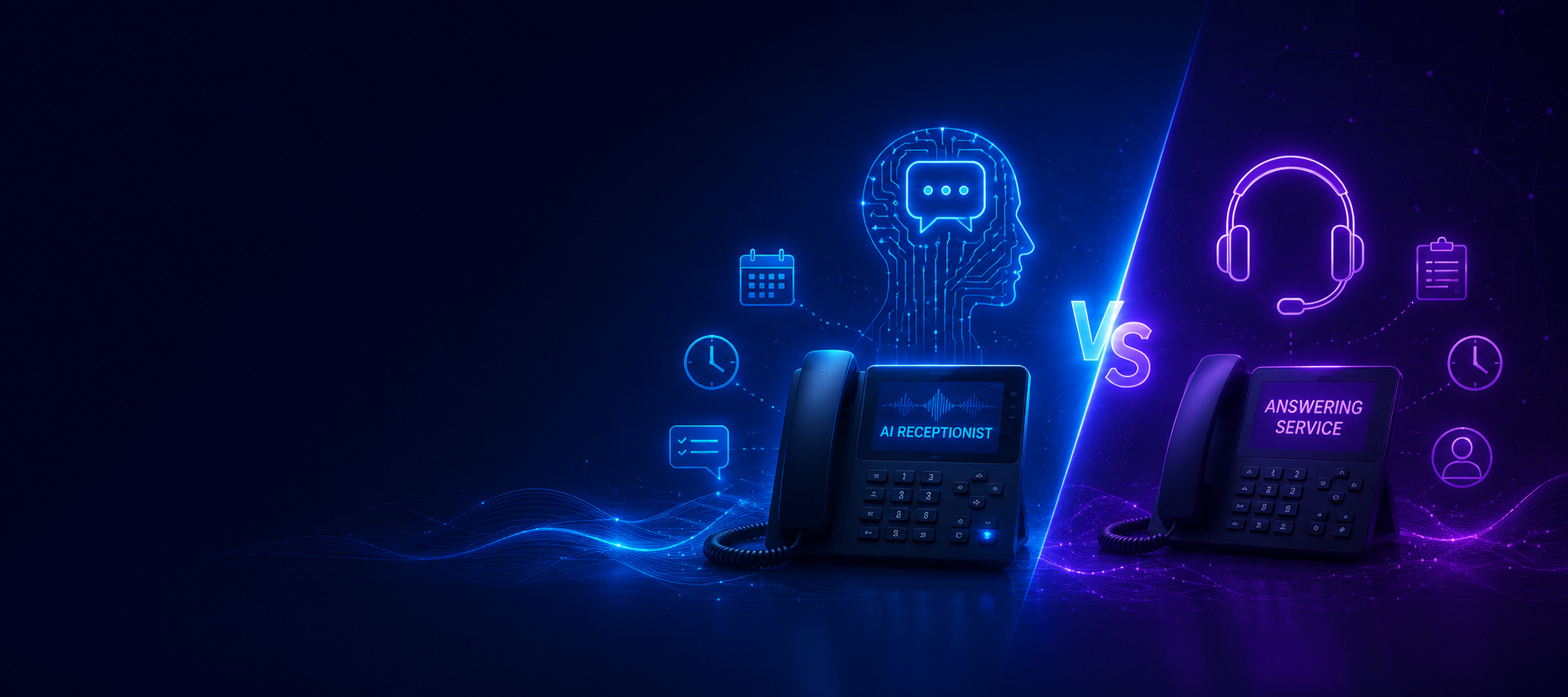
AI Receptionist vs. Traditional Answering Service for Restoration
A live answering service can provide valuable after-hours coverage, but a restoration company may need more than a generic message.
An AI receptionist can be configured to follow the same loss-intake questions on every call, create structured notes, and apply escalation rules consistently. A live service may still be the right choice for some companies or call types, and a hybrid model can also work.
See our detailed AI Receptionist vs. Answering Service guide.
Frequently Asked Questions
Can an AI receptionist answer restoration calls 24/7?
Yes. It can provide continuous first-line intake and apply different routing rules for emergency and non-emergency calls.
Can it collect insurance claim information?
It can collect the fields your company chooses to request, such as carrier or claim information, as part of intake. It should not make coverage or claim decisions.
Can it identify water, fire, mold, or sewage calls?
It can ask the caller what type of loss occurred and follow the corresponding intake and routing workflow.
Can emergency calls go directly to the on-call team?
Yes. Calls that meet your escalation criteria can be transferred or routed to the designated on-call destination.
Can it handle property managers differently from homeowners?
Yes. The workflow can ask who is calling and apply different questions or routing rules based on the caller type.
Every Minute Matters When a Property-Loss Lead Calls
Tier 1 Telecom can build a 24/7 AI intake workflow around your restoration company’s emergency routing, service area, scheduling, and escalation process.
(866) 808-4371