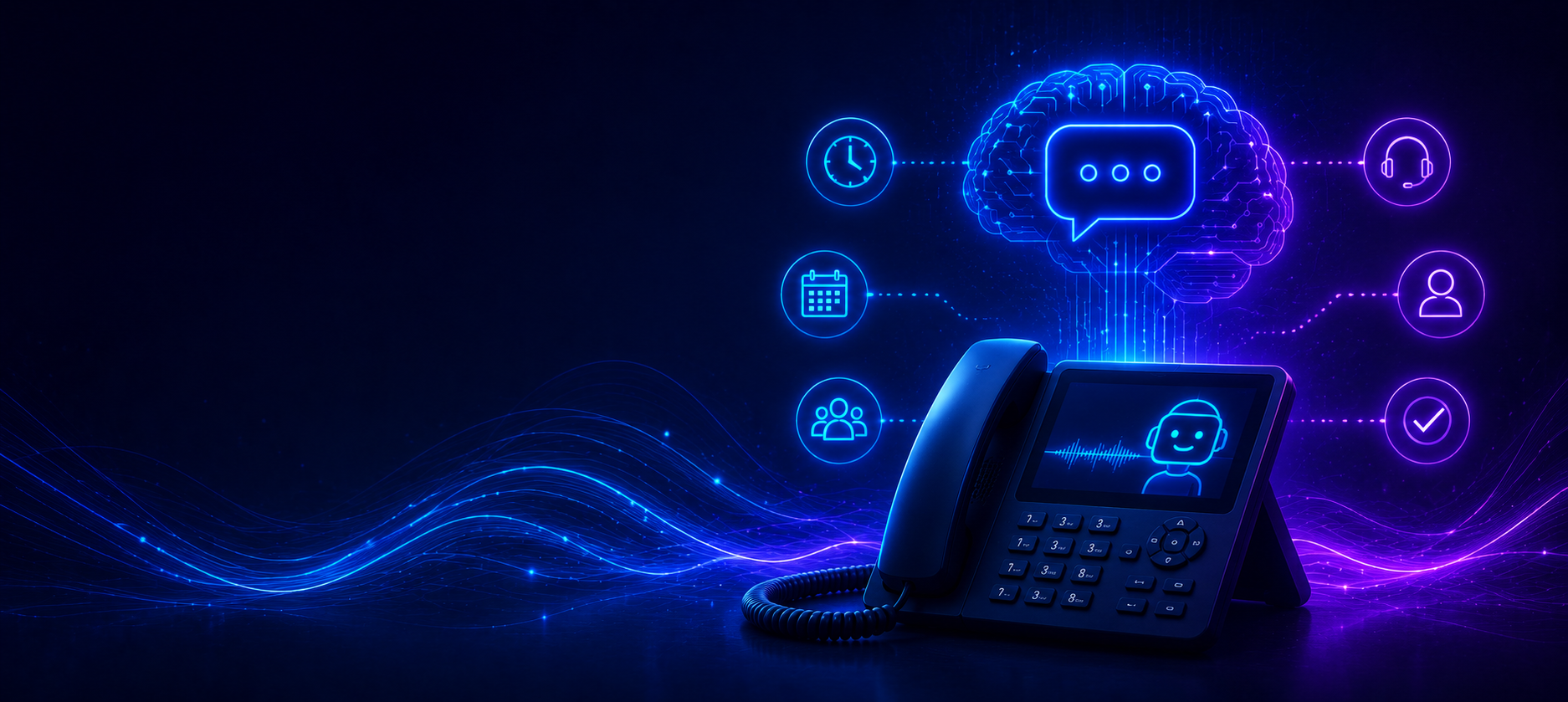
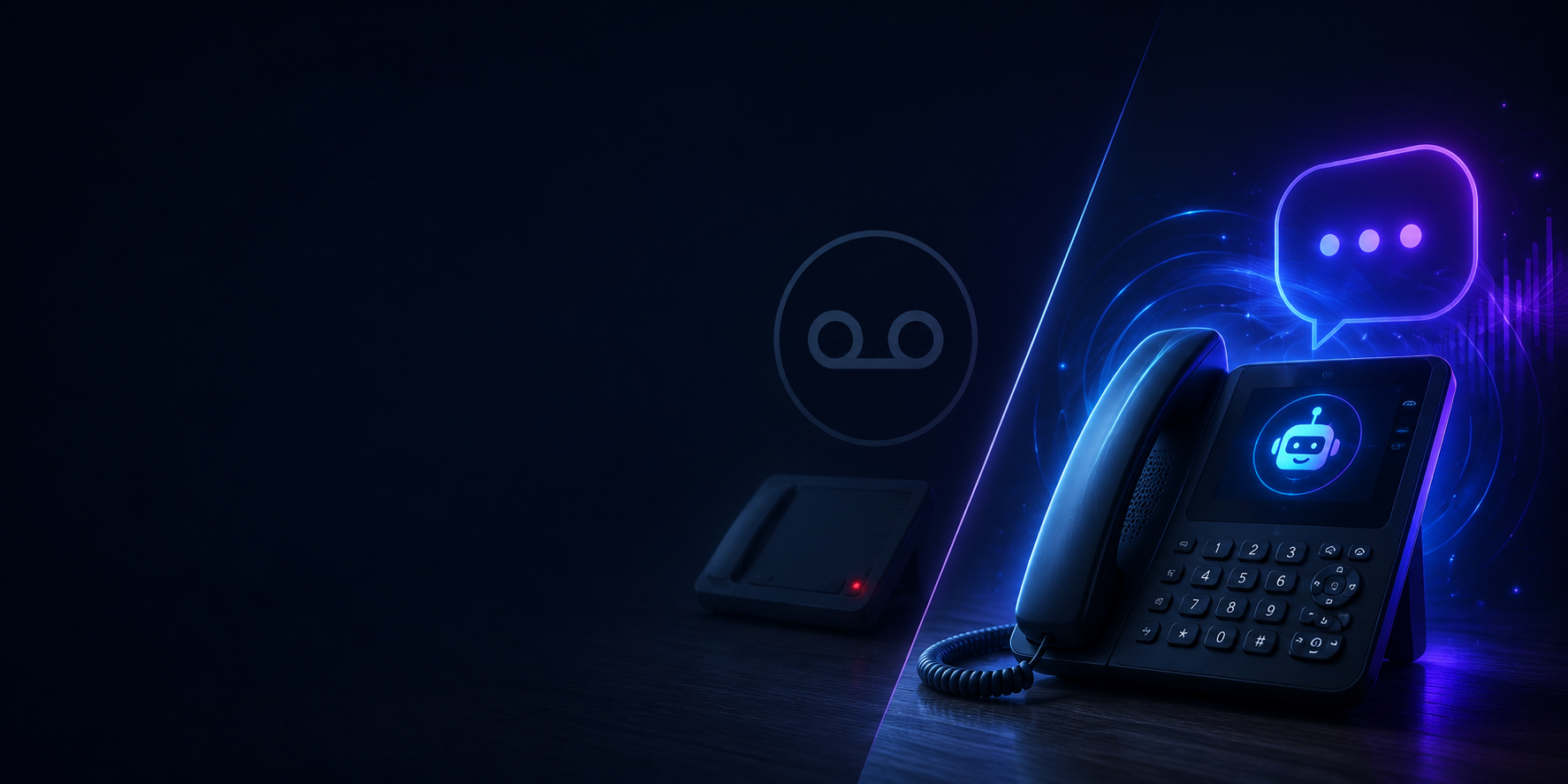
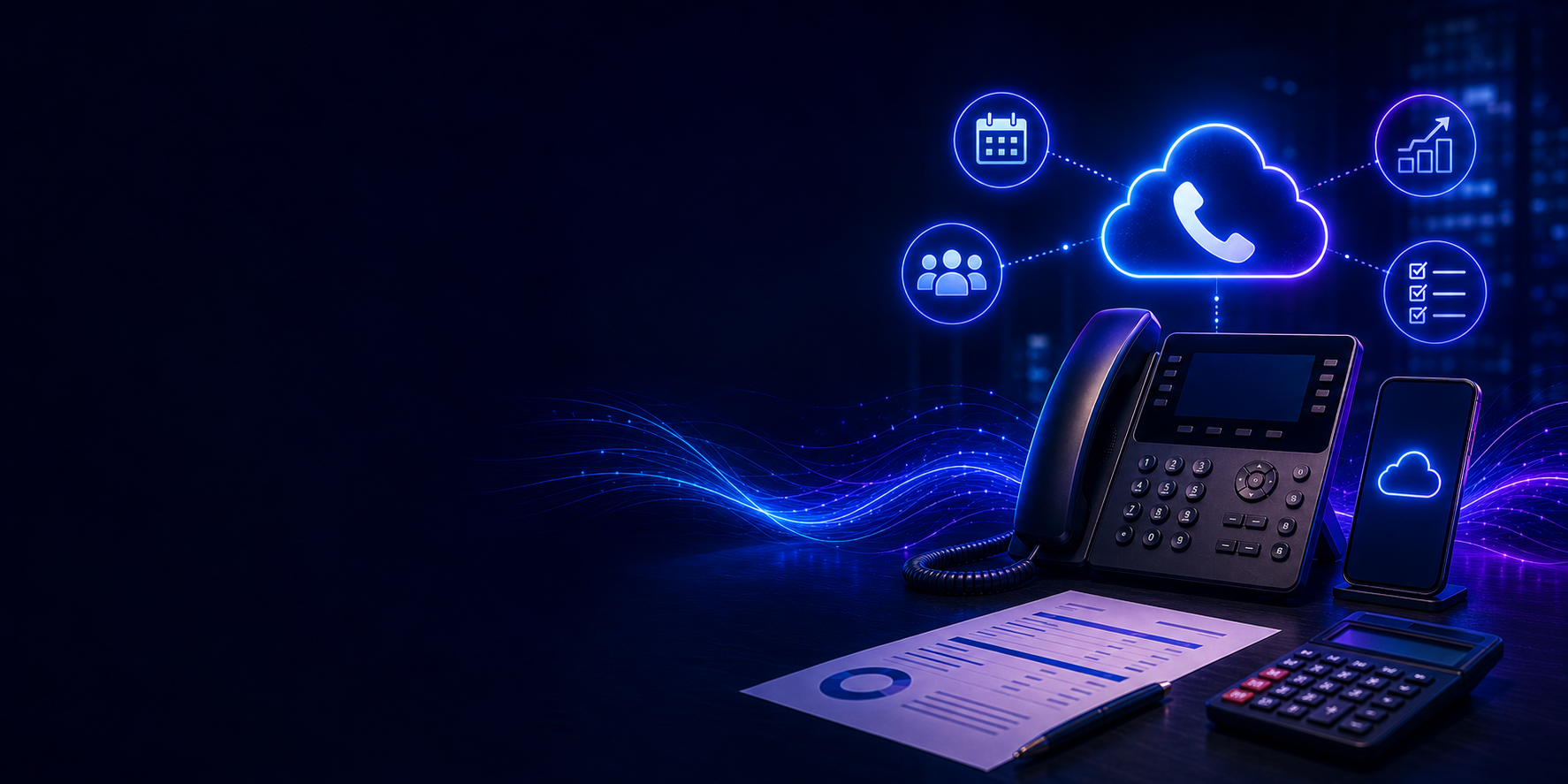
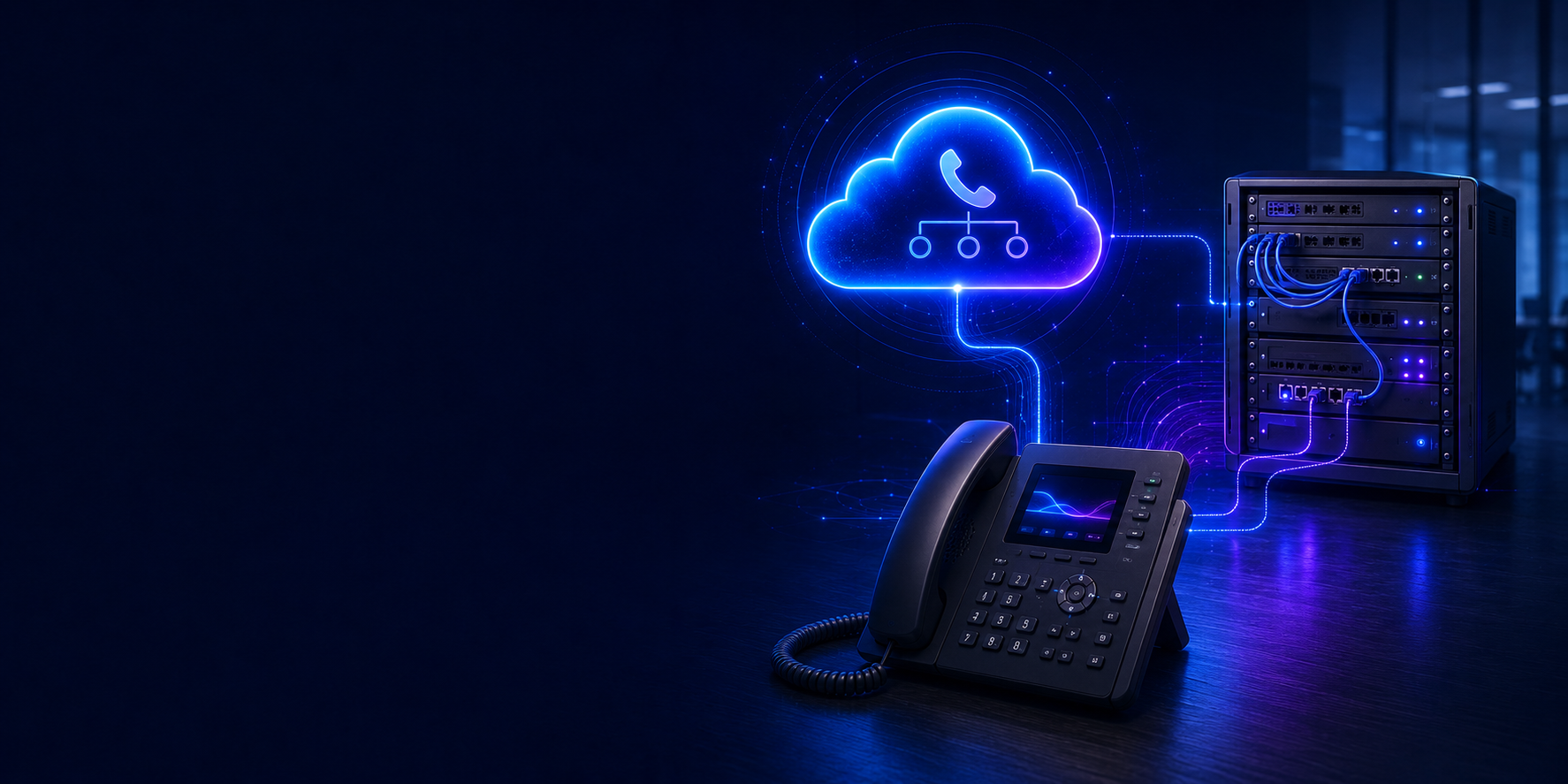
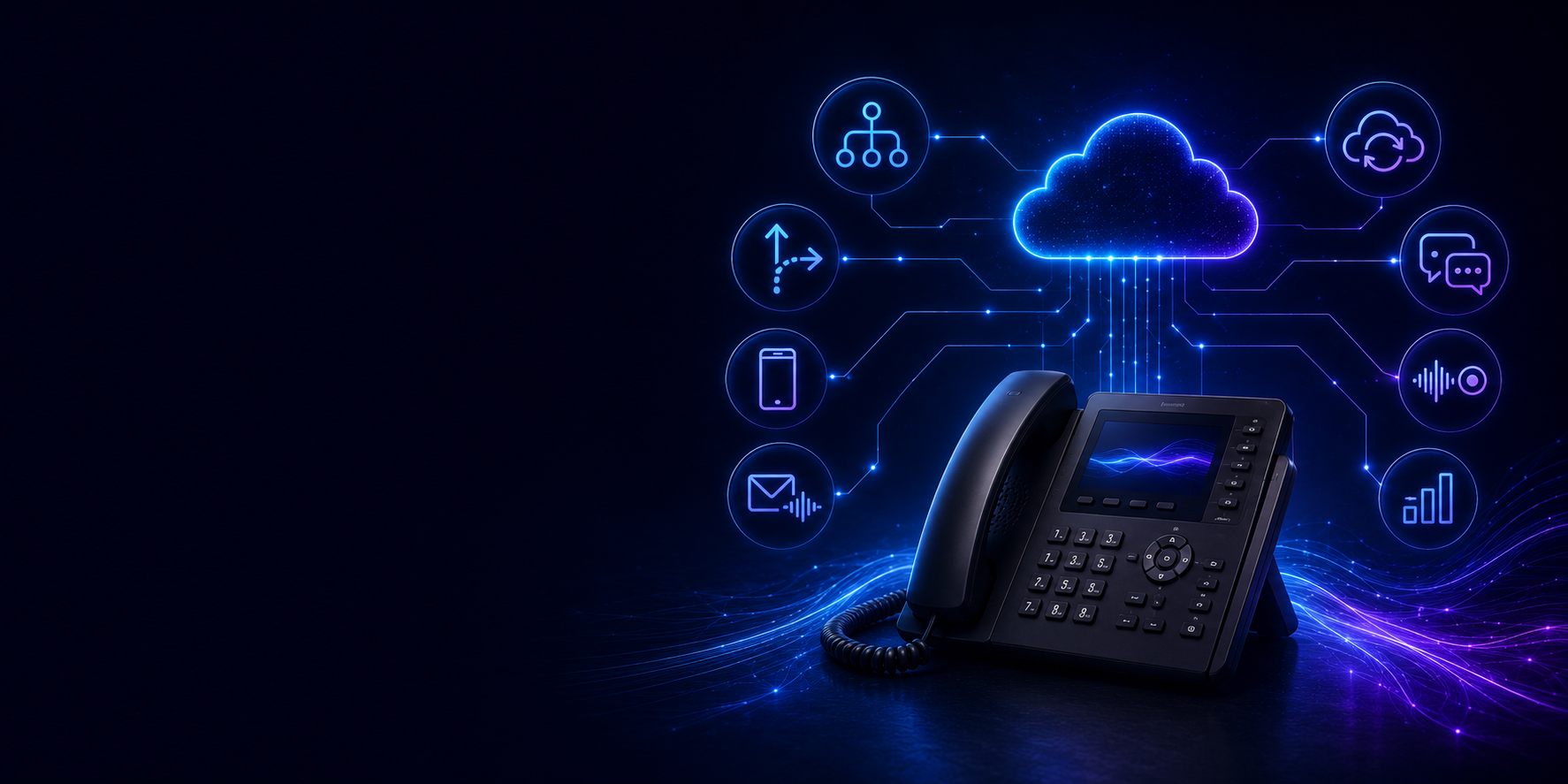
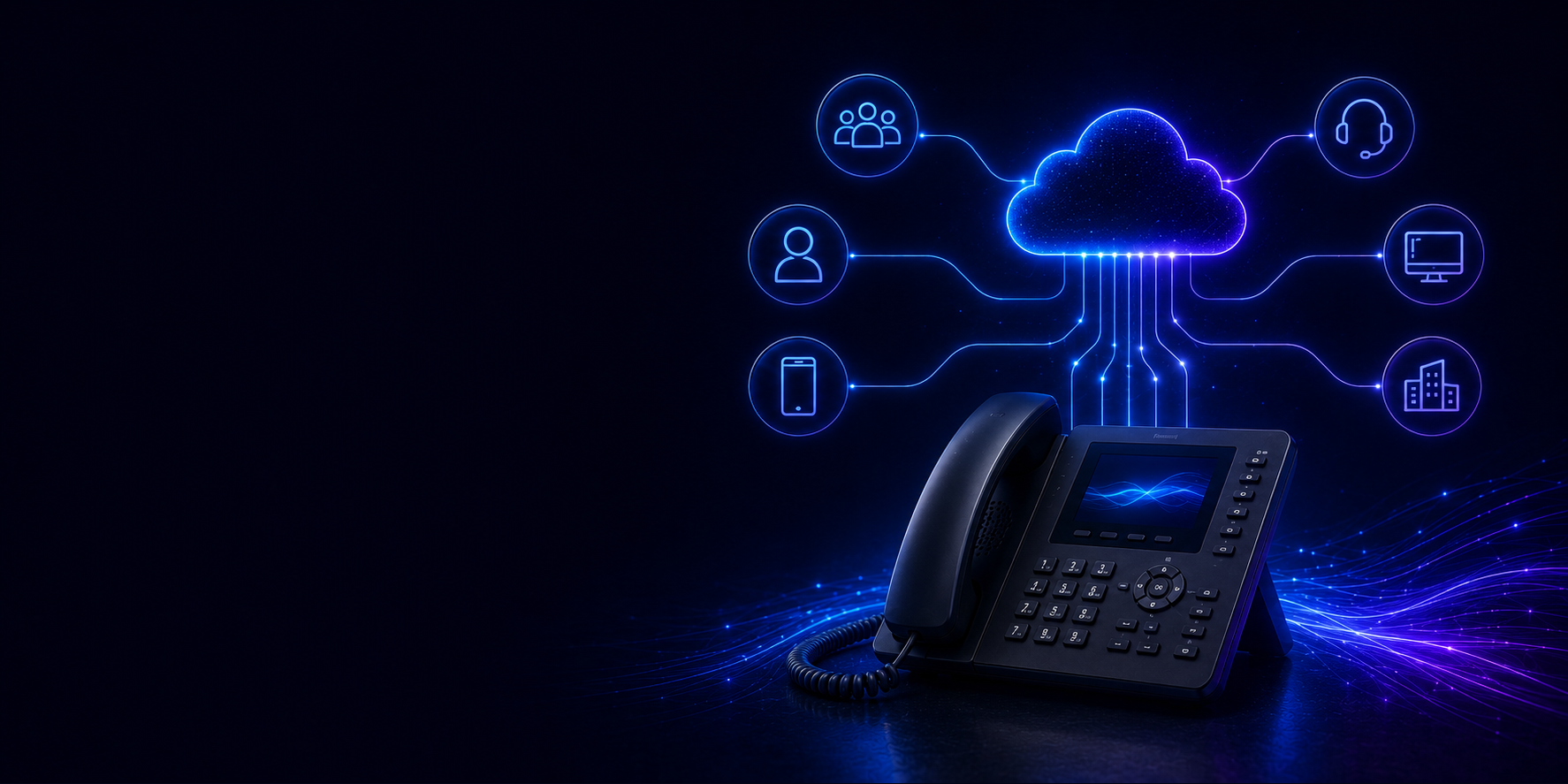
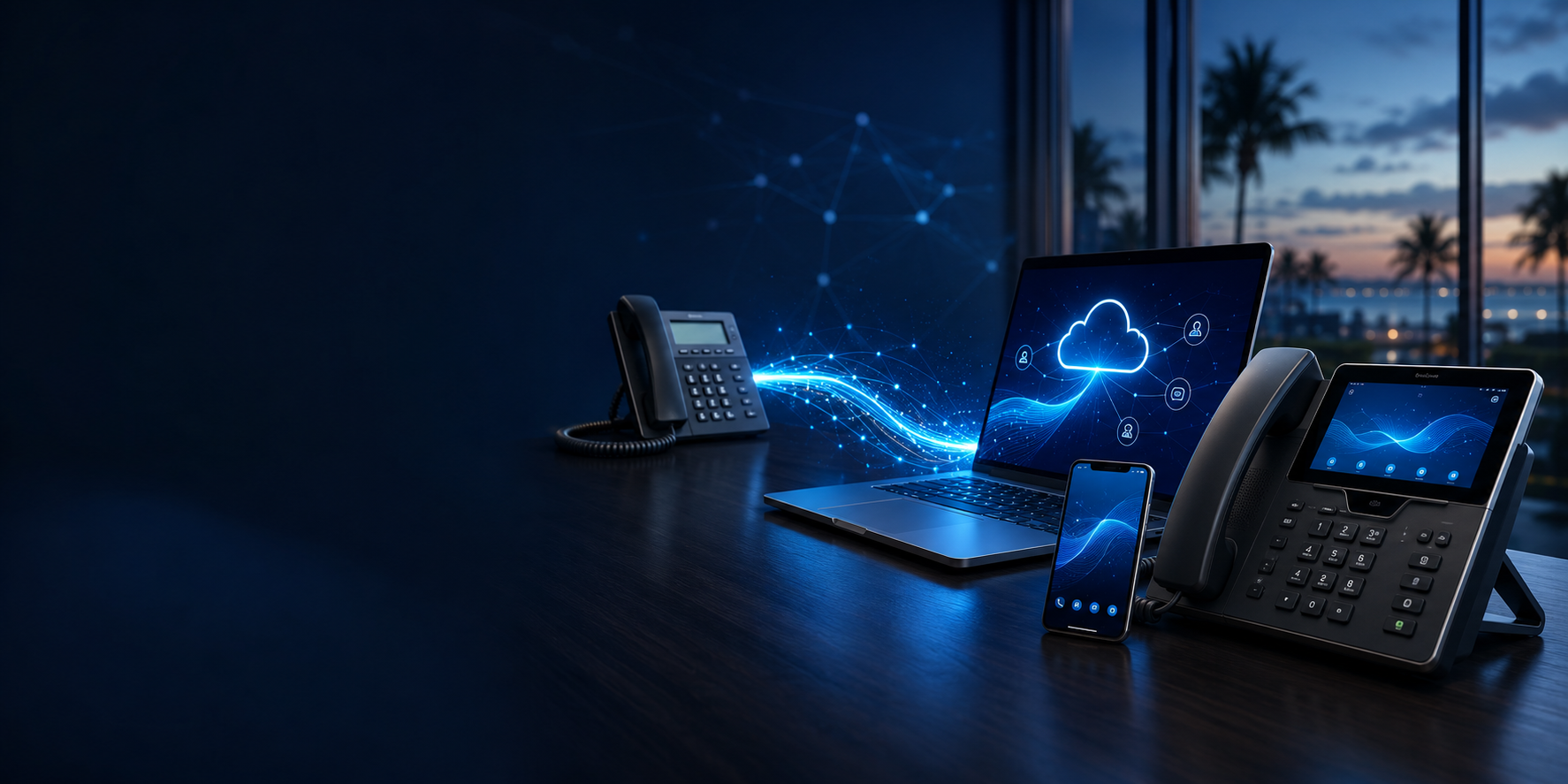
Today's business phone systems do much more than make and receive calls. They connect employees, customers, mobile devices, business texting, AI receptionists, voicemail, and cloud applications into one communications platform.
If you're researching business phone systems, you've probably come across several different terms:
- Business Phone System
- VoIP Phone System
- Cloud Phone System
- Hosted PBX
- Unified Communications
At first glance, they all sound different.
In reality, they're often describing different aspects of the same technology.
Understanding what a modern business phone system actually is makes it much easier to choose the right solution for your business.
A Business Phone System Is More Than Phones
Years ago, a business phone system usually meant a cabinet mounted in a phone closet.
Every desk had a wired telephone.
Every extension connected back to the office.
Adding a new employee often required new hardware and a technician.
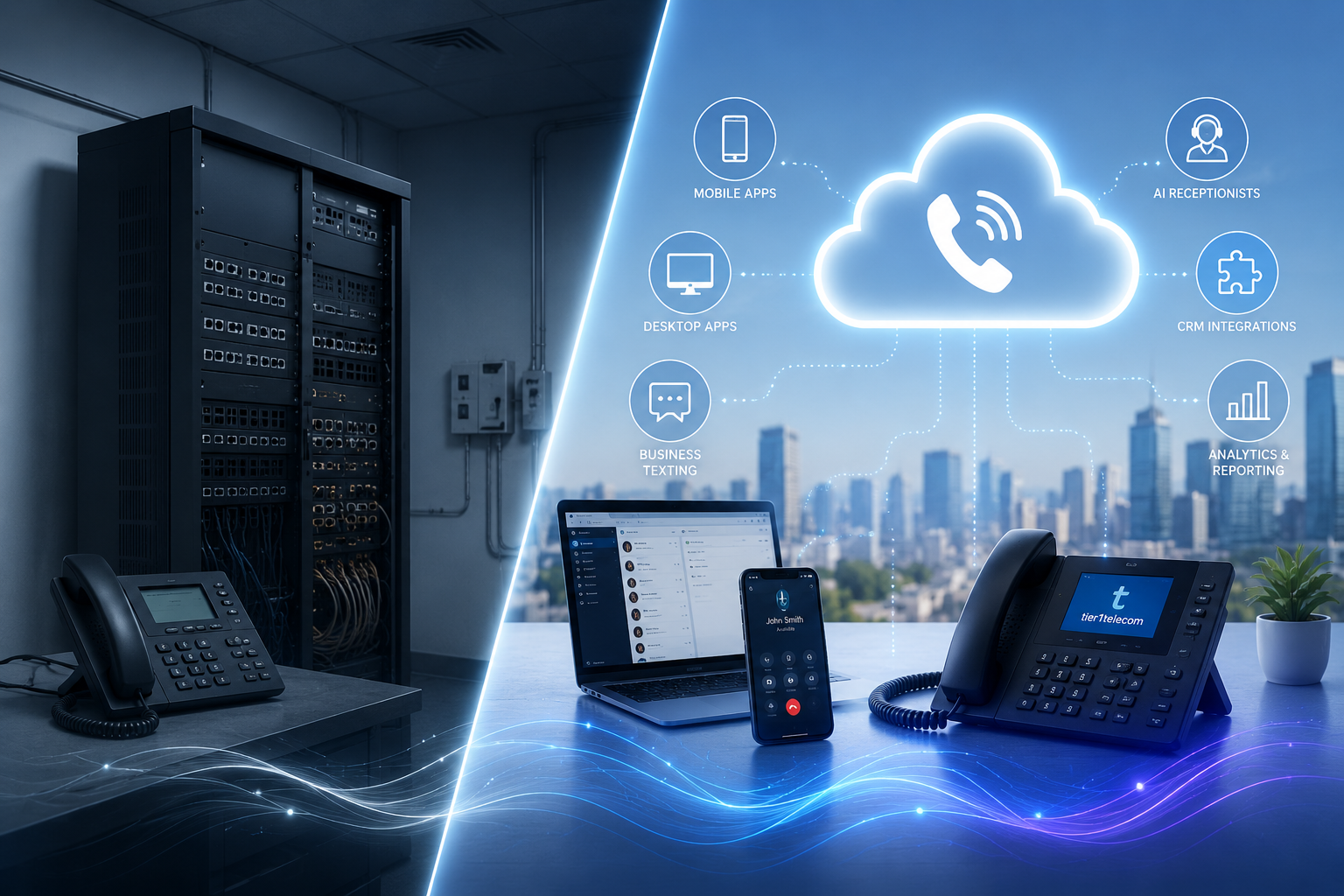
Today's systems work very differently.
Instead of being built around physical hardware...
Modern business phone systems are built around communication.
They connect:
- Desk phones
- Mobile devices
- Desktop applications
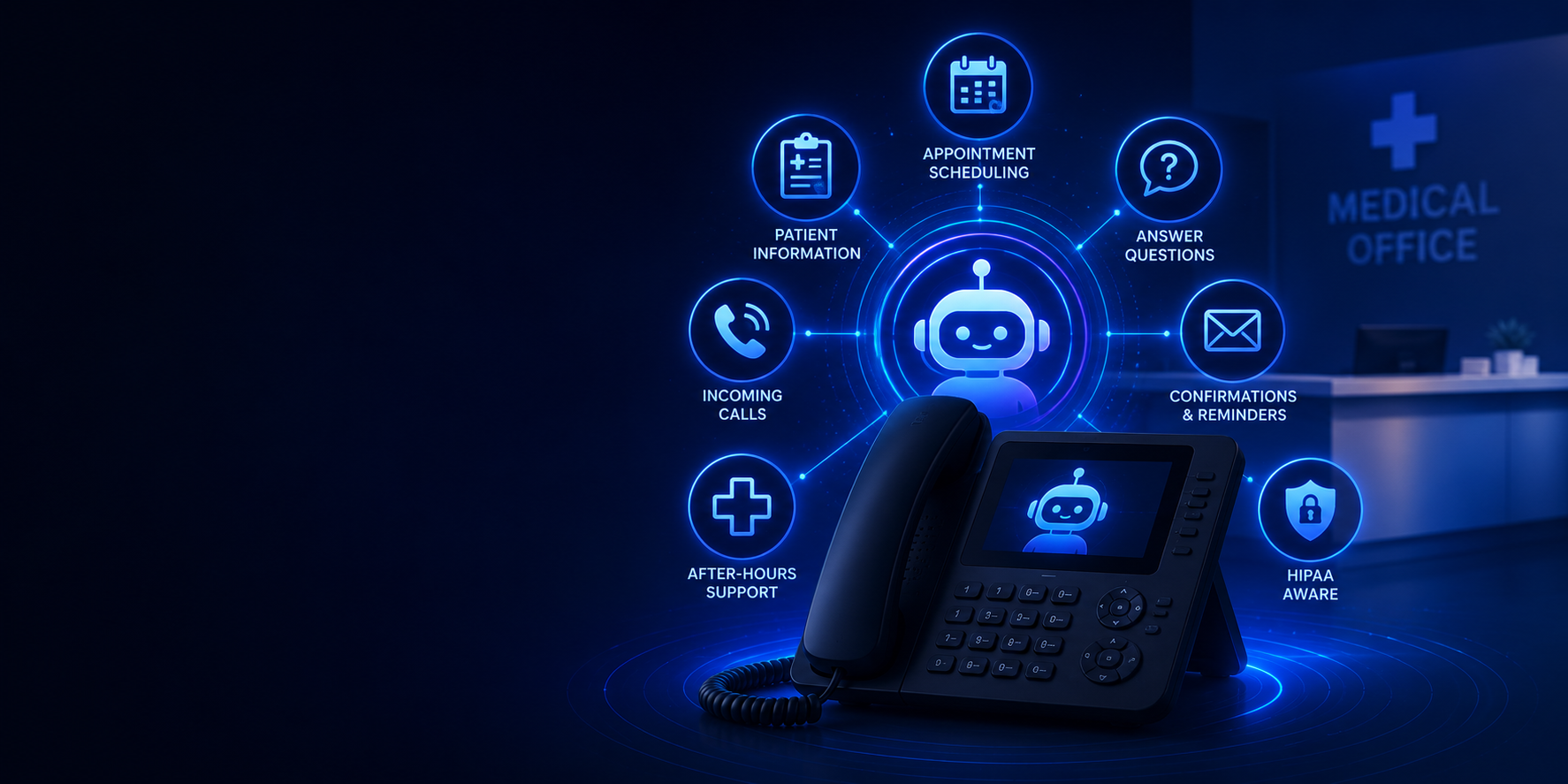
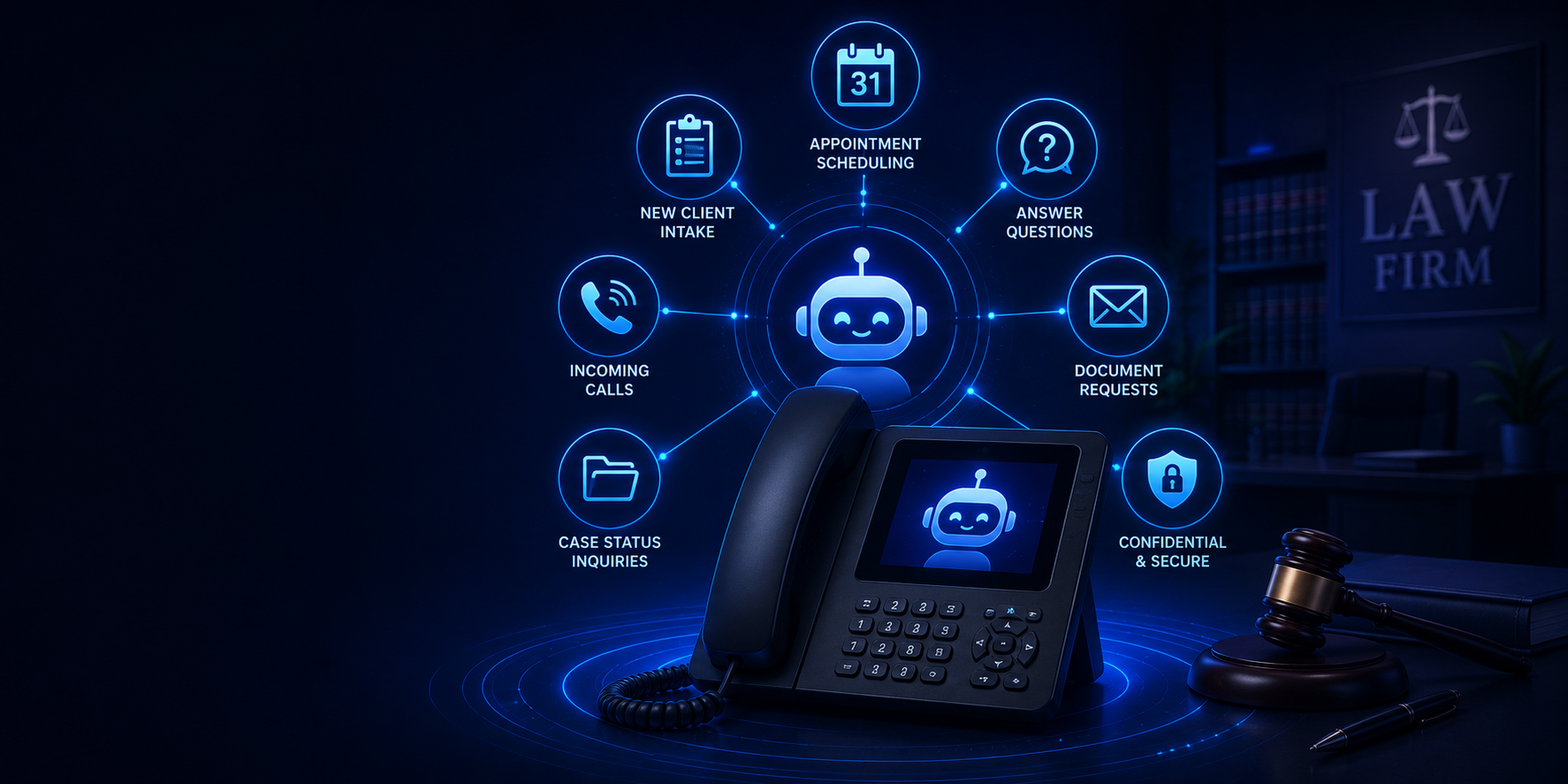
- AI receptionists
- Business texting
- Voicemail
- Video meetings
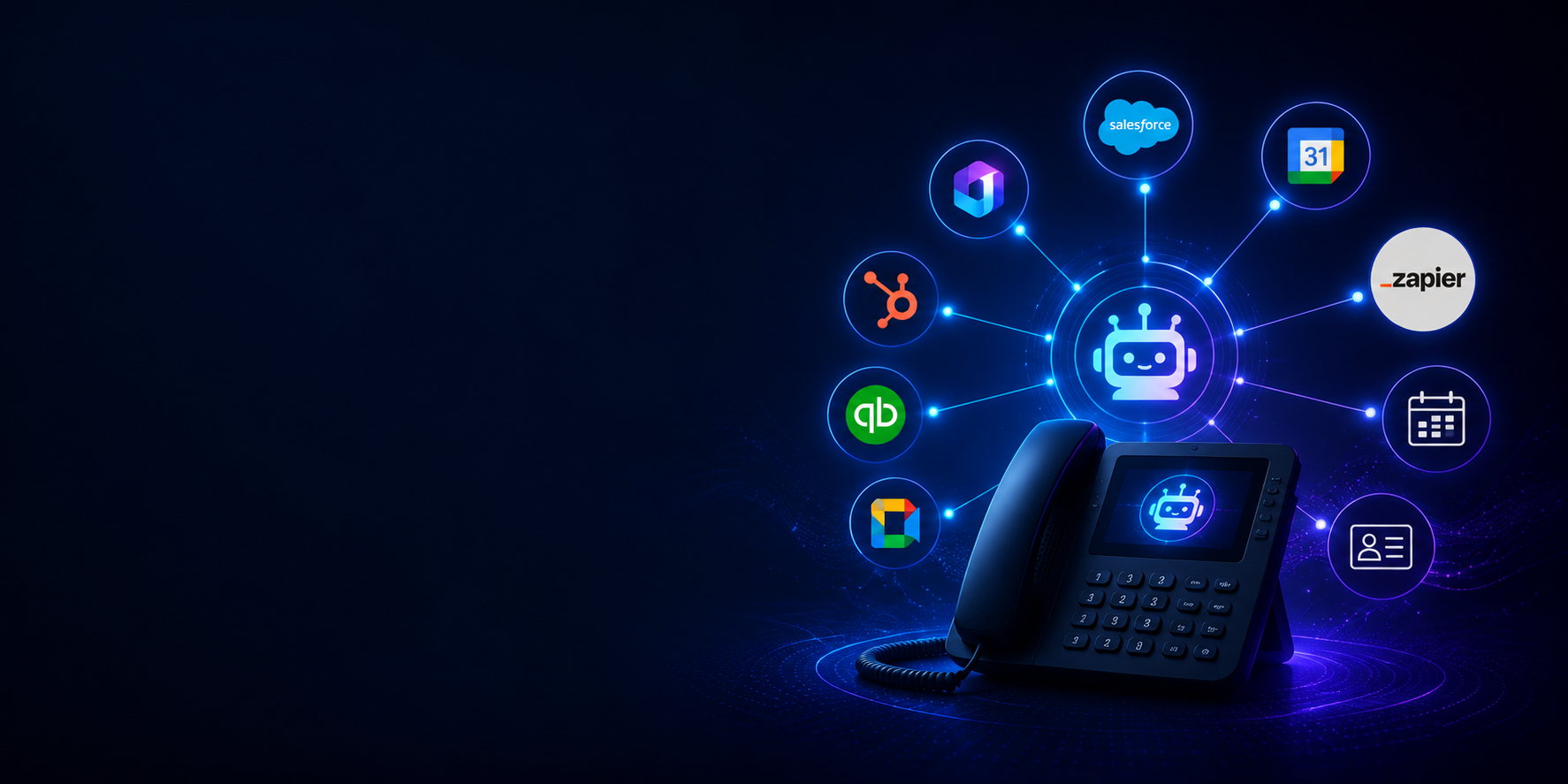
- CRM platforms
- Employees working remotely
Everything becomes part of one communications platform.
How a Modern Business Phone System Works
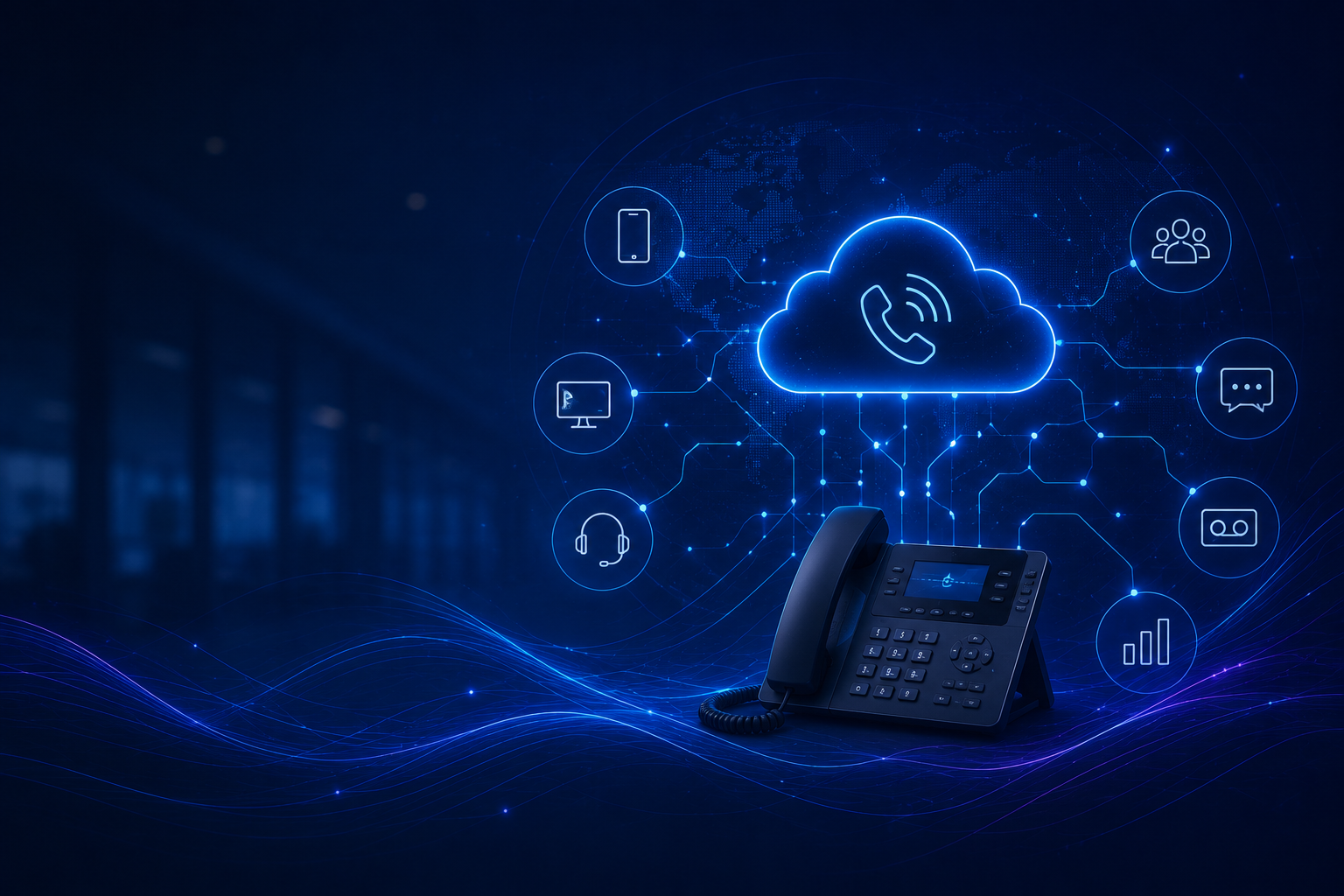
Think of a cloud phone system as the central hub for business communication.
Instead of calls being tied to one office location, they're managed through a secure cloud platform.
When a customer calls:
The platform determines where the call should go.
It might:
- Ring your desk phone
- Ring your mobile app
- Ring multiple employees
- Route through an AI receptionist
- Transfer to another department
- Send voicemail to email
- Trigger business workflows
The caller doesn't know—or care—which technology made it happen.
They simply experience fast, professional communication.
Customer Spotlight
One Phone Number. Every Employee.
One growing company struggled with inconsistent communication.
Some employees answered desk phones.
Others relied on personal cell phones.
Business texting was handled separately.
Voicemail often went unchecked.
Customers weren't always sure who to call.
After moving to a modern cloud phone system, everything worked together.
Employees answered calls from wherever they were working.
Business texting became centralized.
Voicemail appeared in email.
Customers called one number and consistently reached the right person.
The configuration also changed how many phone lines a business needs because each employee no longer required a separate outside line.
The business didn't simply replace its phones.
It modernized the way it communicated.
Cloud Phone System, VoIP, or Hosted PBX?
These terms are often used interchangeably.
Although there are technical differences, they generally describe modern business communications delivered through the internet rather than traditional telephone lines.
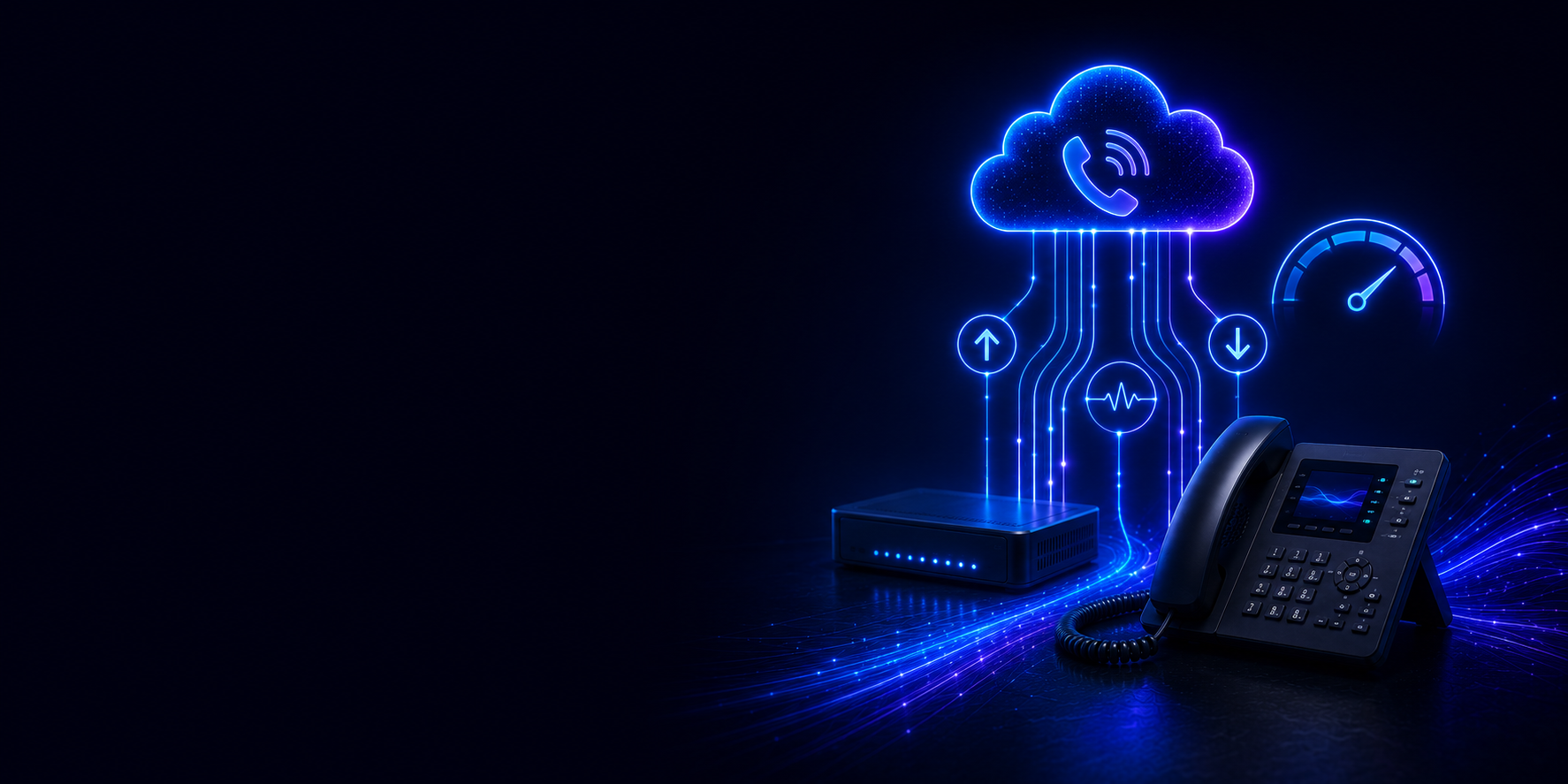
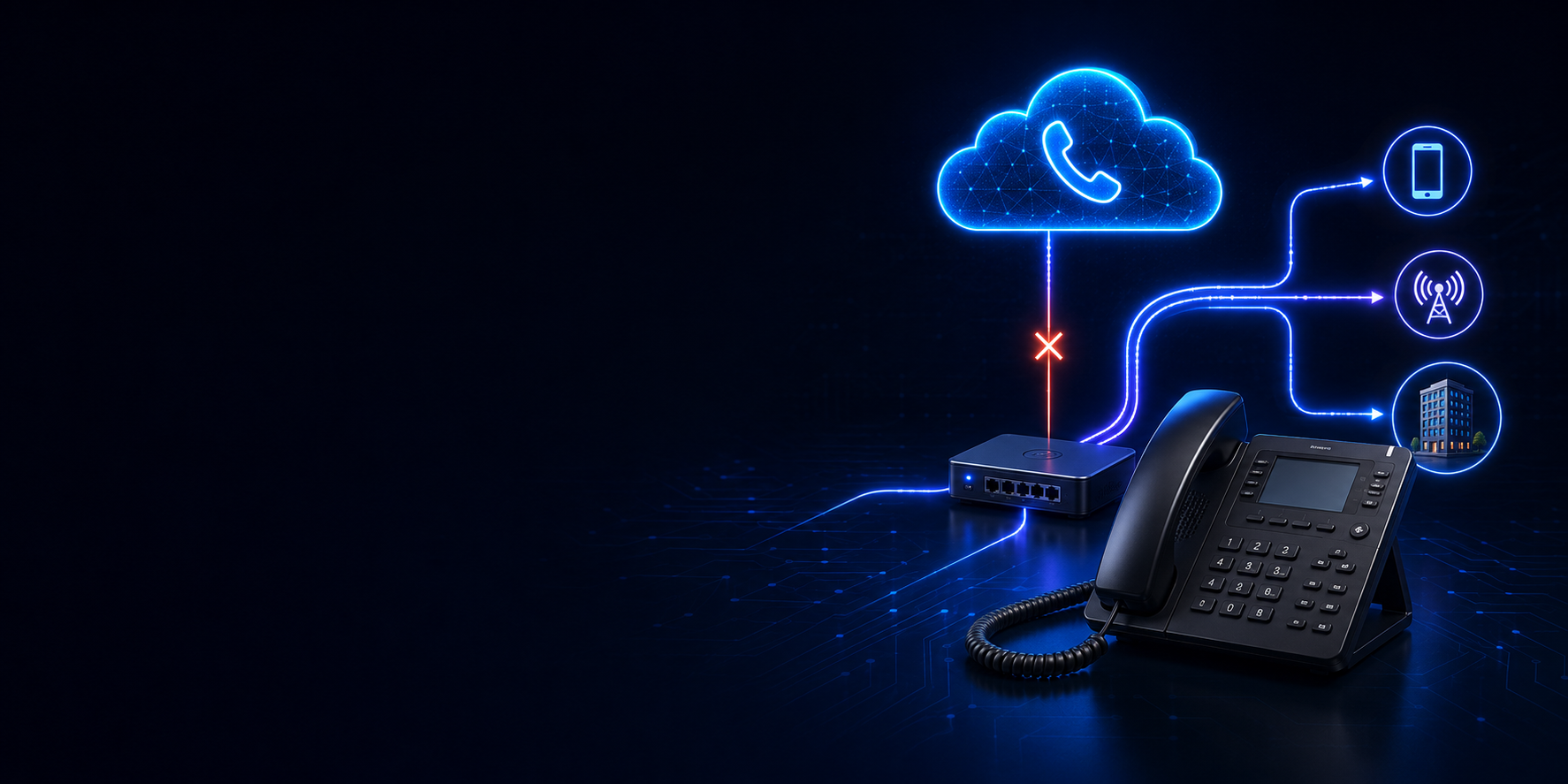
Because a cloud phone system depends on connectivity at each location, businesses should also understand what happens when the internet goes down and prepare alternate call paths before an outage.
You may hear:
Business Phone System
The complete communications platform.
VoIP Phone System
Voice communication using internet technology.
Cloud Phone System
A phone system hosted in secure data centers rather than your office.
Hosted PBX
A professionally managed cloud phone platform.
Most businesses evaluating new communications solutions are really evaluating all of these concepts together.
For a direct comparison of deployment models, read Cloud Phone Systems vs. Traditional Phone Systems.
For a detailed pricing breakdown, see How Much Does a Business Phone System Cost?
Features Businesses Expect Today
Modern business phone system features typically include:
- Auto attendants
- AI receptionists
- Ring groups
- Business texting
- Mobile applications
- Desktop applications
- Call recording
- Call routing
- Voicemail to email
- Video meetings
- CRM integration
- Analytics and reporting
Rather than purchasing separate systems for each capability, businesses increasingly choose one integrated platform.
Why Businesses Are Replacing Older Phone Systems
Many companies replace their phone systems because their needs have changed.
Employees now work remotely.
Customers expect texting.
Businesses rely on CRM software.
AI is becoming part of customer communication.
Traditional office phone systems weren't designed for those workflows.
Cloud phone systems were.
That flexibility allows businesses to grow without constantly replacing hardware.
Before making the change, review the business phone system installation process so account records, routing decisions, equipment, testing, and cutover timing are planned together.
Does Every Business Need a Cloud Phone System?
Not necessarily.
Every business has different requirements.
A small office may need only a few extensions.
A multi-location organization may require sophisticated routing, analytics, AI integration, and mobile access.
The best phone system isn't the one with the most features.
It's the one that supports the way your business actually communicates.
For cloud calling, also review how much internet speed VoIP requires so bandwidth and network quality are part of the phone-system decision.
Frequently Asked Questions
What is a business phone system?
A business phone system is a communications platform that manages voice calls, voicemail, texting, routing, mobile devices, and integrations for an organization.
Is VoIP the same as a business phone system?
Most modern business phone systems use VoIP technology, although VoIP specifically refers to how voice is transmitted over internet networks.
What is a cloud phone system?
A cloud phone system is hosted in secure data centers rather than on equipment located inside your office.
Can employees answer calls on their mobile phones?
Yes. Most modern cloud phone systems allow employees to use mobile applications while keeping business and personal communications separate.
Can a business phone system include AI?
Yes. Many modern systems integrate directly with AI receptionists, call routing, CRM platforms, and scheduling tools.
Do I still need desk phones?
Not always. Many businesses use a combination of desk phones, desktop applications, and mobile apps depending on employee roles.
Communication Has Changed
Business phone systems have evolved from simple telephone equipment into complete communications platforms.
Today's systems don't just connect calls.
They connect employees, customers, AI, texting, CRM software, analytics, and mobile devices into one coordinated environment.
Choosing the right system isn't simply about buying phones.
It's about giving your business the communication tools it needs to serve customers effectively—today and as your business continues to grow.
FREE BUSINESS RESOURCE
Test Your Internet for Business Phone Systems
Wondering whether your Internet connection is ready for cloud business phones?
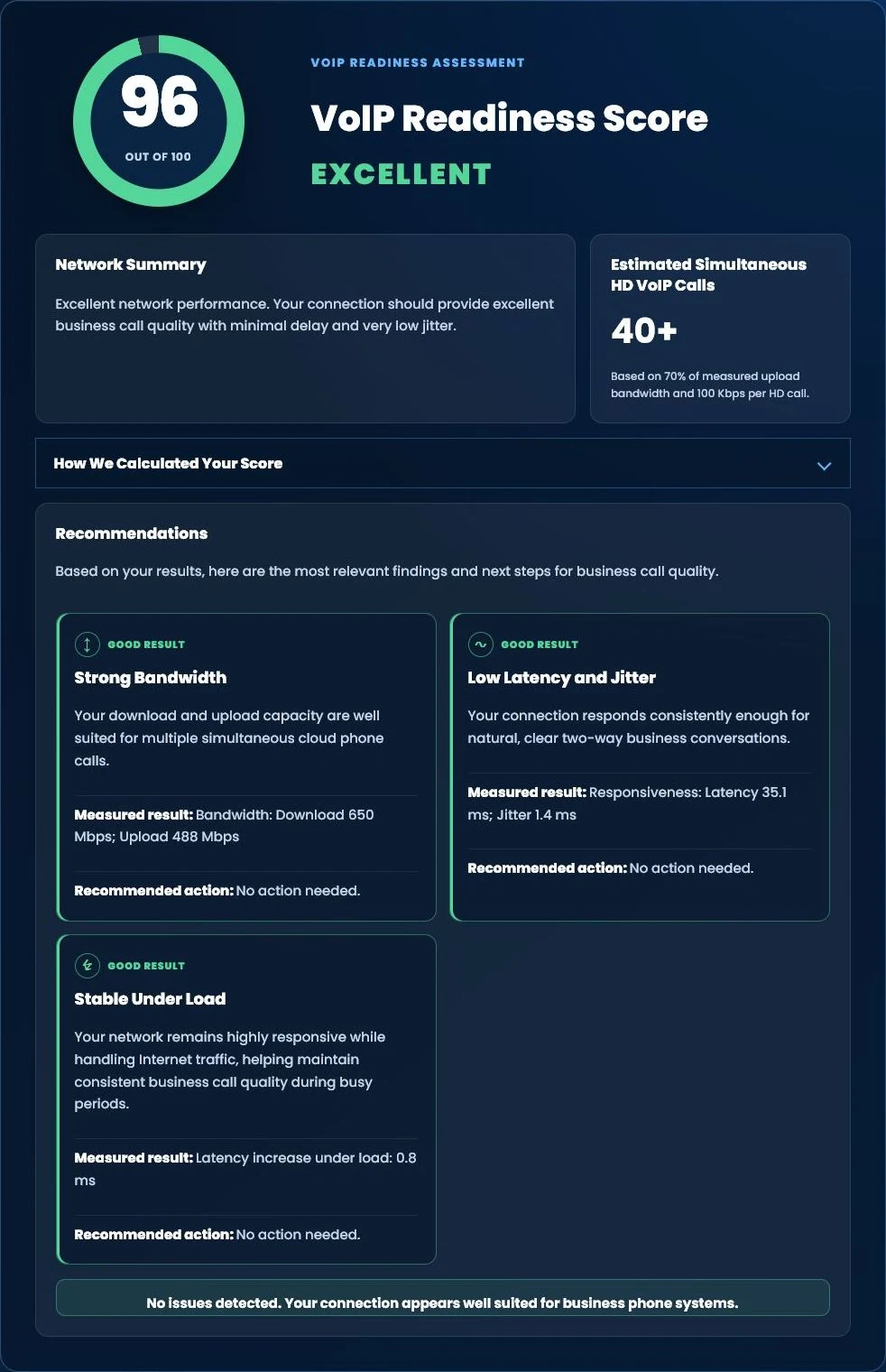
Run our free Tier 1 VoIP Readiness Assessment to measure latency, jitter, network responsiveness and overall VoIP readiness in about one minute.
- VoIP Readiness Score
- Latency & Jitter Analysis
- Network Stability Assessment
- Estimated HD Phone Capacity
Ready to Explore Your Options?
Wondering which business phone system is right for your organization?
We'll help you:
- Compare cloud phone systems
- Understand VoIP technology
- Keep your existing business phone numbers
- Integrate AI receptionists
- Support remote employees
- Build a communications platform that grows with your business
Every business communicates differently.
We'll help design a solution that fits the way your business works.